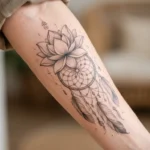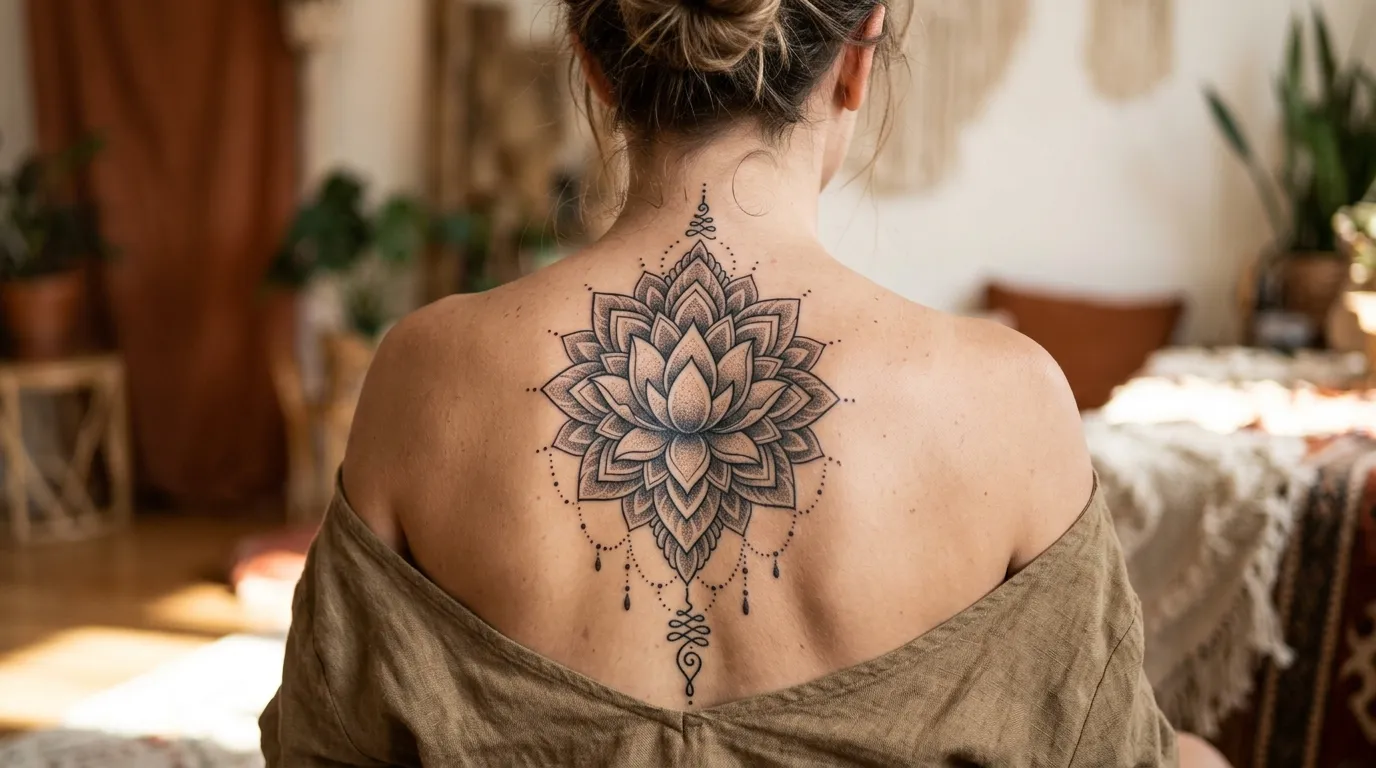
A mandala lotus flower tattoo is more than a pretty design. It can show peace, hope, balance, and a fresh start. The lotus flower grows in muddy water but rises above it with clean petals. This makes it a sign of growth and strength.
A mandala is a pattern made with shapes and lines that often spread out from the center. Its balanced design can stand for peace, order, and a feeling of being whole. When these two symbols come together, they can share a strong message about life.
Some people choose this tattoo to mark a hard time they have passed. Others choose it to show their love of nature, faith, or inner peace. Its meaning can also be personal. The best design is one that feels right to you.
Quick Meaning of a Mandala Lotus Flower Tattoo
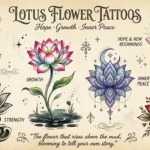
A mandala lotus flower tattoo often stands for:
- Inner peace: Finding calm during hard times.
- Growth: Learning and becoming a better version of yourself.
- Balance: Keeping your mind, heart, and life in harmony.
- Hope: Believing that better days can come.
- Strength: Growing through pain and hard times.
- Spiritual growth: Learning more about yourself and your beliefs.
- New beginnings: Starting again after a big change.
These meanings are not fixed rules. Your tattoo can have a meaning that is special to you.
What Does a Lotus Flower Mean in a Tattoo?
The lotus flower has a long history in many Asian faiths and art forms. It grows in water and mud, yet its flower can rise above the water. This makes it a strong sign of growth and hope.
1. Growth Through Hard Times
The lotus flower can stand for a person who has faced pain and kept going. Its growth reminds people that hard times do not have to shape their whole lives.
This tattoo may mark a time when someone found the strength to move forward. It can also serve as a daily reminder to keep growing.
2. Peace and Calm
A lotus flower can also stand for peace. Its soft petals and calm shape may remind the wearer to slow down and care for their inner self.
Some people choose this design after a hard time in life. Others use it as a sign of the peace they want to keep.
3. Hope and New Beginnings
The lotus flower can open a new chapter in life. It may stand for healing after a loss, leaving a bad habit, or finding a new path.
A lotus tattoo can remind you that one hard day does not mean every day will be hard. Life can change, and growth can take time.
What Does a Mandala Mean in a Tattoo?
A mandala is a pattern built around a center point. Many designs use circles, lines, and shapes that repeat in a balanced way. Mandalas appear in different spiritual and art traditions, and their meanings can vary.
1. Balance and Harmony
The repeated shapes in a mandala can show balance. Each part has a place, and the full pattern works as one design.
For some people, this means keeping work, family, rest, and personal needs in balance. For others, it is a sign of feeling calm within themselves.
2. Focus and Mindfulness
A mandala’s fine lines and repeated shapes can draw the eye toward the center. Some people connect this pattern with focus, quiet thought, or meditation.
A mandala tattoo may remind the wearer to pause and take a breath. It can also stand for a wish to live with more care and purpose.
3. Wholeness and Connection
A mandala can represent the idea that many parts make one whole. Its shapes come together to form a complete pattern.
This can remind someone that their past, present, and future all play a part in their life. It may also show a sense of connection with nature, family, or faith.
What Does a Mandala Lotus Flower Tattoo Mean Together?
When the lotus and mandala are joined, their meanings can work together. The lotus often points to growth, hope, and change. The mandala adds ideas of balance, focus, and wholeness.
Together, the tattoo may share these messages:
| Combined Meaning | What It Can Represent |
| Peace through growth | Finding calm after a hard time |
| Strength and balance | Staying steady when life changes |
| Hope and healing | Moving forward after pain or loss |
| Mind and heart | Finding balance between feelings and thoughts |
| Spiritual growth | Learning more about your inner self |
| A fresh start | Leaving the past behind and moving ahead |
| Personal harmony | Feeling more at peace with who you are |
The design does not have one meaning for everyone. You can choose the message that fits your own story.
Mandala Lotus Flower Tattoo Meaning by Color
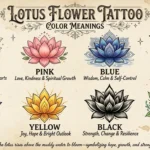
Color can change the feeling of your tattoo. These meanings are common ideas, not rules that everyone follows.
| Color | Common Meaning | Design Feel |
| White | Peace, purity, and calm | Soft and simple |
| Pink | Love, care, and kindness | Warm and gentle |
| Blue | Wisdom, focus, and peace | Cool and calm |
| Purple | Mystery and spiritual growth | Rich and deep |
| Red | Love, courage, and strong feelings | Bold and bright |
| Yellow | Joy, hope, and fresh starts | Light and happy |
| Black | Strength, change, or a clear style | Strong and classic |
| Green | Nature, growth, and renewal | Fresh and earthy |
A black mandala with a white lotus can look clean and simple. A pink lotus with fine black lines can feel soft but clear. A blue lotus with a dark mandala can create a calm look.
Choose a color because you like it and because it fits your message. You do not need to follow a set list of meanings.
Popular Mandala Lotus Flower Tattoo Designs
The style you choose can change how your tattoo looks and feels. Here are some popular ideas.
1. Simple Mandala Lotus Tattoo
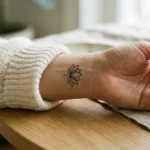
<PRIVATE_PERSON> simple mandala lotus tattoo uses clean lines and fewer details. It can be a good choice for people who like a neat design.
This style may work well on the wrist, ankle, or upper arm. Ask your tattoo artist to keep enough space between the lines so the design stays clear over time.
Read more about:https://bloomsyflower.com/lotus-flower-and-butterfly-tattoo-meaning/
2. Fine-Line Mandala Lotus Tattoo
Fine-line tattoos use thin lines to create small details. This style can make the petals and mandala shapes look light and soft.
It may suit the forearm, shoulder, or upper back. Very small lines can blur as a tattoo ages, so the size and spacing matter.
3. Geometric Mandala Lotus Tattoo
A geometric design uses shapes such as circles, triangles, and straight lines. These shapes can make the tattoo look neat and even.
This style may appeal to people who like order and balance. The lotus in the center can stand out against the sharp shapes around it.
4. Large Mandala Lotus Tattoo
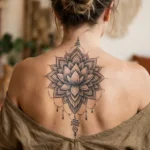
A large design gives the artist more room for petals, dots, and fine patterns. It can look striking on the back, thigh, chest, or shoulder.
This may be a good choice if you want the mandala to be a main part of the tattoo. A larger design also gives the lines more room to age well.
5. Mandala Lotus with Dotwork
Dotwork uses small dots to build shade and detail. It can give the mandala a soft, textured look.
This style often works well in black ink. The artist can use more dots near the center and fewer near the outer edges to create depth.
6. Mandala Lotus with Color
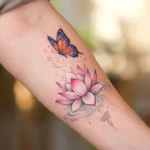
A colored lotus can sit inside a black mandala. This helps the flower stand out from the pattern around it.
You could choose pink for a soft look, blue for a calm feel, or purple for a rich style. Think about how the colors will work with your skin tone and the size of the design.
Where Should You Place a Mandala Lotus Flower Tattoo?
Tattoo placement can affect the size, shape, and detail of the design. It may also affect how easy it is to show or cover.
| Placement | Why People Choose It |
| Wrist | Easy to see and often suits a small design |
| Forearm | Offers room for clear lines and details |
| Upper arm | Easy to cover and works for many sizes |
| Shoulder | Gives the mandala room to spread out |
| Upper back | Offers a wide space for a large, balanced design |
| Sternum | Can suit a centered and detailed pattern |
| Ankle | Works for a small, simple design |
| Thigh | Gives plenty of room for larger art |
| Behind the ear | May suit a tiny, simple version |
The right spot depends on your comfort, work needs, and design size. Ask your tattoo artist to place a stencil on your skin before the session. This helps you see how the design looks when you move.
What Does a Mandala Lotus Tattoo Mean in Different Cultures?
The lotus and mandala both have roots in spiritual and cultural traditions. Their meanings can change across faiths, places, and people.
Hindu Traditions
The lotus appears in Hindu art and stories. It is linked with several deities and can stand for beauty, purity, and spiritual growth.
A lotus tattoo may remind someone of their faith or personal path. If you choose a design linked to a sacred figure, learn about its meaning first.
Buddhist Traditions
The lotus is an important symbol in many forms of Buddhist art. It is often linked with awakening, wisdom, and the path toward freedom from suffering.
Mandalas are also used in some Buddhist traditions as tools for meditation and spiritual practice. A tattoo inspired by these designs may have a deep meaning for some people.
Personal Meaning Today
Today, many people choose mandala lotus tattoos for personal reasons. Some want a sign of hope after a hard time. Others like the balance of the mandala and the beauty of the flower.
It is best not to treat every design as having the same sacred meaning. If a pattern comes from a faith or culture, learn about it and choose it with care.
Is a Mandala Lotus Flower Tattoo Spiritual?
It can be, but it does not have to be. Some people choose it because of their faith or interest in meditation. Others like its shape, detail, or message of growth.
You do not need to follow a certain faith to give your tattoo a personal meaning. You can see it as a reminder to stay calm, keep learning, or face hard times with hope.
If you want the tattoo to reflect a specific religious belief, take time to learn what the lotus and mandala mean in that tradition. This can help you choose a design that feels right and shows respect.
Is a Mandala Lotus Flower Tattoo a Good Choice for You?
This tattoo may suit you if you want a design with meaning and detail. It can be a good fit if you connect with ideas such as:
- Growing through change.
- Finding peace after a hard time.
- Keeping your life in balance.
- Staying close to your faith.
- Starting a new chapter.
- Taking time to know yourself better.
It is also worth thinking about the design’s size and detail. A mandala with many tiny lines may need more space than you expect. A very small version may lose some of its detail as it ages.
Look at a few styles before you decide. Choose an artist who has experience with fine lines and balanced patterns. Ask to see healed tattoos, not only fresh ones.
Common Mistakes to Avoid
A little planning can help you choose a tattoo you will enjoy for years.
Choosing a Design Only for Its Looks
A beautiful design may catch your eye, but think about its meaning too. You do not need a deep reason to get a tattoo, yet it helps to know what you want it to say.
Making the Design Too Small
Mandalas often have fine lines and small shapes. If the design is too small, these details may blur together over time.
Ask your artist what size will keep the pattern clear. It is better to remove a few tiny details than to crowd them all into a small space.
Copying a Design Without Changes
You may find a tattoo you love online, but it may not fit your body or needs. Use it for ideas and ask your artist to create a design that suits you.
Assuming Every Symbol Has One Meaning
The lotus and mandala can have different meanings across cultures and people. Your tattoo can also carry a personal message that is not shared by everyone.
Ignoring Aftercare
A new tattoo needs care while it heals. Follow your artist’s aftercare steps, keep the area clean as advised, and do not pick at peeling skin.
Seek medical advice if you notice spreading redness, pus, fever, or pain that gets worse.
10 Facts About Mandala Lotus Flower Tattoos
- The lotus often stands for growth and hope.
- A mandala is usually built around a center point.
- Repeated shapes can give a mandala a balanced look.
- The lotus and mandala can be used together to share a personal message.
- Black ink is a common choice for detailed mandala patterns.
- Color can change the look and feel of the tattoo.
- Larger designs often allow more room for fine details.
- Wrist and ankle designs may need fewer details to stay clear.
- Lotus symbols appear in many Asian art and faith traditions.
- The meaning of your tattoo can be personal, even when it uses old symbols.
Mandala Lotus Flower Tattoo Myths and Facts
Myth 1: Every mandala lotus tattoo has the same meaning.
Fact: People can give the same design different meanings. Your life, beliefs, and goals can shape what it means to you.
Myth 2: You must follow a religion to get this tattoo.
Fact: Some people choose it for spiritual reasons, while others choose it for personal growth or its design. Learning about its cultural roots is still a good idea.
Myth 3: A small mandala will always look clear.
Fact: Fine lines need enough space. If a design is too small, its details may blur as time passes.
Tips Before Getting Your Tattoo
- Choose the meaning first. Decide what the lotus and mandala mean to you.
- Think about size. Make sure the pattern has enough room for its details.
- Pick a skilled artist. Look for clear linework and healed examples.
- Check the placement. Try a stencil before the tattoo begins.
- Follow aftercare steps. Good care helps your skin heal well.
Questions About Mandala Lotus Flower Tattoo Meaning
1. What is the main meaning of a mandala lotus flower tattoo?
It often stands for peace, balance, hope, and growth. The lotus can show strength through hard times, while the mandala can show harmony.
2. Does a mandala lotus tattoo mean spiritual growth?
It can. Many people link the lotus with spiritual growth and the mandala with focus or inner balance. The meaning depends on the person and the design.
3. What does a black mandala lotus tattoo mean?
Black ink can give the tattoo a strong, clear look. Some people connect it with strength, change, or a simple style, but there is no single fixed meaning.
4. What does a pink mandala lotus tattoo mean?
Pink may be linked with love, care, and kindness. A pink lotus inside a mandala can create a soft look with a detailed pattern.
5. Is a mandala lotus flower tattoo good for a first tattoo?
It can be. A small, simple design may be easier to plan than a large, detailed one. Talk with your artist about size, placement, pain, and aftercare first.
6. Where is the best place for a mandala lotus tattoo?
There is no single best place. The forearm, shoulder, back, thigh, wrist, and ankle can all work. The best spot depends on the size and detail of your design.
7. Does a mandala lotus tattoo represent healing?
It can represent healing for someone who has moved through a hard time. The lotus may serve as a reminder of hope, strength, and a new start.
8. Can men get mandala lotus flower tattoos?
Yes. Anyone can choose this design. The size, line style, color, and placement can be changed to fit each person’s taste.
9. Is a mandala lotus tattoo linked to Buddhism?
The lotus and mandala both appear in some Buddhist traditions. Their meanings can be sacred and detailed, so it is helpful to learn about the design before choosing it.
10. How do I choose the right mandala lotus tattoo?
Start with the meaning you want to share. Then choose a style, size, color, and placement that fit your needs. Ask an experienced tattoo artist to help you plan the details.
Final Thoughts
Mandala Lotus Flower Tattoo Meaning includes peace, balance, hope, and growth. The lotus stands for growth through hard times, while the mandala reflects calm and balance.
The Mandala Lotus Flower Tattoo Meaning may connect to faith, a fresh start, or a personal goal. Some people choose this design simply for its beauty.
Understanding Mandala Lotus Flower Tattoo Meaning can help you choose the right design. Learn about its cultural roots, pick a clear size, and work with a skilled artist. In the end, Mandala Lotus Flower Tattoo Meaning depends on what the design means to you.

Zahid Abbas is an educator, researcher, and digital publishing strategist behind BloomsyFlower, a flower and gardening resource covering flower meanings, symbolism, history, care, seasonal blooms, and gifting. He combines research with simple, reader-friendly writing to help people understand, grow, and enjoy flowers.