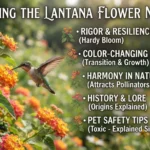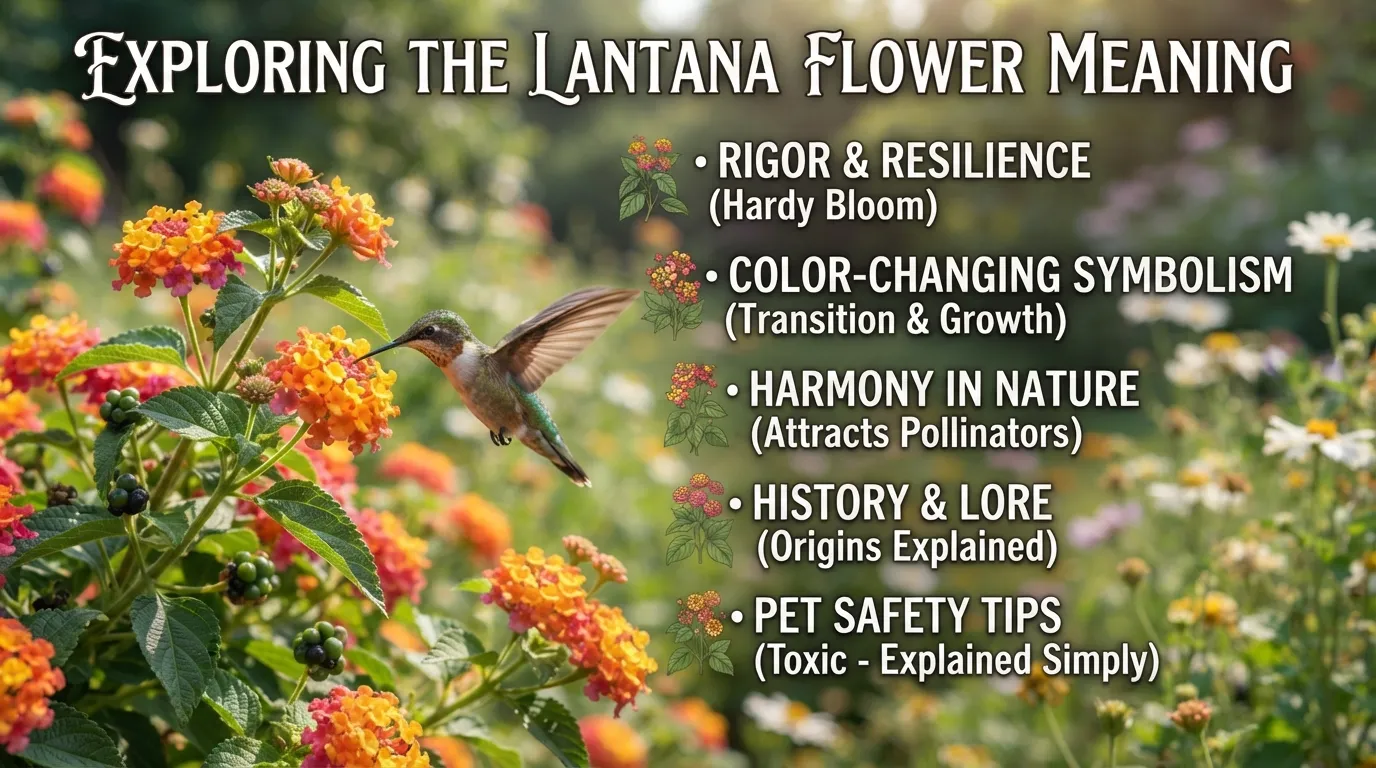
The lantana flower means rigor, severity, and changing feelings. It also stands for cooperation and harmony when seen in its many-colored clusters. People give lantana to show that love or friendship can grow and shift over time, yet still stay strong.
Origin of the Name
The word “lantana” comes from an old Latin plant name once used for the viburnum shrub, since early botanists thought lantana looked similar to it. Carl Linnaeus later used the name “lantana” for this very different flowering plant in his 1753 plant classification work. The name stuck, even though the two plants are not closely related.
Lantana in Victorian Flower Language
In Victorian times, people used flowers to send quiet messages. Lantana stood for “rigor” and “severity.” Some readings also linked it to a sense of sternness or firm resolve. This meaning likely grew from the plant’s tough, hardy nature. Lantana survives heat, drought, and poor soil, standing firm where many other flowers would wilt.
Botanical Foundations & Profile
| Feature | Detail |
|---|---|
| Scientific Name | Lantana camara (common lantana) |
| Native Region | Central and South America |
| Bloom Period | Spring through fall; year-round in warm climates |
| Average Lifespan | Perennial shrub; can live several years |
| USDA Zones | Zones 8 through 11; grown as an annual in cooler zones |
| Species Count | About 150 species |
History & Cultural Timeline
- Lantana grew wild across Central and South America long before European contact.
- European explorers brought lantana to other continents in the 1600s and 1700s as an ornamental plant.
- Carl Linnaeus formally named the genus Lantana in 1753.
- Lantana later spread widely across Asia, Africa, and Australia, sometimes becoming invasive in the wild.
Symbolism Deep-Dive
Changing Feelings
Lantana flower clusters often shift color as they age, moving from yellow to orange to red, sometimes all on the same plant. This color-changing trait gave the flower its link to shifting emotions and evolving feelings.
Rigor
Lantana thrives in hot, dry conditions where many other plants struggle. This tough, no-nonsense survival skill ties the flower to rigor, discipline, and firm endurance.
Harmony
Dozens of tiny blooms join together in one round lantana flower head. Even with many different colors in a single cluster, they form one balanced, pleasing whole, symbolizing harmony among differences.
Meaning by Color
| Color | Meaning |
|---|---|
| Yellow/Orange | Warmth and growing affection |
| Red/Pink | Passion and deepening love |
| Purple | Dignity and quiet strength |
| White | Purity and simple honesty |
| Multicolor | Harmony through change |
Color Meanings & Cultural Safety Matrix
Yellow-Orange Lantana
- Primary sentiment: Warmth and growing affection.
- Geographic nuances: In many tropical regions, bright yellow-orange lantana is linked to cheerful, everyday gardens. In the West, these tones often suggest friendship warming into something more.
- Gifting warning: A safe, casual choice for most settings.
Red-Pink Lantana
- Primary sentiment: Passion and deepening love.
- Geographic nuances: Red tones widely symbolize romantic love across both Western and Latin American traditions, where the plant is native.
- Gifting warning: Fitting for close, meaningful relationships.
Purple Lantana
- Primary sentiment: Dignity and quiet strength.
- Geographic nuances: Purple flowers often carry noble or respectful meaning across many cultures.
- Gifting warning: Best suited for formal or respectful gestures.
Multicolor Lantana
- Primary sentiment: Harmony through change and growth.
- Geographic nuances: The natural color-shifting trait is celebrated worldwide in gardens as a symbol of life’s many stages.
- Gifting warning: A thoughtful choice for marking personal growth or change.
Global Traditions & Literary Impact
In many Caribbean and Latin American communities, lantana grows freely along roadsides and in gardens, often seen as a hardy, cheerful symbol of everyday resilience. Its ability to thrive almost anywhere has made it a familiar, beloved part of daily life in warm climates worldwide.
In literature, lantana sometimes appears in tropical garden writing and poetry describing bold, multicolored blooms along warm coastlines. Please double-check any specific literary references, as I cannot search a live database and details may be inaccurate.
Economic, Culinary, and Medicinal Uses
Lantana is grown mainly for ornamental beauty in gardens worldwide, prized for its long bloom season and ability to attract butterflies. It is not considered a food plant, and most parts of the plant, especially the unripe berries, are known to be toxic if eaten. Some traditional folk remedies in its native regions have used lantana leaves externally, but this is not considered safe or well-studied today. Always consult a doctor before using any plant for health purposes.
Ultimate Etiquette & Gifting Guide
| Relationship | Recommended Color | The Subtext |
|---|---|---|
| New Romance | Yellow-Orange | “My affection for you is growing.” |
| Spouse or Partner | Red-Pink | “Our love continues to deepen.” |
| Respected Elder | Purple | “I hold you in quiet, steady respect.” |
| Friend Going Through Change | Multicolor | “I see your growth, and I admire it.” |
Universal Safety Rule
Keep lantana berries away from children and pets, since the unripe fruit is toxic, and always wear gloves when pruning, as some people find the leaves irritating to skin.
Related Flower Meanings:
https://bloomsyflower.com/bird-of-paradise-flower-meaning/
Lantana vs. Close Lookalikes
| Feature | Lantana | Verbena | Milkweed (Asclepias) |
|---|---|---|---|
| Petal Shape | Small, tubular flowers in round clusters | Small, five-lobed flowers in flat clusters | Small, star-shaped flowers in rounded clusters |
| Fragrance | Sharp, slightly musky scent | Light or no scent | Sweet, mild scent |
| Foliage | Rough, textured, slightly fuzzy leaves | Toothed, slightly rough leaves | Broad, smooth leaves |
| Bloom Season | Spring through fall, or year-round in warm areas | Summer through fall | Summer |
| Growth Style | Grows as a spreading shrub | Grows low and spreading or upright | Grows upright in clumps |
How to tell them apart
Crush a leaf gently and smell it. Lantana leaves give off a sharp, musky odor, while verbena and milkweed leaves do not share this same strong scent.
Practical Maintenance & Domestic Safety
Care Basics
- Plant lantana in full sun for the most blooms.
- Use well-drained soil; lantana handles poor soil well.
- Water moderately; established plants tolerate drought.
- Trim back in early spring to encourage fresh, full growth.
Pet Toxicity Warning
The ASPCA lists lantana as toxic to cats, dogs, and horses, particularly the unripe green berries. Eating the plant can cause vomiting, weakness, and in serious cases, more severe symptoms. Keep pets away from lantana, especially any fallen berries, and contact a vet right away if you suspect they have eaten any part of it.
Expert Curations & Misconceptions
10 Quick Fun Facts
- Lantana flower clusters often change color as they age.
- Butterflies are strongly attracted to lantana blooms.
- Lantana can become invasive in some warm, humid regions.
- The plant’s leaves give off a strong scent when crushed.
- Lantana is related to verbena and other plants in the same family.
- Some lantana varieties grow as low ground cover, others as tall shrubs.
- Ripe lantana berries turn dark blue or black, unlike the toxic green unripe ones.
- Lantana is sometimes called “wild sage” in certain regions.
- The plant blooms almost continuously in warm, frost-free climates.
- Lantana was one of the first ornamental plants spread worldwide by early explorers.
3 Myth vs. Reality Pairs
Myth: All lantana berries are safe once they ripen.
Reality: While ripe berries are less toxic, caution is still advised, and unripe green berries remain clearly dangerous.
Myth: Lantana is a native wildflower in most places it grows.
Reality: It is native only to Central and South America and is considered invasive in many other regions.
Myth: Lantana flowers stay one solid color their whole bloom cycle.
Reality: Many lantana varieties naturally shift color as each flower cluster matures.
2 Quick Florist Tips
- Lantana is less common in cut arrangements due to its short vase life; it shines best as a potted or garden plant.
- If used in arrangements, handle stems carefully and wash hands afterward, since some people react to the leaves.
Questions About Lantana flower meaning
What does the lantana flower mean spiritually?
Lantana means rigor and quiet endurance, along with harmony that comes from embracing change.
Is lantana a good gift for special occasions?
It works well as a potted garden gift rather than a cut bouquet, often given to mark personal growth or lasting friendship.
What does multicolor lantana mean?
Multicolor lantana represents harmony through change, since its blooms naturally shift color as they mature.
Is lantana toxic to pets?
Yes, the ASPCA lists lantana as toxic, especially the unripe green berries, so keep pets away from it.
Can you eat lantana?
No, lantana is not considered a food plant, and its unripe berries are toxic if eaten.
When does lantana bloom?
Lantana blooms from spring through fall in most climates, and nearly year-round in warm, frost-free regions.
How did lantana get its name?
The name comes from an old Latin plant term once used for viburnum, later applied to lantana by Carl Linnaeus in 1753.
What did lantana mean in Victorian times?
It meant rigor and severity, reflecting the plant’s tough, hardy nature.
Final Thoughts
The lantana flower carries a meaning rooted in resilience, change, and quiet harmony. Its ability to shift colors as it blooms makes it a living symbol of growth, showing that feelings and bonds can change over time while still remaining strong and connected.
Thriving in heat and poor soil where other plants struggle, lantana also represents rigor and steady endurance. Loved by butterflies and gardeners alike, this hardy, colorful plant brings constant beauty to warm gardens worldwide. Consider planting lantana in a sunny, dry corner of your yard, where its ever-changing blooms can remind you that growth and strength often go hand in hand.

Zahid Abbas is an educator, researcher, and digital publishing strategist behind BloomsyFlower, a flower and gardening resource covering flower meanings, symbolism, history, care, seasonal blooms, and gifting. He combines research with simple, reader-friendly writing to help people understand, grow, and enjoy flowers.