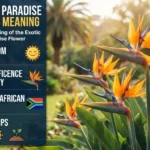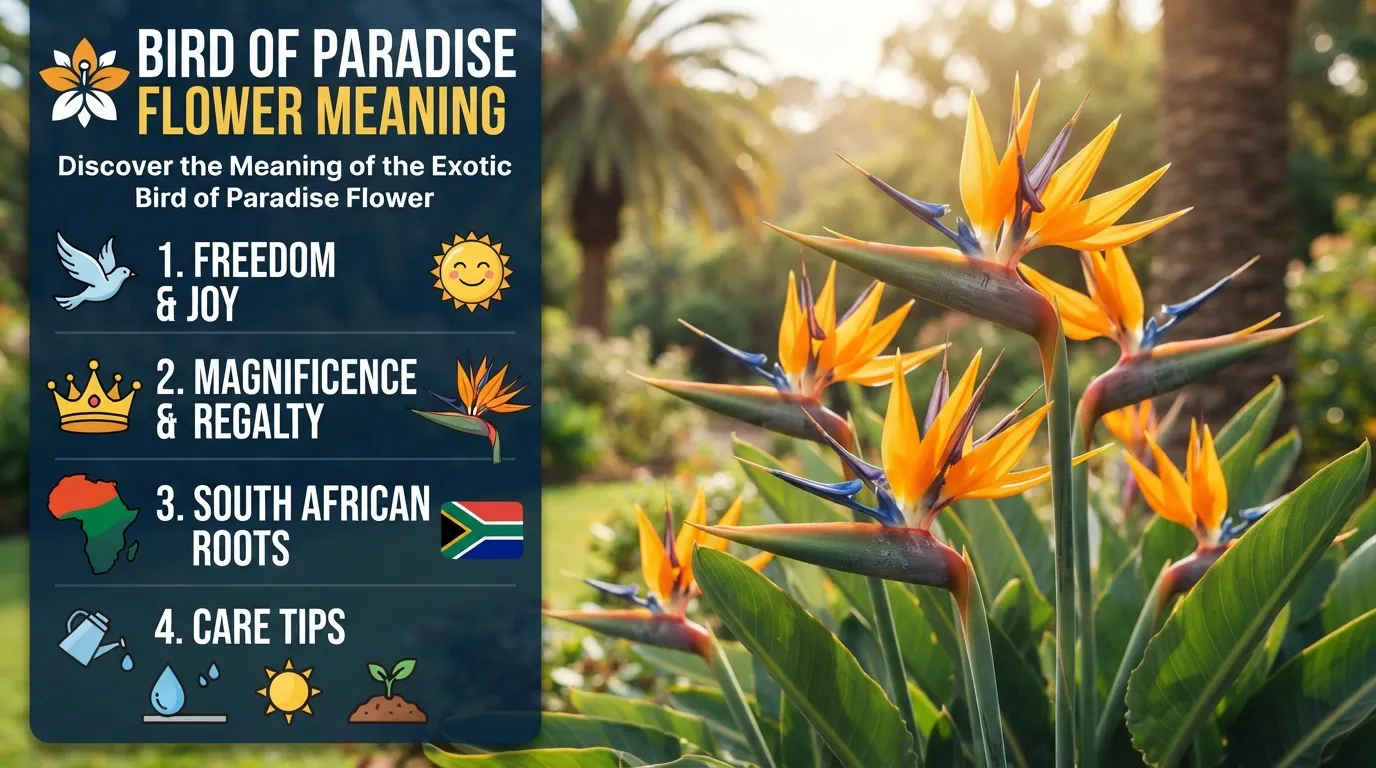
The bird of paradise flower means freedom, joy, and paradise on earth. It also stands for faithfulness and good perspective. People give this bold flower to celebrate a new chapter, or to wish someone excitement and magnificence ahead.
Origin of the Name
The flower got its name from its striking shape. Its bright orange and blue petals rise up like the colorful plumage of a tropical bird. English botanists named it after the actual bird of paradise, a group of unfamiliar birds found in New Guinea, known for their bold, dramatic feathers. The scientific name, Strelitzia, honors Queen Charlotte of Mecklenburg-Strelitz, who was queen consort of the United Kingdom in the late 1700s.
Bird of Paradise in Victorian Flower Language
In Victorian times, people used flowers to send quiet messages. The bird of paradise stood for “faithfulness” and “joyfulness,” and also carried a sense of “magnificence” and “freedom.” This meaning grew from the flower’s bold, upward shape. It looks as if it is ready to take flight, much like a bird stretching its wings before soaring into the sky.
Botanical Foundations & Profile
| Feature | Detail |
|---|---|
| Scientific Name | Strelitzia reginae |
| Native Region | South Africa |
| Bloom Period | Late winter through summer, depending on climate |
| Average Lifespan | Perennial; can live many years with care |
| USDA Zones | Zones 9 through 11; often grown indoors elsewhere |
| Species Count | About 5 species |
History & Cultural Timeline
- Bird of paradise grew wild in South Africa for thousands of years before it was studied by Western botanists.
- English botanist Sir Joseph Banks introduced the flower to Europe in the late 1700s.
- The flower was named Strelitzia in 1788, in honor of Queen Charlotte.
- Los Angeles, California, adopted the bird of paradise as its official city flower in 1952.
Symbolism Deep-Dive
Freedom
The bird of paradise bloom opens upward and outward, much like wings spreading for flight. This bold, open shape gave the flower its strong link to freedom and a spirit ready to explore.
Joy
With its bright orange, blue, and white colors, the bird of paradise stands out boldly in any setting. This cheerful, vibrant look ties the flower closely to joy and celebration.
Paradise
Native to warm, sunny South Africa, this flower has long been linked to tropical beauty and paradise-like settings. Its unfamiliar look brings a sense of faraway wonder wherever it blooms.
Meaning by Color
| Color | Meaning |
|---|---|
| Orange | Joy, warmth, and enthusiasm |
| Blue | Faithfulness and calm trust |
| White | Purity and peaceful new beginnings |
| Yellow | Friendship and sunny optimism |
Color Meanings & Cultural Safety Matrix
Orange and Blue Bird of Paradise
- Primary sentiment: Joy paired with faithfulness.
- Geographic nuances: In South Africa, this classic color combination is a proud national symbol. In the West, it often signals tropical celebration and excitement.
- Gifting warning: A bold, safe choice for most joyful occasions.
White Bird of Paradise
- Primary sentiment: Purity and a peaceful new start.
- Geographic nuances: In the West, white often marks weddings and fresh beginnings. In some Eastern homes, white flowers can connect to mourning.
- Gifting warning: Check local customs before gifting white bird of paradise at a celebration.
Yellow Bird of Paradise
- Primary sentiment: Friendship and sunny optimism.
- Geographic nuances: Yellow tones are often tied to warmth and good cheer across many cultures.
- Gifting warning: A cheerful pick for new friendships or happy milestones.
Global Traditions & Literary Impact
In South Africa, the bird of paradise, also called the crane flower, holds deep national pride as a symbol of the country’s unique natural beauty. It often appears in South African art, stamps, and tourism imagery as a proud emblem of the nation’s wildlife and landscapes.
In literature, the bird of paradise flower often appears in travel writing and poetry describing tropical gardens and unfamiliar landscapes. Please double-check any specific literary references, as I cannot search a live database and details may be inaccurate.
Economic, Culinary, and Medicinal Uses
Bird of paradise is grown almost entirely for its dramatic ornamental beauty in gardens, resorts, and floral arrangements worldwide. It is not considered a food plant and has no well-known traditional medicinal use. In fact, some parts of the plant, including the seeds and seed pods, can be mildly toxic if eaten. Enjoy this flower for its striking beauty, and avoid any culinary or home remedy use.
Related Flower Meanings: https://bloomsyflower.com/cattleya-flower-meaning/
Ultimate Etiquette & Gifting Guide
| Relationship | Recommended Color | The Subtext |
|---|---|---|
| Someone Starting a New Journey | Orange and Blue | “Wishing you joy and new freedom.” |
| Spouse or Partner | Blue | “My faithfulness to you never wavers.” |
| New Friend | Yellow | “Here’s to sunny days ahead together.” |
| Wedding or Fresh Start | White | “Wishing you peace and new beginnings.” |
Universal Safety Rule
Keep bird of paradise seeds and seed pods away from children and pets, since they can cause mild stomach upset if eaten.
Bird of Paradise vs. Close Lookalikes
| Feature | Bird of Paradise | Heliconia | Canna Lily |
|---|---|---|---|
| Petal Shape | Pointed, upright orange and blue “wings” | Boat-shaped, stacked bright bracts | Wide, ruffled, tropical petals |
| Fragrance | Little to no scent | Little to no scent | Mild or no scent |
| Foliage | Large, broad, banana-like leaves | Long, paddle-shaped leaves | Broad, upright leaves, often colorful |
| Bloom Season | Late winter through summer | Spring through fall | Summer through fall |
| Growth Style | Grows as a clumping perennial | Grows as a tall, clumping plant | Grows from a rhizome, upright stems |
How to tell them apart
Look at the flower shape. Bird of paradise has sharp, pointed petals that rise up like a bird’s crest, while heliconia blooms hang or stack in a boat-like shape.
Practical Maintenance & Domestic Safety
Care Basics
- Plant bird of paradise in full sun for the best blooms.
- Use rich, well-drained soil.
- Water deeply but let the soil dry slightly between waterings.
- Protect from frost, since the plant prefers warm, tropical conditions.
Pet Toxicity Warning
The ASPCA lists bird of paradise as mildly toxic to cats, dogs, and horses. Eating the seeds or pods can cause vomiting, drowsiness, and stomach upset. Keep pets away from the plant, especially its seed pods, and contact a vet if you suspect they have eaten any part of it.
Expert Curations & Misconceptions
10 Quick Fun Facts
- Bird of paradise is named for its resemblance to the tropical bird of the same name.
- It is the official city flower of Los Angeles, California.
- The plant can live for decades with proper care.
- Bird of paradise flowers are pollinated by sunbirds in their native South Africa.
- The plant’s leaves resemble banana leaves, though it is not closely related to bananas.
- A single bird of paradise plant can produce many blooms each season.
- The flower can take several years to bloom for the first time after planting.
- Bird of paradise is a popular choice for tropical wedding bouquets.
- The plant can grow quite large, sometimes reaching five feet tall or more.
- Bird of paradise is also called “crane flower” in some regions.
3 Myth vs. Reality Pairs
Myth: Bird of paradise blooms year-round everywhere it grows.
Reality: Bloom timing varies by climate, often concentrated in late winter through summer.
Myth: The entire bird of paradise plant is highly toxic.
Reality: It is only mildly toxic, mainly in the seeds and pods, not the flower itself.
Myth: Bird of paradise is easy to grow indoors with no special care.
Reality: It needs plenty of bright light and warmth to thrive and bloom indoors.
2 Quick Florist Tips
- Cut bird of paradise stems when the flower is just starting to open for the longest vase life.
- Gently separate the petals by hand to help the bloom “open” fully in an arrangement.
Questions About Bird of paradise flower meaning
What does the bird of paradise flower mean spiritually?
Bird of paradise means freedom and joy, symbolizing a spirit ready to rise and explore new possibilities.
Is bird of paradise a good gift for special occasions?
Yes, it works well for new beginnings, celebrations, and tropical-themed events like weddings.
What does the orange and blue coloring mean?
Together, orange and blue represent joy paired with faithfulness and trust.
Is bird of paradise toxic to pets?
Yes, the ASPCA lists it as mildly toxic, especially the seeds and pods, so keep it away from curious pets.
Can you eat bird of paradise?
No, it is not a food plant, and some parts can cause mild stomach upset if eaten.
When does bird of paradise bloom?
It typically blooms from late winter through summer, depending on the climate.
How did bird of paradise get its name?
It was named for its resemblance to the unfamiliar bird of paradise, known for its bold, colorful feathers.
Is bird of paradise easy to grow at home?
With plenty of sunlight, warmth, and patience, bird of paradise can be grown successfully, though it may take years to first bloom.
Final Thoughts
The bird of paradise flower stands as a bold symbol of freedom, joy, and tropical paradise. Its striking orange and blue petals rise like wings ready for flight, capturing a sense of adventure and excitement in every bloom.
From its South African roots to its status as the official flower of Los Angeles, bird of paradise has become a global symbol of unfamiliar beauty and new beginnings. Whether you grow it as a dramatic garden centerpiece or gift it to celebrate someone’s fresh start, this remarkable flower reminds us that true beauty often takes a little patience and plenty of sunshine to fully bloom.

Zahid Abbas is an educator, researcher, and digital publishing strategist behind BloomsyFlower, a flower and gardening resource covering flower meanings, symbolism, history, care, seasonal blooms, and gifting. He combines research with simple, reader-friendly writing to help people understand, grow, and enjoy flowers.