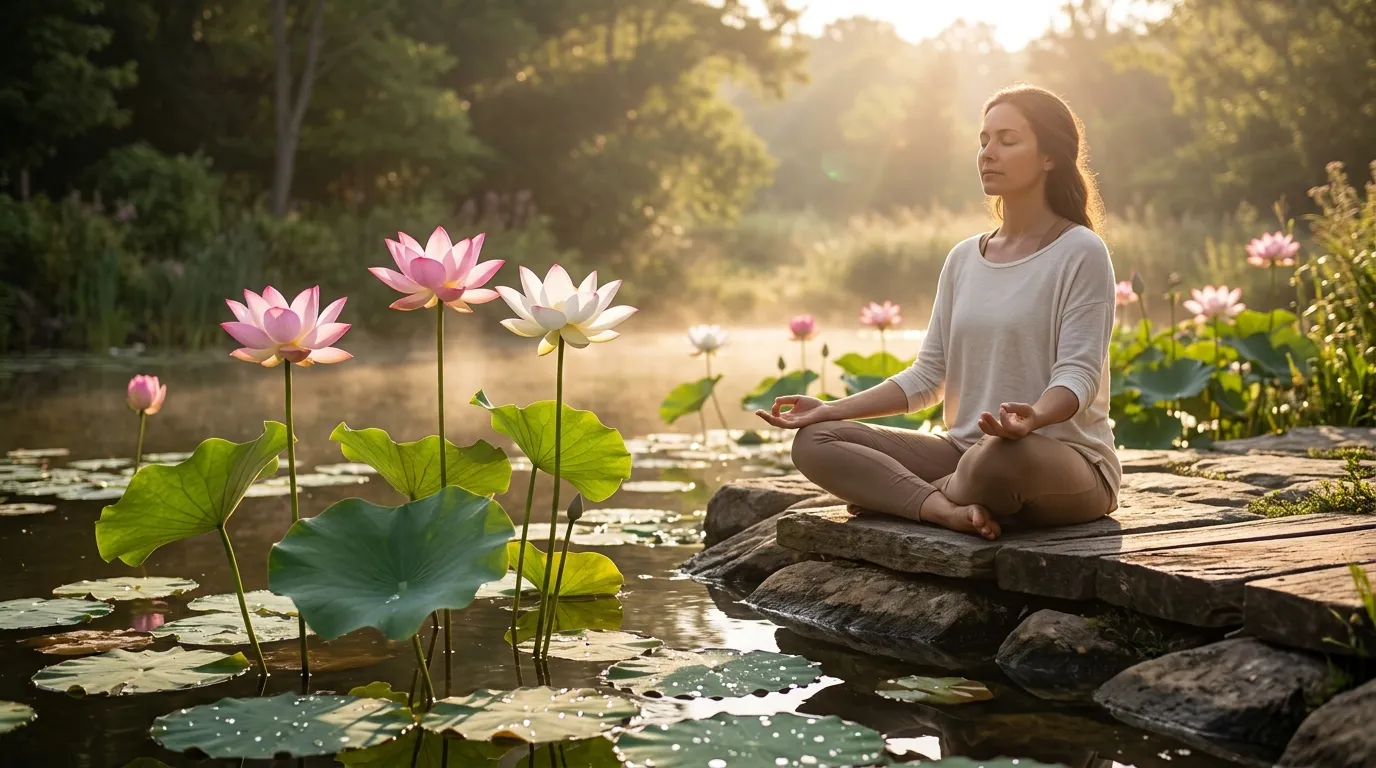
The lotus flower meaning yoga is linked to peace, growth, and a calm mind. In yoga, the lotus flower meaning yoga can remind us to stay calm during hard times. The flower grows in mud, yet it opens above the water. This makes it a sign of hope and a fresh start. The lotus flower meaning yoga is also linked to the lotus pose, a seated yoga pose used for calm breathing and quiet thought. However, not everyone can sit in this pose with ease. You can enjoy the lotus flower meaning yoga without forcing your body into one shape.
Quick Meaning of the Lotus Flower in Yoga
In yoga, the lotus often stands for peace, a clear mind, and inner growth. Its roots grow in mud, but its flower rises above the water. This can remind people that hard times do not have to stop them from growing.
The lotus is also linked to Padmasana, the Sanskrit name for Lotus Pose. This seated pose is used in some yoga and meditation practices. Still, the flower’s meaning is not limited to this pose. It can also stand for hope, balance, and a fresh start.
Origin of the Name
The word lotus came into English through Latin. Latin took it from Greek, where lōtos was used for more than one plant. Over time, the word became linked to plants with large, showy flowers.
In yoga, the name Padmasana comes from Sanskrit. Padma means lotus, while asana means seat or pose. Together, the words mean “Lotus Pose.” The name links the shape of the seated pose to the look of a lotus flower.
The sacred lotus has the scientific name Nelumbo nucifera. This is the plant often shown in Asian art and linked to spiritual growth. The name used in yoga, however, is not the same as the plant’s scientific name.
The Lotus Flower in Victorian Flower Language
In Victorian times, people often used flowers to share feelings without words. This practice is now called the language of flowers. Different books gave flowers meanings, but the meanings were not always the same.
The lotus was not as common in Victorian flower guides as roses, violets, or lilies. For this reason, it is hard to give it one fixed Victorian meaning. Today, the lotus is more often linked to purity, hope, and spiritual growth because of its role in Asian faith and art.
These meanings fit well with yoga. The flower can serve as a quiet reminder to slow down, breathe, and keep growing. Still, these are common ideas, not rules that every person must follow.
Botanical Foundations and Profile
The sacred lotus is a water plant with large leaves and bright flowers. Its scientific name is Nelumbo nucifera. The flower grows on a tall stem above the water. Its round leaves may rest on the water or rise above it.
| Plant Detail | Simple Facts |
| Scientific name | Nelumbo nucifera |
| Native region | Parts of Asia and northern Australia |
| Bloom period | Often summer, with timing based on local weather |
| Average lifespan | A long-lived plant that can grow for many years |
| USDA zones | Often grown in warm areas; local care needs may vary |
| Species count | Two accepted species in the Nelumbo genus |
The lotus grows from thick stems under the mud. These stems are often called roots, but they are more like underground plant stems. The plant likes warm weather and shallow water. It may grow in ponds, lakes, and water gardens.
The lotus is not the same as a water lily. Both grow in water, but their flowers and leaves look different. A lotus flower usually rises above the water. A water lily flower often rests on or near the water’s surface.
History and Cultural Timeline
The lotus has been valued for thousands of years. People have grown it for food, beauty, and faith. Over time, the flower also became a strong sign of spiritual life.
- More than 3,000 years ago: People in China were already growing sacred lotus.
- Over many centuries: The lotus became important in Hindu and Buddhist art.
- In yoga practice: The lotus gave its name to Padmasana, or Lotus Pose.
- Today: Many yoga teachers use the lotus as a sign of calm and growth.
The flower’s meaning can change from place to place. Still, peace, purity, and growth are common themes. In yoga, these ideas can help people focus on their breath and body.
Three Deep Meanings of the Lotus in Yoga
1. Peace and a Calm Mind
The lotus opens above quiet water. Its shape can remind people to slow down and breathe. During yoga, a lotus image may help someone focus on the present moment. The flower does not make the mind calm by itself. Instead, it serves as a gentle reminder to pause.
2. Growth Through Hard Times
The lotus grows from mud at the bottom of the water. Yet its flower rises into the light. This makes it a sign of growth after hard times. In yoga, this meaning can remind people to keep going, even when life feels hard. Small steps can still lead to change.
Read more about:https://bloomsyflower.com/white-lotus-flower-meaning/
3. Balance and Inner Strength
A lotus stem holds the flower above the water. The flower stays open as it reaches toward the light. This can stand for balance and steady effort. Yoga also asks people to find a balance between effort and ease. The lotus can remind us not to push too hard.
Lotus Flower Meaning by Color
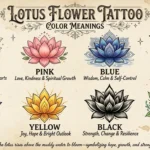
Lotus flowers are most often white or pink, though other colors appear in some types and in art. Color meanings are not the same in every culture. They can also change based on faith, place, and personal taste.
| Lotus Color | Common Meaning | Cultural Notes | Gifting Tip |
| White | Peace, purity, and a clear mind | White lotus flowers are linked with purity in Buddhist art | A thoughtful choice for a yoga teacher or a calm space |
| Pink | Love, care, and spiritual growth | Pink lotus flowers are often shown with holy figures in Asian art | Nice for a close friend or a new start |
| Red | Love and strong feelings | Red flowers often suggest love, but meanings vary by place | Choose it when you want to show care |
| Blue | Wisdom and focus in some art | Blue lotus images have different meanings and may show a water lily, not sacred lotus | Check the plant type before buying |
| Yellow | Joy and warmth in flower art | Meanings can differ across countries and faiths | A bright choice for a cheerful gift |
A note about blue lotus: The plant sold as blue lotus is often Nymphaea caerulea, a type of water lily. It is not the same plant as the sacred lotus, Nelumbo nucifera. Names used in shops can be confusing, so check the scientific name if it matters.
In yoga spaces, the color may matter less than the meaning behind the flower. White may suit a quiet room, while pink can feel warm and kind. Above all, choose a color that fits the person and the setting.
Global Traditions and Books
The Lotus in Buddhist and Hindu Traditions
The lotus has a long place in Buddhist and Hindu art. In Buddhist art, holy figures may sit or stand on a lotus. The flower can stand for a pure heart and a mind that grows through learning. In Hindu traditions, the lotus is linked with the sun and some gods.
These ideas connect with yoga because yoga can include quiet thought and self-study. The lotus may remind people to act with care and stay open to learning. Still, yoga has many paths and beliefs. Not every yoga student sees the flower in the same way.
A Book Linked to Lotus Ideas
The Lotus Sutra is an old Buddhist text with a strong place in several Buddhist groups. It is not a yoga manual, but it helps explain why the lotus is important in Asian spiritual life. Its teachings have shaped art and faith in many places. The date of its first writing is not known for sure, so exact dates should be checked before use in a detailed history.
For a yoga reader, the link is simple: the lotus is more than a pretty flower. It can stand for a mind that keeps learning and growing.
Food, Plant Uses, and Safety
The sacred lotus is not only grown for its flowers. People in parts of Asia eat its thick underground stems, called rhizomes. These may be sliced, fried, pickled, or added to other dishes. Lotus seeds are also used in some foods.
Some plant parts have been used in traditional health practices. However, this does not prove that lotus products can treat illness. Plant products can vary in strength and may not be safe for everyone. Do not use lotus as a medicine without advice from a qualified health professional.
For yoga, you do not need to eat or drink lotus products to enjoy the flower’s meaning. A picture, a real flower, or a short moment of quiet thought can be enough.
Lotus Flower Gifting Guide
A lotus gift can mark a fresh start, a time of change, or a wish for peace. Still, the best gift depends on the person and their beliefs. Use these ideas as a guide, not as strict rules.
| Relationship | Suggested Color | What It May Say |
| Yoga teacher | White or pink | Thanks for your care and guidance |
| Close friend | Pink | I wish you peace and growth |
| Family member | White | I hope your days feel calm |
| Someone starting a new path | Pink or white | May this be a fresh start |
| Meditation or yoga space | White | A calm and simple feel |
| Someone who loves bright colors | Red or yellow, if available | Warmth and joy |
A living lotus plant can be a special gift, but it needs the right home. It grows best in a sunny pond or a large water pot. Before giving one, check that the person has room and time to care for it.
A Simple Rule for Giving Lotus Flowers
Choose a lotus gift because it feels right for the person, not because a color has one fixed meaning. If the gift is for a religious place or teacher, ask about local customs first. A kind note can explain why the flower made you think of them.
Lotus vs. Water Lily: How to Tell Them Apart
Lotus and water lilies both grow in water, so people often mix them up. However, they are different plants. The sacred lotus is Nelumbo nucifera, while water lilies belong to the Nymphaea group.
| Feature | Sacred Lotus | Water Lily |
| Flower shape | Often rises above the water | Often rests near the water |
| Flower center | Has a wide, cone-like seed head | Does not have the same cone-like seed head |
| Leaves | Often round and may rise above water | Often float on the surface |
| Bloom time | Often blooms in warm months | Depends on the type and local weather |
| Plant group | Nelumbo | Nymphaea and related groups |
Easy tip: Look at the flower and its center. A lotus often stands high above the water and has a clear seed head. A water lily usually sits closer to the surface. This can help you tell them apart.
Practical Care and Home Safety
You can grow a sacred lotus if you have a sunny pond or water pot. It needs warmth, space, and the right growing mix. Because lotus plants can spread fast, a pot can help keep them in one place.
Simple Care Tips
- Sun: Choose a spot with plenty of direct sunlight.
- Soil: Use heavy garden soil made for water plants.
- Water: Keep the pot in water at a suitable depth for the plant.
- Pruning: Remove dead leaves and flowers when needed.
- Space: Use a wide pot to help control its spread.
Is the Lotus Safe for Pets?
The sacred lotus is not a true lily. Kew lists no known hazards for Nelumbo nucifera. However, names like “lotus” can refer to different plants. Always check the plant’s scientific name before deciding it is safe.
Eating any plant may upset a pet’s stomach. If your dog or cat eats an unknown plant and then vomits, has diarrhea, or seems unwell, contact a vet. Keep plant food and garden products away from pets, too.
10 Quick Lotus Facts
- The sacred lotus grows in shallow water.
- Its scientific name is Nelumbo nucifera.
- Its flowers can be white or pink.
- The lotus has large, round leaves.
- Water drops can roll off its leaves.
- Its seeds grow inside a wide seed head.
- People eat lotus stems and seeds in parts of Asia.
- The lotus is linked with purity in Buddhist art.
- Padmasana is the Sanskrit name for Lotus Pose.
- The Nelumbo genus has two accepted living species.

Kew Science
Lotus Myths and Facts
Myth 1: Everyone must sit in Lotus Pose to do yoga.
Fact: You can practice yoga in many seated positions. Lotus Pose is not right for every body. A simple cross-legged seat or a chair may work better. Never force your knees into a pose.
Myth 2: The lotus has one meaning in every culture.
Fact: Its meaning can change with faith and place. Peace, purity, and growth are common meanings, but they are not the only ones.
Myth 3: A lotus flower will make you feel calm.
Fact: A flower can remind you to slow down, but it cannot promise a certain feeling. Quiet breathing and safe yoga practice may help some people relax. Each person is different.
Two Simple Florist Tips
Tip 1: Choose a white or pink lotus image for a calm yoga room. These colors can give the space a soft, peaceful feel.
Tip 2: Add a short note when gifting a lotus. You might write, “May you keep growing, even through hard days.” This explains your meaning without relying on color alone.
Questions About Lotus Flower Meaning in Yoga
1. What does the lotus flower mean in yoga?
The lotus often stands for peace, growth, and a clear mind. It can remind people to keep learning through hard times.
2. Why is the lotus linked to meditation?
The lotus is linked with calm and spiritual growth in several Asian traditions. Lotus Pose is also used for seated meditation by some yoga students.
3. Does everyone need to do Lotus Pose?
No. Lotus Pose can be hard on the knees and hips. You can sit cross-legged in an easier way or use a chair instead. Stop if you feel pain.
4. What does a white lotus mean in yoga?
A white lotus often stands for peace, purity, and a clear mind. You may see it in pictures used for yoga or quiet thought.
5. What does a pink lotus mean?
A pink lotus is often linked with spiritual growth and care. In Buddhist art, pink lotus flowers may appear with holy figures.
6. Can I give a lotus flower to a yoga teacher?
Yes, if the teacher likes flowers or plant gifts. A lotus can show thanks for their help and guidance. You could also give a card with a lotus picture.
7. Is the lotus flower safe for pets?
Kew lists no known hazards for the sacred lotus, Nelumbo nucifera. Still, check the plant name because other plants may be called lotus. If a pet becomes sick after eating a plant, contact a vet.
8. Can you eat a lotus flower?
Some parts of the sacred lotus, such as its stems and seeds, are used as food. Do not eat a plant unless you know its exact type and that the part is safe to eat.
9. When does the lotus bloom?
Sacred lotus often blooms in warm months. The exact time depends on the weather, growing place, and plant type. In many areas, flowers appear in summer.
10. What does Padmasana mean?
Padmasana means Lotus Pose in Sanskrit. Padma means lotus, and asana means pose or seat.
Final Thoughts
The lotus flower meaning yoga connects the flower with peace, growth, and a calm mind. The lotus grows from mud, yet its flower opens above the water. This can remind us that hard days do not have to stop us from growing. In yoga, the lotus is also linked with Padmasana, a seated pose used for quiet thought. Still, you do not need to sit in full Lotus Pose to enjoy its meaning. Choose a seat that feels safe for your body. You can keep a lotus picture near your mat, give one as a thoughtful gift, or use its image as a reminder to breathe. Let the lotus inspire small steps toward a calmer, kinder life.

Zahid Abbas is an educator, researcher, and digital publishing strategist behind BloomsyFlower, a flower and gardening resource covering flower meanings, symbolism, history, care, seasonal blooms, and gifting. He combines research with simple, reader-friendly writing to help people understand, grow, and enjoy flowers.