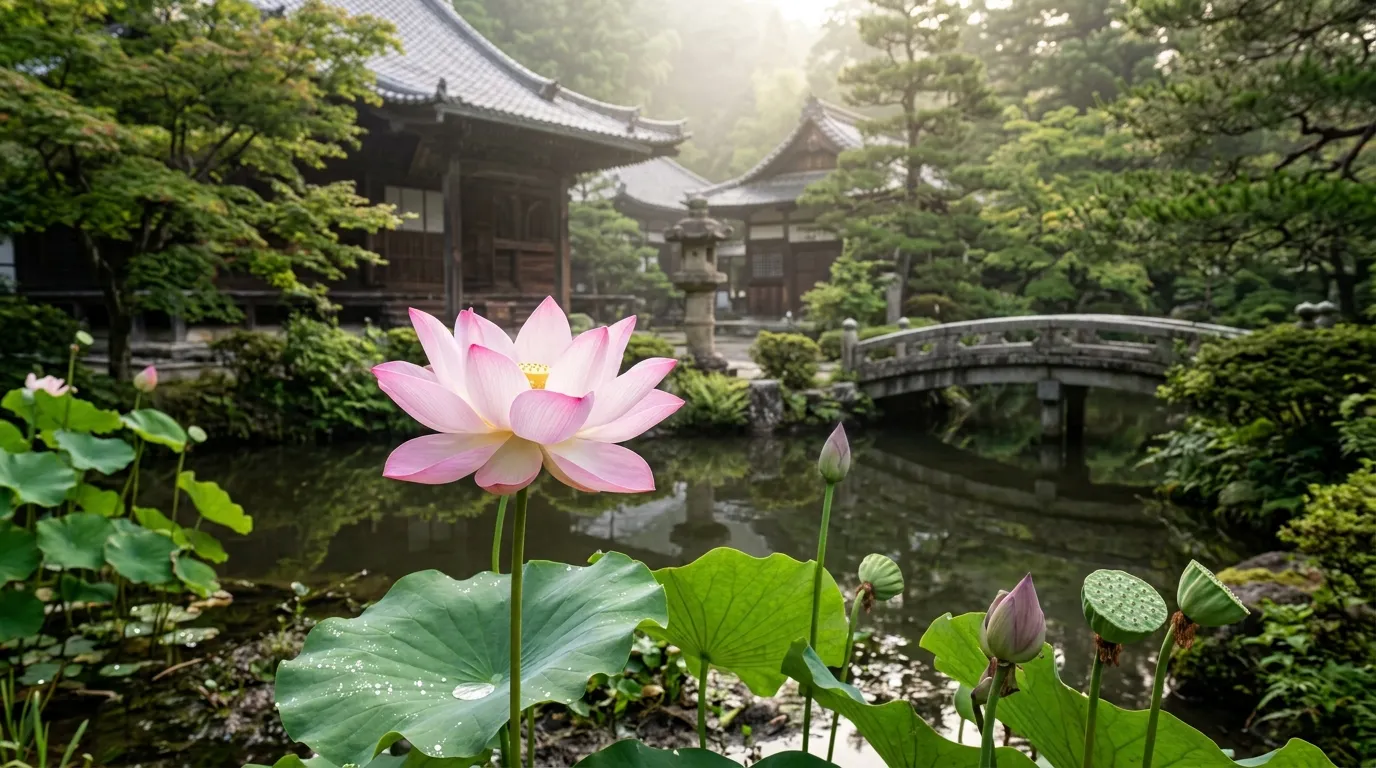
Lotus flower meaning Japanese traditions share is closely linked to purity, hope, and spiritual growth. In Japan, the lotus is an important symbol in Buddhism. It grows from mud, yet its flower opens above the water. So, it can remind people that a good heart can grow through hard times. The lotus also appears in old art, temple designs, and holy books. However, its meaning can change with the color and the setting. Learning about the lotus can help you understand its place in Japanese life and art.
Quick Meaning of the Lotus Flower in Japan
In Japan, the lotus often stands for purity, hope, and spiritual growth. It can remind people to keep a kind heart, even when life is hard.
The flower is closely linked to Buddhism. It can also bring thoughts of peace, new life, and the chance to grow as a person.
Origin of the Name
The Japanese word for lotus is hasu (蓮). You may also see the word hachisu. One idea links the name to the shape of the seed pod, which looks like a bee’s nest. This link is often shared as the story behind the name.
The sacred lotus has the scientific name Nelumbo nucifera. This is the name plant experts use around the world. Joseph Gaertner gave the plant its accepted scientific name in 1788. The name Nelumbo was first published in 1763.
The lotus grows in Japan and other parts of Asia. Over many years, it became a well-known flower in Japanese ponds, gardens, and Buddhist art. Its beauty helped make it a favorite, but its meaning goes much deeper.
The Lotus in Victorian Flower Language
Victorian flower language was a way to share feelings through flowers. In the past, people used flowers to send a message without saying it aloud.
The lotus does not have one clear, fixed meaning in Victorian flower language. Instead, its meaning in Japan is more closely tied to Buddhism and the flower’s growth from mud into clean-looking petals. Because of this, the lotus is often seen as a sign of purity and a good heart.
So, when you read about lotus meanings, look at where the meaning comes from. For example, a Japanese Buddhist picture may share a different message from a modern flower gift.
Botanical Foundations and Profile
The sacred lotus is a water plant. It grows in ponds, lakes, and other places with shallow water. Its thick stems grow in the mud, while its leaves and flowers rise above the water.
The flower has many wide petals. Pink and white are common colors. After the flower blooms, a seed pod forms in the middle. Its round leaves can be large, and water drops often roll off them.
| Plant detail | Simple facts |
|---|---|
| Common name | Sacred lotus |
| Scientific name | Nelumbo nucifera |
| Japanese name | Hasu (蓮) |
| Native region | Parts of Asia and northern Australia |
| Bloom period | Often summer to early fall, based on local weather |
| Average lifespan | A long-lived plant that can grow for many years |
| USDA hardiness zones | Depends on the type and local growing conditions |
| Species count | The genus Nelumbo has two living species |
The lotus needs warmth and sunlight to grow well. However, its bloom time can change from place to place. In Japan, many lotus flowers bloom in summer. July is often a good month to see them, though the season varies by type and location.
History and Cultural Timeline
The lotus has been part of Japanese art and faith for many centuries. Its story is closely tied to Buddhism. Here are a few key points from its history.
- Around the 500s: Buddhism came to Japan, along with holy books and art. However, sources give different dates for its arrival.
- Heian period (794–1185): During this time, the lotus became an important part of Buddhist art and faith.
- 12th century: Japanese artists made fine boxes and other items with lotus designs. Some of these items were made to hold Buddhist books.
- Today: People still enjoy lotus flowers in ponds, parks, and temple gardens. The flower also remains a key sign in Buddhist art.
The lotus has lasted through many changes in Japanese life. Today, people still love it for its beauty and the message it can share.
Three Deep Meanings of the Lotus
1. Purity and a Good Heart
The lotus grows in mud, but its flower opens above the water. This has made it a sign of purity in Buddhism. It can remind people to keep a good heart, even when life around them feels hard.
However, this does not mean a person must be perfect. Instead, the flower can stand for trying to be kind and fair, even during hard times.
2. Hope and New Growth
A lotus starts life under the water. Then, its stem rises, and the flower opens in the light. This change can remind us that life can get better.
So, the lotus may bring hope to someone facing a new start. It can be a gentle way to say, “Keep going. Better days may come.”
3. Peace and Spiritual Growth
In Japanese Buddhist art, the lotus is often shown under holy figures. The flower can stand for a person who is growing in wisdom and kindness.
Its calm shape may also bring thoughts of peace. For many people, the lotus is a reminder to slow down and think about what matters most. In this way, the flower can share a message of hope and calm.
Read more about:https://bloomsyflower.com/lotus-flower-meaning-love/
Lotus Flower Meaning by Color
Lotus flowers come in more than one color. In Japan, the lotus has a strong link to Buddhism. However, each color does not have one fixed meaning for everyone.
Pink, white, and yellow lotus flowers may bring different feelings to mind. The message can depend on the artwork, the faith, or the person who receives the flower.
Pink Lotus
A pink lotus can suggest care, beauty, and respect. Pink lotus flowers are seen in Buddhist art, where the lotus has a deep link to faith and spiritual growth.
A pink lotus may be a kind gift for someone you care about. Still, it is best to think about the person’s taste and beliefs before choosing a flower.
White Lotus
A white lotus often stands for purity and a clean heart. Its pale petals fit well with the lotus’s role in Buddhist art.
White may feel calm and gentle. So, it can be a good choice for a quiet gift. However, the meaning depends on the person and the reason for giving it.
Yellow Lotus
Yellow lotus flowers can bring thoughts of light, warmth, and joy. Their bright color may feel cheerful.
However, yellow does not have one set meaning in all Japanese settings. If you are choosing a lotus for a special event, ask about local customs when possible.
Lotus Color Meaning Table
| Color | Common feeling | Gift idea | A point to remember |
|---|---|---|---|
| Pink | Care, beauty, respect | A gift for a friend or family member | The meaning can change with the setting |
| White | Purity, peace, a clean heart | A quiet and thoughtful gift | Check the meaning for the event |
| Yellow | Joy, light, hope | A gift to cheer someone up | Color meanings are not fixed rules |
These are broad ideas, not rules that every person in Japan follows. In fact, the lotus itself has a stronger and more widely known link to purity and Buddhism than to any one color rule.
Japanese Traditions, Art, and Writing
The lotus is easy to spot in Japanese Buddhist art. For example, it may appear on temple items, holy books, and the seats under statues of Buddhas and other holy figures. The flower is used because it can stand for purity and spiritual growth.
The Lotus Sutra
The Lotus Sutra is an important Buddhist text. In Japanese, it is known as Hokekyō. The text teaches that all people have the chance to grow in wisdom and reach a state of deep understanding. Over time, it became very important in Japan and helped shape Buddhist faith and art.
The book was likely written down between 100 BCE and 200 CE. Later, it was translated into Chinese in 406 and became important in Japan. So, it is a real example of how the lotus has shaped religious writing and art.
Lotus Flowers in Japanese Art
Artists have used lotus shapes on cloth, boxes, paintings, and other items. For example, a Japanese robe from the 1700s, now held by the Metropolitan Museum of Art, has a lotus design. The museum explains that the lotus stands for purity because it grows from mud without being stained by it.
This shows that the lotus is more than a pretty flower. Instead, it can carry a message about how to live and how to grow.
Food and Other Uses of the Lotus
The lotus is not only a flower to enjoy. In fact, many parts of the sacred lotus are used as food in Asia, including Japan. The thick stem that grows under the mud is often called lotus root. People can slice and cook it in many ways. Lotus seeds are also used in food.
| Part of the plant | Common use |
|---|---|
| Lotus root | Cooked in meals |
| Seeds | Used in some foods and snacks |
| Leaves | Used to wrap food in some places |
| Flowers and leaves | Used in some tea and food customs |
The thick stem under the mud is called a rhizome. This is a plant stem that grows under the ground or mud. It helps the lotus store food and grow again.
Some parts of the lotus also appear in traditional plant products. However, this does not prove that they can treat a health problem. Plant products can cause harm or react with medicine. So, ask a trained health worker before using them for health reasons.
Safety note: Never eat a plant unless you know its exact name and which parts are safe to eat. Also, remember that a plant sold as “lotus” may be a different kind of plant.
A Lotus Gift Guide
A lotus can be a thoughtful gift because it carries messages of hope and peace. However, the best choice depends on the person and the reason for the gift.
| Who will receive it? | Color to consider | Possible message |
|---|---|---|
| Parent or family member | Pink or white | Care and respect |
| Close friend | Pink or yellow | Kindness and happy wishes |
| Someone facing a hard time | Pink or white | Hope and strength |
| Someone who loves Japanese art | Any color | Beauty and meaning |
| Someone who enjoys gardening | A living lotus plant | A chance to grow and care for a plant |
These are ideas, not strict rules. Instead, think about the person’s favorite color and the message you want to share.
If the gift is for a Japanese event or a person who follows Buddhism, take time to learn about their customs. That extra care can make the gift more thoughtful.
A Simple Rule for Giving Lotus Flowers
Choose a lotus for the message you wish to share, not only for its color. Also, a short note with kind words can make the gift feel even more special.
Lotus vs. Water Lily: How to Tell Them Apart
The lotus and water lily may look alike at first. Both grow in water and have large flowers. Yet, they are different plants. The sacred lotus belongs to the genus Nelumbo, while water lilies belong to a different plant family.
| Feature | Sacred lotus | Water lily |
|---|---|---|
| Flower shape | Wide petals around a raised seed head | Petals around the center of the flower |
| Fragrance | Depends on the type | Depends on the type |
| Leaves | Often rise above the water | Often float on the water |
| Bloom time | Often blooms in warm months | Depends on the type and place |
| Plant group | Nelumbo | Nymphaea and related water lilies |
Easy tip: Look at the leaves and flower stems. Lotus leaves and flowers often rise above the water. In contrast, water lily leaves usually float on the surface.
Lotus Care and Pet Safety
Basic Care
- Sun: Give a lotus plenty of direct sunlight.
- Soil: Use heavy soil made for water plants.
- Water: Grow it in a pond or a large water pot.
- Care: Remove dead leaves and flowers when needed.
A lotus can spread through its underground stems. So, a large pot can help keep it in one place. Before planting it, check the needs of your lotus type.
Is the Lotus Safe for Pets?
Kew lists no known hazards for the sacred lotus, Nelumbo nucifera. However, plant names can be confusing, and not every plant called “lotus” is the same.
For this reason, keep pets from chewing plants you cannot identify. Eating an unknown plant may cause an upset stomach, vomiting, or other signs of illness. If a pet eats an unknown plant and seems unwell, contact a vet.
Ten Quick Facts About the Lotus
- The sacred lotus is a water plant.
- Its thick stems grow in mud under the water.
- Its flowers can be pink or white.
- Its leaves are large and round.
- Water drops often roll off its leaves.
- A seed pod forms after the flower blooms.
- Lotus seeds can stay alive for a very long time.
- People eat lotus root and seeds in parts of Asia.
- The Japanese word for lotus is hasu.
- The lotus is an important sign in Japanese Buddhist art.
Lotus Myths and Facts
Myth 1: The Lotus Means the Same Thing Everywhere
Fact: The lotus often stands for purity in Japanese Buddhism. However, its meaning can change with the person, place, and story.
Myth 2: Every Lotus Is the Same Plant
Fact: The name “lotus” can be used for different plants. The sacred lotus is Nelumbo nucifera, while the blue lotus is often a water lily.
Myth 3: The Lotus Can Heal Every Hard Feeling
Fact: The lotus can remind people of hope and strength. Still, a flower is not a treatment for a health problem.
Two Florist Tips
Tip 1: Choose a fresh flower with firm petals and no signs of damage. If you buy a cut lotus, ask the seller how to keep it fresh.
Tip 2: Add a short note that explains why you chose the flower. For example, a simple message about hope, peace, or care can make your gift more meaningful.
Questions About Lotus Flower Meaning in Japan
1. What does the lotus mean in Japan?
The lotus often stands for purity, hope, and spiritual growth. It is closely linked to Buddhism and Japanese art.
2. Is the lotus a holy flower in Japan?
The lotus is an important flower in Japanese Buddhist art. For example, it often appears under statues of Buddhas and other holy figures.
3. What does a pink lotus mean?
A pink lotus can suggest care, beauty, and respect. However, the meaning may change with the setting and the person who receives it.
4. What does a white lotus mean?
A white lotus often stands for purity and peace. This meaning is closely linked to the flower’s role in Buddhist art.
5. Can I give a lotus as a gift?
Yes, a lotus can be a thoughtful gift for someone who likes flowers or Japanese art. Still, think about the person’s taste and beliefs first.
6. What is the Japanese name for the lotus?
The Japanese word is hasu (蓮). You may also see hachisu used for lotus.
7. When does the lotus bloom in Japan?
Lotus flowers often bloom in summer. July is a common time to see them, but the season changes with the type and place.
8. Can people eat lotus?
Yes, some parts of the sacred lotus are used as food, including lotus root and seeds. However, only eat plant parts that are known to be safe.
9. Is the lotus safe for cats and dogs?
Kew lists no known hazards for the sacred lotus, but the plant must be identified correctly. So, if a pet eats an unknown plant and becomes ill, contact a vet.
10. Why is the lotus linked to purity?
The lotus grows in mud, but its flower opens above the water. Because of this, it has become a sign of purity and a good heart in Buddhist art.
Final Thoughts
Lotus flower meaning Japanese traditions share is tied to purity, hope, and spiritual growth. The lotus grows in mud, yet its flower opens above the water. So, it can remind us that hard times do not have to change who we are. In Japan, the lotus has a strong place in Buddhist art and holy books. Pink may suggest care, while white can feel calm and pure. Still, flower meanings can change with the person and the setting. If you want to give a lotus, think about the message you wish to share. You can also grow one in a sunny pond or enjoy it in a painting. In the end, a simple flower can hold a deep and lasting idea.

Zahid Abbas is an educator, researcher, and digital publishing strategist behind BloomsyFlower, a flower and gardening resource covering flower meanings, symbolism, history, care, seasonal blooms, and gifting. He combines research with simple, reader-friendly writing to help people understand, grow, and enjoy flowers.