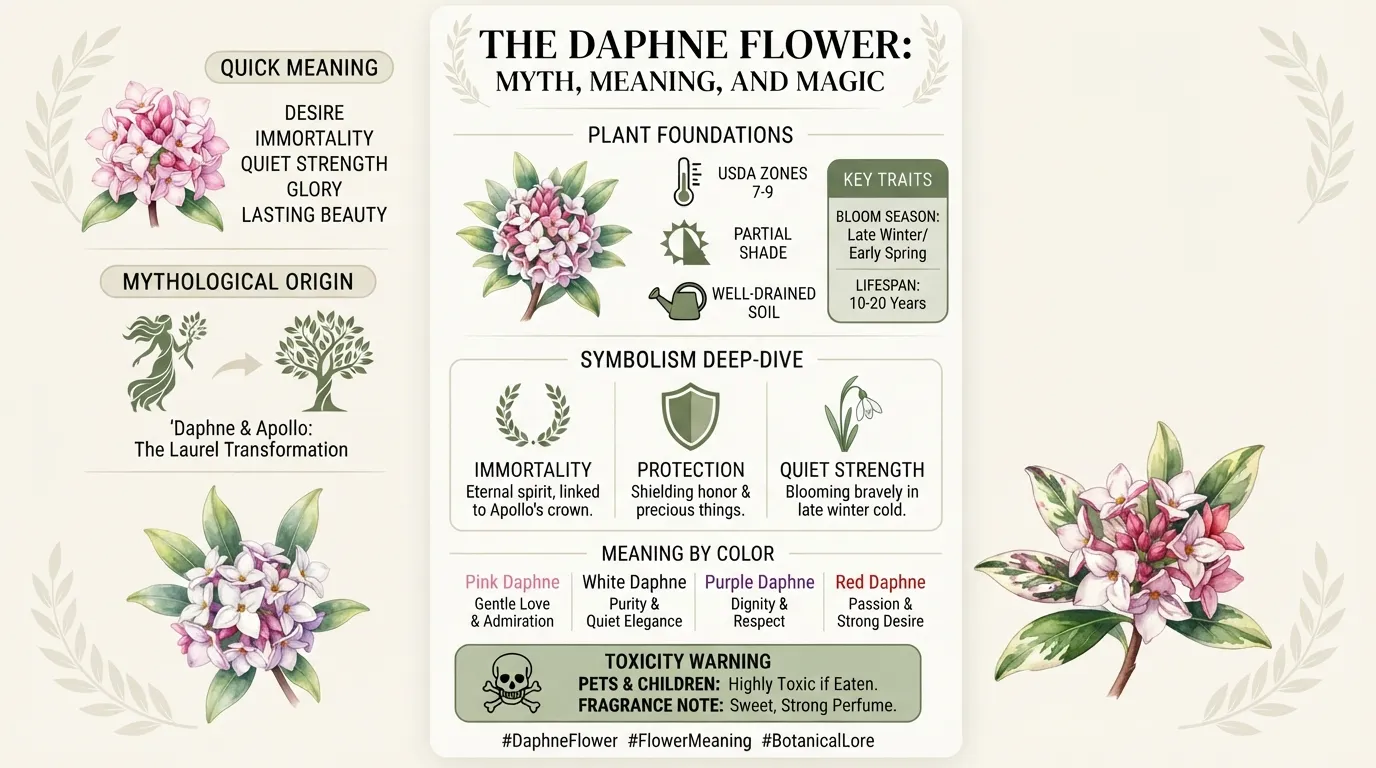
The daphne flower means desire, immortality, and quiet strength. It also stands for glory and lasting beauty. In old myths, this flower connects to a story of protection and change. People often give daphne to celebrate deep love or lasting honor.
Origin of the Name
The word “daphne” comes from Greek myth. In the old story, a nymph named Daphne turned into a laurel tree to escape a god named Apollo. Her name stuck to both the tree and, later, to this fragrant flowering shrub. Botanists borrowed the name because of the plant’s link to old Greek stories about beauty and change.
Daphne in Victorian Flower Language
In Victorian times, people used flowers to send hidden messages. This quiet flower language helped them share feelings without speaking them aloud.
Giving someone a daphne flower meant “I want to share sweetness with you” or, in some readings, “glory” and “immortality.” This meaning grew from the flower’s sweet, strong scent and its link to the ancient Greek laurel myth, a story about lasting fame and honor.
Botanical Foundations & Profile
| Feature | Detail |
|---|---|
| Scientific Name | Daphne (genus with many species, e.g. Daphne odora) |
| Native Region | Europe, Asia, and North Africa |
| Bloom Period | Late winter to early spring |
| Average Lifespan | 10 to 20 years for most garden shrubs |
| USDA Zones | Zones 7 through 9, depending on species |
| Species Count | About 95 known species |
History & Cultural Timeline
- The daphne name traces back to ancient Greek mythology, told for thousands of years.
- Early European gardeners began growing daphne shrubs for their strong, sweet scent by the 1500s.
- Daphne became a popular garden plant in England during the 1700s and 1800s.
- Today, gardeners around the world grow daphne for its rare winter blooms and rich perfume.
Symbolism Deep-Dive
Immortality
In the Greek myth, Daphne turned into a laurel tree instead of dying. This story links the flower to lasting life and a spirit that never truly fades, even through great change.
Protection
Apollo used the laurel tree, born from Daphne’s story, to crown victors and heroes. This history ties the flower to protection, honor, and shielding something precious.
Quiet Strength
Daphne shrubs often bloom in late winter, when few other flowers dare to open. This early, brave blooming shows quiet strength and hope, even in the coldest days of the year.
Meaning by Color
| Color | Meaning |
|---|---|
| Pink | Gentle love and admiration |
| White | Purity and quiet elegance |
| Purple | Dignity and deep respect |
| Red | Passion and strong desire |
Color Meanings & Cultural Safety Matrix
Pink Daphne
- Primary sentiment: Gentle love and soft admiration.
- Geographic nuances: In Western gardens, pink daphne is prized as a romantic, early spring gift. In parts of Asia, pink flowers often symbolize youth and new beginnings.
- Gifting warning: A safe, warm choice for close friends or partners.
White Daphne
- Primary sentiment: Purity and calm elegance.
- Geographic nuances: In the West, white often means fresh starts. In some Eastern cultures, white flowers can connect to mourning instead.
- Gifting warning: Check local customs before gifting white daphne at a joyful event.
Purple Daphne
- Primary sentiment: Dignity and quiet respect.
- Geographic nuances: Purple flowers often carry royal or noble meaning across many cultures.
- Gifting warning: Best suited for formal or respectful gifts, not casual ones.
Red Daphne
- Primary sentiment: Passion and strong desire.
- Geographic nuances: Red flowers widely symbolize deep love in both Western and Eastern traditions.
- Gifting warning: Save red daphne for close, loving relationships.
Explore More Flower Meanings:
https://bloomsyflower.com/angelonia-flower-meaning/
Global Traditions & Literary Impact
In ancient Greece, the laurel wreath, born from the Daphne myth, crowned poets, athletes, and war heroes. This tradition of honoring greatness with a laurel crown lasted for centuries and still echoes today in phrases like “resting on your laurels.”
In literature, the Daphne myth appears in Metamorphoses, a long poem by the Roman writer Ovid, written around 8 CE. This ancient work tells the full story of Daphne’s transformation into a tree. Please double-check this literary reference, as I cannot search a live database and details may be inaccurate.
Economic, Culinary, and Medicinal Uses
Daphne is prized mainly for its strong, sweet perfume rather than for food or medicine. Some perfume makers use daphne scent in soaps and candles. However, most parts of the daphne plant are considered toxic if eaten, so it should never be used in cooking or home remedies. Always keep this plant away from curious hands and mouths, especially children and pets.
Ultimate Etiquette & Gifting Guide
| Relationship | Recommended Color | The Subtext |
|---|---|---|
| Spouse or Partner | Red or Pink | “My love and desire for you run deep.” |
| Respected Mentor | Purple | “I honor your wisdom and guidance.” |
| New Beginning | White | “Wishing you a fresh, peaceful start.” |
| Close Friend | Pink | “Your friendship is gentle and true.” |
Universal Safety Rule
Always place daphne where pets and small children cannot reach it, and pair any gifted bloom with a short note so your true message stays clear.
Daphne vs. Close Lookalikes
| Feature | Daphne | Lilac | Jasmine |
|---|---|---|---|
| Petal Shape | Small, clustered star-shaped blooms | Small, four-petaled clusters | Small, five-petaled star shapes |
| Fragrance | Very strong, sweet scent | Sweet, slightly fruity scent | Strong, sweet night scent |
| Foliage | Glossy, evergreen leaves | Broad, deciduous leaves | Thin, climbing vine leaves |
| Bloom Season | Late winter to early spring | Mid to late spring | Summer |
| Growth Style | Grows as a small shrub | Grows as a tall shrub or small tree | Grows as a climbing vine |
How to tell them apart
Smell the flowers first. Daphne often blooms in winter, when lilac and jasmine are still asleep. This timing alone gives it away.
Practical Maintenance & Domestic Safety
Care Basics
- Plant daphne in partial shade with some morning sun.
- Use well-drained soil, since daphne dislikes wet roots.
- Water gently; avoid soaking the soil too often.
- Avoid heavy pruning, since daphne can be sensitive to hard cuts.
Pet Toxicity Warning
The ASPCA lists daphne as toxic to dogs, cats, and horses. Eating any part of the plant, especially the berries, can cause vomiting, mouth irritation, and stomach pain. Keep pets away from this shrub, and call a vet right away if you think they have eaten any part of it.
Expert Curations & Misconceptions
10 Quick Fun Facts
- Daphne flowers often bloom before their leaves fully open.
- The scent from just one small shrub can fill an entire garden.
- Daphne is named after a nymph from ancient Greek mythology.
- Some daphne species bloom in the middle of winter snow.
- The plant’s berries are bright red but highly toxic.
- Daphne shrubs grow slowly, often just a few inches each year.
- Some gardeners call daphne “one of the most fragrant shrubs in the world.”
- Daphne belongs to a plant family that includes over 900 related species.
- The Greek laurel wreath tradition still influences award ceremonies today.
- Daphne shrubs can be tricky to grow, earning a reputation among gardeners as “moody.”
3 Myth vs. Reality Pairs
Myth: Daphne flowers are safe to eat since they smell so sweet.
Reality: Most daphne parts, especially the berries, are toxic and should never be eaten.
Myth: Daphne is easy to grow anywhere.
Reality: Daphne can be fussy about soil, water, and sun, often testing even skilled gardeners.
Myth: Daphne and lilac are the same plant.
Reality: They are different plants entirely, though both offer strong, sweet garden scents.
2 Quick Florist Tips
- Cut daphne stems early in the morning, when the scent is strongest and freshest.
- Place cut daphne in a cool room away from direct sun to help blooms last longer.
Common Questions and Answers
What does the daphne flower mean spiritually?
Daphne means lasting strength and quiet transformation, drawn from the Greek myth of change and protection.
Is daphne a good gift for special occasions?
Yes, it works well for anniversaries, honoring achievements, or marking a fresh new beginning.
What does a red daphne mean?
Red daphne stands for deep passion and strong desire between two people.
Can you eat daphne flowers or berries?
No, most parts of the daphne plant are toxic and should never be eaten.
When does daphne bloom?
Daphne usually blooms in late winter or early spring, often before many other plants wake up.
Is daphne hard to grow at home?
Daphne can be a bit tricky, needing the right shade, soil, and careful watering to truly thrive.
How did the daphne flower get its name?
It was named after Daphne, a nymph in Greek myth who turned into a laurel tree to escape a god.
What did daphne mean in Victorian times?
In Victorian flower language, daphne often meant glory, immortality, or a wish to share sweetness with someone special.
Final Thoughts
The daphne flower carries a rich story of change, strength, and lasting beauty. Its roots in ancient Greek myth give it a deep sense of meaning, tied to protection and quiet honor. Its brave habit of blooming in the cold winter months makes it a true symbol of hope during hard, quiet seasons.
Though small and often overlooked, daphne fills entire gardens with its powerful, sweet scent. Whether grown for its rare winter beauty or gifted to honor someone’s strength and grace, daphne reminds us that true beauty can bloom even in the coldest moments. Consider planting daphne near a window or doorway, where its winter perfume can greet you every time you pass by.

Zahid Abbas is an educator, researcher, and digital publishing strategist behind BloomsyFlower, a flower and gardening resource covering flower meanings, symbolism, history, care, seasonal blooms, and gifting. He combines research with simple, reader-friendly writing to help people understand, grow, and enjoy flowers.