The datura flower means danger, mystery, and deep transformation. It also stands for enchantment and hidden power. This flower looks soft and dreamy, but it carries strong warnings in nearly every culture that knows it. People see datura as a flower of two worlds: great beauty and real caution, both at once.
Origin of the Name
The word “datura” comes from an old Sanskrit word, dhattūra. This word was used in ancient India to name the plant. Sanskrit is one of the oldest languages in the world, and this name traveled through many cultures over time. Botanists later kept this same name when they gave the plant its official scientific title.
Datura in Victorian Flower Language
In Victorian times, people used flowers to send quiet messages. Each flower carried its own hidden meaning, understood without words.
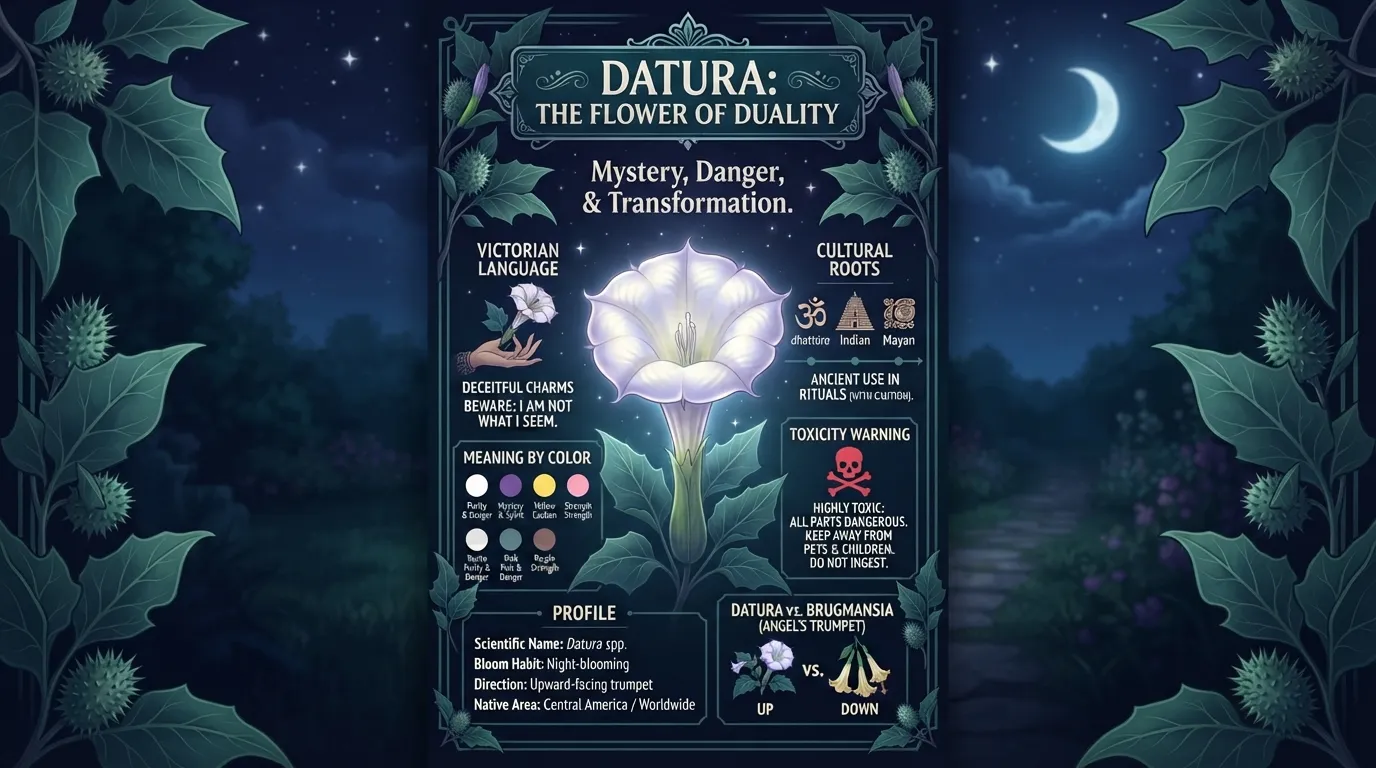
Giving someone a datura flower sent a clear, serious warning. It meant “deceitful charms” or “beware, I am not what I seem.” This meaning grew from the plant’s true nature. Its trumpet-shaped blooms look lovely and inviting, but the entire plant is highly toxic. This sharp contrast between beauty and danger shaped its meaning for centuries.
Botanical Foundations & Profile
| Feature | Detail |
|---|---|
| Scientific Name | Datura (genus with several species, e.g. Datura stramonium) |
| Native Region | Likely Central America, now found worldwide |
| Bloom Period | Summer through early fall |
| Average Lifespan | Grows as an annual, living one season |
| USDA Zones | Zones 3 through 10, grown as an annual |
| Species Count | About 9 to 14 recognized species |
History & Cultural Timeline
- Datura has grown wild across the world for thousands of years, long before written records began.
- Ancient healers in India and the Americas used datura in careful, ritual settings, though always with great caution.
- European explorers encountered datura in the 1600s and brought stories of the plant back home.
- Today, botanists and gardeners grow datura mainly for its dramatic, trumpet-shaped blooms and its role in plant science.
Symbolism Deep-Dive
Mystery
Datura flowers open fully at night and close during the bright day. This strange, secretive habit gave the plant a lasting link to mystery, hidden truths, and things not fully understood.
Danger
Every part of the datura plant holds strong natural toxins. This real, serious danger shaped its long history as a symbol of caution, warning people to look past outward beauty.
Transformation
In old traditions, datura was sometimes linked to visions and deep, powerful change. This connection gave the flower a symbolic tie to major life shifts and inner transformation, treated with great respect and care.
More About Symbolism:https://bloomsyflower.com/nerine-flower-meaning/
Meaning by Color
| Color | Meaning |
|---|---|
| White | Purity mixed with hidden danger |
| Purple | Mystery and spiritual depth |
| Yellow | Caution and unpredictable energy |
| Pink | Softness hiding real strength |
Color Meanings & Cultural Safety Matrix
White Datura
- Primary sentiment: Purity on the surface, danger underneath.
- Geographic nuances: In parts of Asia, white datura appears in old temple stories tied to certain deities. In Western gardens, white often signals elegance, though here it still carries the plant’s warning.
- Gifting warning: Datura is not a typical gift flower due to its toxicity; treat it as an ornamental garden plant, not a bouquet choice.
Purple Datura
- Primary sentiment: Mystery and deep, spiritual meaning.
- Geographic nuances: In parts of Latin America, purple datura sometimes appears in traditional folklore tied to nighttime and dreams.
- Gifting warning: Best admired in a garden setting rather than given as a cut flower gift.
Yellow Datura
- Primary sentiment: Caution and restless energy.
- Geographic nuances: Yellow blooms are less common but appear in some ornamental hybrid varieties grown worldwide.
- Gifting warning: Like other datura colors, this is a plant for viewing, not for gifting or handling casually.
Global Traditions & Literary Impact
In parts of India, datura holds a place in certain religious stories and temple traditions, sometimes linked to powerful deities in ancient tales. It appears carefully in these old stories, always treated with deep respect and caution due to its dangerous nature.
In literature, datura is mentioned in various works exploring mystery and the natural world, including some references in 19th-century botanical writing that described its dramatic blooms and dangerous reputation. Please double-check any specific literary references, as I cannot search a live database and details may be inaccurate.
Economic, Culinary, and Medicinal Uses
Historically, some traditional healers used small, carefully measured parts of datura in old remedies. However, this plant is extremely dangerous, and even small amounts can cause serious harm or death. Today, datura is studied mainly by scientists and used in very controlled pharmaceutical research, never in home remedies or casual use. This article shares historical and cultural facts only, not health guidance, and no part of this plant should ever be used without expert medical supervision.
Ultimate Etiquette & Gifting Guide
Because datura is highly toxic, it is not a traditional gifting flower like roses or lilies. Instead, it holds meaning mainly as an ornamental garden plant admired from a safe distance.
| Setting | Recommended Use | The Subtext |
|---|---|---|
| Garden Display | Grow in a controlled, fenced area | “A striking, mysterious addition to nature.” |
| Botanical Collection | Label clearly with warnings | “Beauty that demands respect and care.” |
| Moon Garden | Plant among other night-blooming flowers | “A nighttime symbol of mystery and wonder.” |
Universal Safety Rule
Never touch datura with bare hands if you have cuts or plan to touch your face afterward, and always keep this plant completely out of reach of children and pets.
Datura vs. Close Lookalikes
| Feature | Datura | Morning Glory | Angel’s Trumpet (Brugmansia) |
|---|---|---|---|
| Petal Shape | Upright trumpet-shaped blooms | Small, round, funnel-shaped blooms | Large, hanging trumpet-shaped blooms |
| Fragrance | Strong, sweet night scent | Little to no scent | Strong, sweet evening scent |
| Foliage | Broad, jagged-edged leaves | Heart-shaped climbing leaves | Large, soft, drooping leaves |
| Bloom Season | Summer through fall | Summer | Warm months, mild climates |
| Growth Style | Grows upright as a bushy annual | Grows as a climbing vine | Grows as a small tree or shrub |
How to tell them apart
Look at the flower’s direction. Datura blooms point upward, like a trumpet reaching for the sky. Angel’s trumpet blooms hang downward instead.
Practical Maintenance & Domestic Safety
Care Basics
- Plant datura in full sun for the strongest blooms.
- Use well-drained soil, since datura dislikes sitting in water.
- Water moderately; avoid overwatering the roots.
- Wear gloves when handling any part of this plant.
Pet Toxicity Warning
The ASPCA lists datura as highly toxic to dogs, cats, and horses. Every part of the plant, including seeds and leaves, can cause serious symptoms such as rapid heartbeat, confusion, and severe illness if eaten. Keep pets and children far away from this plant, and call a vet or poison control immediately if any part is eaten.
Expert Curations & Misconceptions
10 Quick Fun Facts
- Datura flowers often open at dusk and close by mid-morning.
- The plant is sometimes called “moonflower” due to its nighttime blooming habit.
- Datura seed pods are covered in sharp, spiky bumps.
- Every part of the datura plant, including the seeds, is toxic.
- Datura belongs to the same plant family as tomatoes and potatoes.
- Some datura species can grow several feet tall in one season.
- The flower’s strong scent is meant to attract night-flying moths.
- Datura has appeared in folklore across India, the Americas, and beyond.
- Scientists still study datura compounds for controlled medical research.
- Datura is considered an invasive weed in some regions of the world.
3 Myth vs. Reality Pairs
Myth: Datura is safe to touch since only eating it is dangerous.
Reality: Even touching the plant and then touching your eyes or mouth can cause irritation or harm.
Myth: Datura and angel’s trumpet are the exact same plant.
Reality: They are closely related but distinct plants, with datura generally growing more upright.
Myth: A pretty flower can never be truly dangerous.
Reality: Datura proves that stunning beauty and serious danger can exist in the very same bloom.
2 Quick Florist Tips
- Datura is rarely used in cut flower arrangements due to its toxicity and short bloom life.
- If grown for display, always place clear warning labels nearby, especially around children or pets.
Common Questions About Datura flower meaning
What does the datura flower mean spiritually?
Datura often symbolizes mystery, transformation, and hidden power, tied to old traditions of visions and deep change.
Is datura a good gift flower?
No, datura is not typically given as a cut flower gift due to its high toxicity. It is better admired as a garden plant.
What does a white datura mean?
White datura suggests purity on the surface, while still carrying the plant’s well-known warning of danger underneath.
Can you eat datura?
No, every part of the datura plant is toxic and can cause serious harm or death if eaten. It should never be used in food.
When does datura bloom?
Datura typically blooms from summer through early fall, often opening its flowers at night.
Is datura invasive or hard to grow?
Datura grows easily in many climates and can become invasive in some regions, so it needs careful, contained planting.
How did the datura flower get its name?
The name comes from the ancient Sanskrit word dhattūra, used in early India to describe this plant.
What did datura mean historically?
Historically, especially in Victorian flower language, datura meant deceitful charm, warning that beauty can hide real danger.
Final Thoughts
The datura flower stands as one of nature’s clearest lessons in contrast. Its large, trumpet-shaped blooms look soft, dreamy, and inviting, especially as they open under moonlight. Yet beneath that beauty lies a plant that demands serious respect and careful handling.
Across history, cultures from India to the Americas have treated datura with a mix of wonder and caution. It reminds us that not everything beautiful is safe, and not everything dangerous is without meaning. If you choose to grow datura, treat it as a striking garden showpiece, always kept safely away from children, pets, and curious hands. Admire its mystery from a respectful distance, and let its quiet warning remind you that true beauty often asks for care.

Zahid Abbas is an educator, researcher, and digital publishing strategist behind BloomsyFlower, a flower and gardening resource covering flower meanings, symbolism, history, care, seasonal blooms, and gifting. He combines research with simple, reader-friendly writing to help people understand, grow, and enjoy flowers.