Quick Meaning of Gomphrena
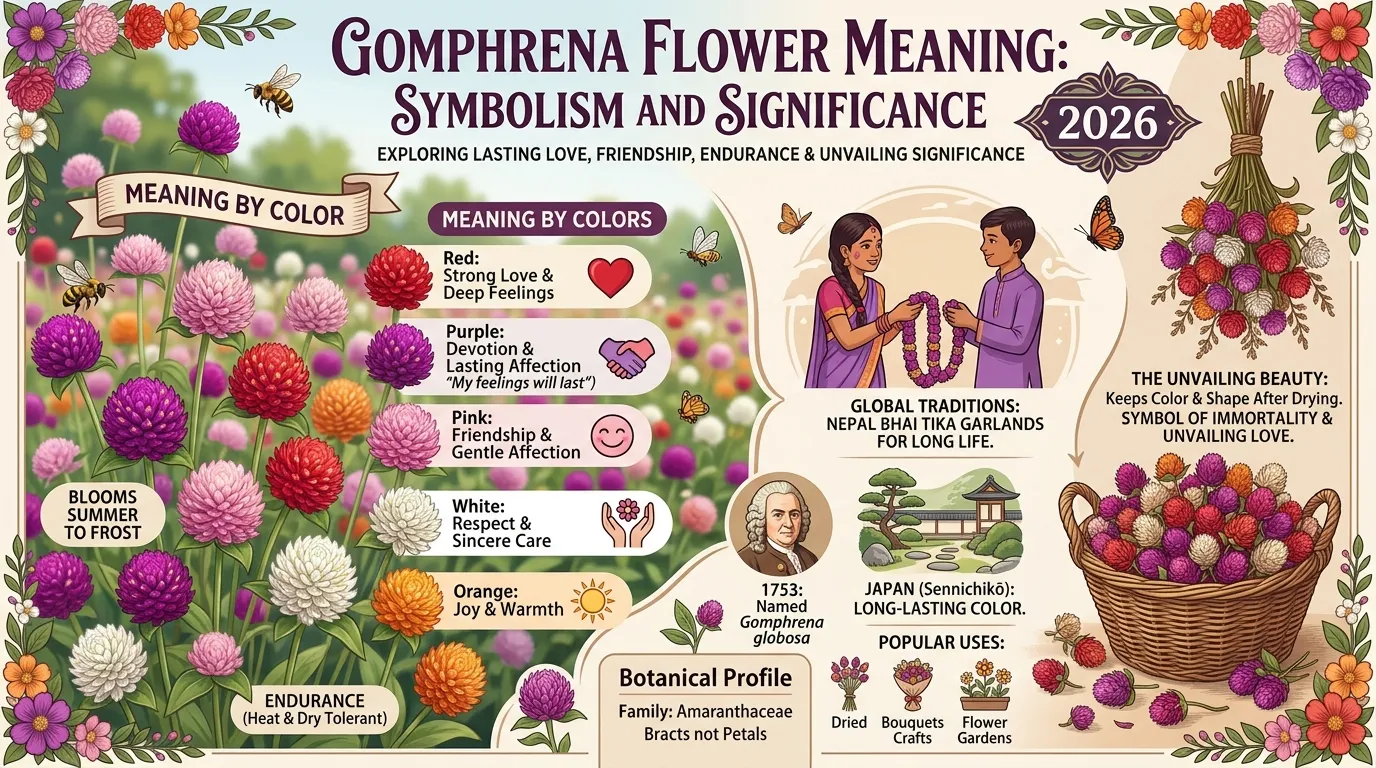
Gomphrena often means lasting love, friendship, and endurance. Its round blooms keep their color after drying. This lasting beauty gives the flower its special meaning.
Origin of the Name
Gomphrena is the name of a plant genus.
The name has an old and uncertain history. Kew notes a possible link to an old Latin plant name. Pliny used that name for a type of amaranth.
The best-known species is Gomphrena globosa.
Carl Linnaeus first published this scientific name in 1753. The word globosa means round. Gomphrena flower meaning describes the shape of the flower head.
Gomphrena is also called globe amaranth. Other names include bachelor’s buttons and makhamali.
Gomphrena in Victorian Flower Language
It is linked with lasting love and immortality.
Gomphrena flower meaning comes from its long-lasting blooms. The flower keeps its shape and color after drying.
Old flower traditions often used amaranth as a sign of life that does not fade.
This gives gomphrena a simple message:
“My feelings will last.”
Botanical Foundations & Profile
The most common garden gomphrena is Gomphrena globosa.
It belongs to the Amaranthaceae family. This is the amaranth plant family.
The colorful flower head is not made only of petals. Much of its color comes from bracts. Bracts are leaf-like parts around the tiny flowers.
| Botanical Detail | Gomphrena Profile |
| Scientific Name | Gomphrena globosa |
| Plant Family | Amaranthaceae |
| Native Region | Mexico to Brazil |
| Bloom Period | Summer to frost in many gardens |
| Average Lifespan | One growing season |
| USDA Zones | Often grown as an annual in cooler zones |
| Species Count | About 144 accepted species in the genus |
Gomphrena globosa is an annual plant in its native range.
It grows well in warm areas. It can also grow as a garden annual in cooler places.
The genus contains many species. The number can change as plant studies change.
History & Cultural Timeline
- 1753: Linnaeus published Gomphrena globosa.
- 1681–1688: Globe amaranth was reported as reaching Japan.
- Edo period: The flower became known in Japan as sennichikō.
- Today: Gomphrena is grown for gardens and dried flowers.
Symbolism Deep-Dive
Lasting Love
Gomphrena often represents love that lasts.
Its flower heads keep their color after drying. This makes the flower a natural symbol of steady feelings.
Endurance
Gomphrena can handle heat and short dry periods.
Its long bloom season also supports its link with strength and endurance.
Lasting Friendship
Gomphrena can represent friendship that stays strong over time.
Its lasting color gives this meaning a simple and clear image.
Gomphrena flower meaning come from flower traditions. They are not scientific facts.
Continue Exploring Flower Meanings https://bloomsyflower.com/cyclamen-flower-meaning/
Meaning by Color
Gomphrena comes in several bright colors.
Common colors include purple, pink, red, white, and orange.
Color meanings can change between cultures. Personal taste should always come first.
| Color | Common Meaning | Simple Message |
| Purple | Devotion and lasting affection | “I will remember you.” |
| Pink | Friendship and gentle affection | “You are special to me.” |
| Red | Love and strong feelings | “My feelings are deep.” |
| White | Respect and sincere care | “My care is true.” |
| Orange | Joy and warmth | “You bring happiness.” |
Purple Gomphrena
Primary sentiment: Devotion and lasting affection.
In Japan, gomphrena is known as sennichikō. Its name points to its long-lasting color.
In Nepal, gomphrena is used during Bhai Tika. The flower represents a wish for a brother’s long life.
Gifting warning: Purple may feel romantic in some settings. Consider the relationship before gifting it.
Pink Gomphrena
Primary sentiment: Friendship and gentle affection.
Pink flowers often suggest warmth and friendship in Western flower design.
In Japan, gomphrena is valued for its lasting color. In Nepal, the flower is linked with long life during Bhai Tika.
Gifting warning: Pink does not always mean romance. The gomphrena flower meaning can change by culture.
Red Gomphrena
Primary sentiment: Love, energy, and strong affection.
Red flowers often have romantic meaning in Western gifting.
In many Asian cultures, red can also suggest happiness and celebration.
Gifting warning: Red can feel strongly romantic. Choose it carefully for friendly or formal gifts.
White Gomphrena
Primary sentiment: Purity, respect, and sincere care.
White flowers are common in weddings in many Western cultures.
White flowers may also be linked with remembrance in some cultures. Personal and family traditions matter most.
Gifting warning: White flowers can have different gomphrena flower meaning at weddings and memorial events.
Orange Gomphrena
Primary sentiment: Joy, warmth, and energy.
Orange flowers often suit cheerful events in Western floral design.
Bright orange flowers are also common in festive flower displays across South Asia.
Gifting warning: Orange has no single meaning around the world.
Global Traditions & Literary Impact
Gomphrena in Nepal
Gomphrena has a special place in Bhai Tika, part of Nepal’s Tihar festival.
The flower is called makhamali in Nepal.
Sisters give their brothers garlands that include gomphrena. The flower’s long-lasting nature represents a wish for long life.
Gomphrena in Japan
Gomphrena is called sennichikō in Japan.
The name relates to the flower’s ability to keep its color for a long time.
The plant arrived in Japan during the Edo period.
Literary Reference
Richard Folkard’s Plant Lore, Legends, and Lyrics was published in 1884.
The book discusses globe amaranth and older flower traditions.
Literary note: This reference should be double-checked against the original book before publication.
Economic, Culinary, and Medicinal Uses
Gomphrena is popular in fresh and dried flower work.
Its flower heads keep their shape and color well. This makes them useful for:
- Dried bouquets
- Flower crafts
- Garlands
- Long-lasting arrangements
- Garden displays
The flowers also contain natural pigments called betacyanins. These pigments can produce red and violet colors.
Some sources report food and traditional herbal uses for Gomphrena globosa.
However, traditional use does not prove that a plant treats a health problem.
Do not use gomphrena as medicine without advice from a qualified health professional.
For eating, use only plants clearly grown for food. Garden flowers may have unsafe pesticide residues.
Ultimate Etiquette & Gifting Guide
| Relationship | Recommended Color | The Subtext |
| Romantic partner | Red or purple | “My feelings will last.” |
| Spouse | Purple or red | “Our bond stays strong.” |
| Close friend | Pink or orange | “Our friendship brings joy.” |
| Parent | Pink or white | “I care about you.” |
| Wedding couple | White or pink | “Wishing you lasting happiness.” |
| Sibling | Purple or mixed colors | “May our bond stay strong.” |
| Memorial gift | White or purple | “Your memory remains.” |
| Host or hostess | Orange or pink | “Thank you for your kindness.” |
Universal Safety Rule
For gifting, choose flowers based on the person’s taste and culture.
For food use, only use plants grown for eating and free from unsafe chemicals.
Gomphrena vs. Close Lookalikes
Gomphrena can look like several small, round flowers.
Its firm, papery flower head helps set it apart.
| Trait | Gomphrena | Bachelor’s Button | Clover | Globe Thistle |
| Petal Shape | Tiny flowers inside round bracts | Fringed petals | Small clustered flowers | Spiky florets |
| Fragrance | Very mild or none | Light or mild | Mild | Usually mild |
| Foliage | Green, oval leaves | Narrow leaves | Three-part leaves | Deeply cut leaves |
| Bloom Season | Summer to frost | Late spring to summer | Spring to summer | Summer |
| Flower Texture | Firm and papery | Soft and delicate | Soft and small | Firm and spiny |
How to Tell Them Apart
Look at the flower head first.
Gomphrena has a firm, round, papery head.
Its bright parts are mainly bracts. Tiny true flowers grow inside them.
Practical Maintenance & Domestic Safety
Care Basics
Plant gomphrena in full sun for the best flowers.
Use soil that drains well. Keep young plants lightly watered.
Once established, the plant can handle short dry periods.
Remove faded blooms to keep the plant neat and encourage more flowers.
Pet Toxicity Warning
ASPCA lists Celosia globosa as non-toxic to dogs, cats, and horses.
However, Celosia globosa is not the current scientific name for Gomphrena globosa.
Because plant names can cause confusion, do not assume every gomphrena species is pet-safe.
Keep unknown plants away from pets that like to chew plants.
If a pet eats a plant and becomes sick, contact a veterinarian.
Expert Curations & Misconceptions
10 Quick Fun Facts
- Gomphrena belongs to the amaranth family.
- The best-known species is Gomphrena globosa.
- Linnaeus published the species name in 1753.
- The plant is native from Mexico to Brazil.
- Gomphrena is also called globe amaranth.
- Its flower heads are round and papery.
- Much of the color comes from bracts.
- The flowers keep their color well after drying.
- Bees and butterflies can visit its flowers.
- Gomphrena is popular in dried flower arrangements.
Myth vs. Reality
| Myth | Reality |
| Gomphrena never fades. | It lasts much longer than many flowers, especially when dried. |
| All the colorful parts are petals. | Much of the color comes from bracts. |
| Gomphrena always means romantic love. | It can also represent friendship, endurance, and long life. |
2 Quick Florist Tips
Tip 1: Cut gomphrena when the flower heads have strong color. They dry well at this stage.
Tip 2: Mix gomphrena with other dried flowers. Its round shape adds useful texture.
What People Ask About Gomphrena
1. What is the spiritual meaning of gomphrena?
Gomphrena is often linked with lasting love and immortality. These meanings come from flower traditions and its long-lasting blooms.
2. What is the best occasion for gomphrena?
Gomphrena is a good choice for birthdays, anniversaries, friendship gifts, and celebrations. It also works well in dried flower arrangements.
3. What does purple gomphrena mean?
Purple gomphrena can represent devotion and lasting affection. In Nepal, gomphrena is also used during Bhai Tika as a symbol of long life.
4. What does pink gomphrena mean?
Pink gomphrena can represent friendship and gentle affection. Its meaning may change across cultures and personal traditions.
5. What does red gomphrena mean?
Red gomphrena can represent strong love and deep feelings. Red can also suggest joy and celebration in some cultures.
6. Is gomphrena toxic to pets?
ASPCA lists Celosia globosa as non-toxic to dogs, cats, and horses. However, Celosia globosa is different from Gomphrena globosa. Do not assume that every gomphrena species is safe for pets.
7. Can gomphrena be eaten?
Some sources report edible uses for Gomphrena globosa. Only eat plants grown for food. Ornamental flowers may contain pesticide residues.
8. When does gomphrena bloom?
Gomphrena often blooms from summer until frost. The exact bloom time depends on the variety and local weather.
9. Is gomphrena invasive?
Kew records Gomphrena globosa as introduced in many places. Whether it becomes invasive depends on the local climate and habitat.
10. Why is it called globe amaranth?
The name refers to its round flower heads. “Globe” describes the flower shape, while “amaranth” connects it with the amaranth group of plants.
11. What did gomphrena mean historically?
Older flower traditions linked amaranth with immortality. Gomphrena fits this idea because its flower color can remain after drying.
Final Thoughts
Gomphrena flower meaning symbolizing unfading love, endurance, and everlasting affection, Gomphrena is a small flower with a lasting message.. Its round, papery blooms keep their color well after drying. This natural trait helps explain its links with lasting love, friendship, and endurance. The flower also has strong cultural meaning. In Nepal, gomphrena garlands are used during Bhai Tika. They express wishes for long life. In Japan, its name also points to its long-lasting color. Gomphrena is easy to enjoy in gardens and flower arrangements. It also works well in dried bouquets. If you want a flower with a lasting message, gomphrena is a lovely choice. Plant it in a sunny garden, add it to a bouquet, or enjoy its bright color at home.

Zahid Abbas is an educator, researcher, and digital publishing strategist behind BloomsyFlower, a flower and gardening resource covering flower meanings, symbolism, history, care, seasonal blooms, and gifting. He combines research with simple, reader-friendly writing to help people understand, grow, and enjoy flowers.