Imagine a plant that moves its flowers to watch the sun all day long. As the sun moves across the sky, the blooms turn to face it. At night, they turn back to the east to wait for morning. That is the heliotrope. It smells like warm vanilla, cherry pie, and almonds.
Here is what you will learn in this guide:
- The exact meaning of the heliotrope flower.
- How its sun-turning habit shaped its romantic history.
- The meanings behind each flower color.
- How to care for it safely around pets.
The Definitive Answer
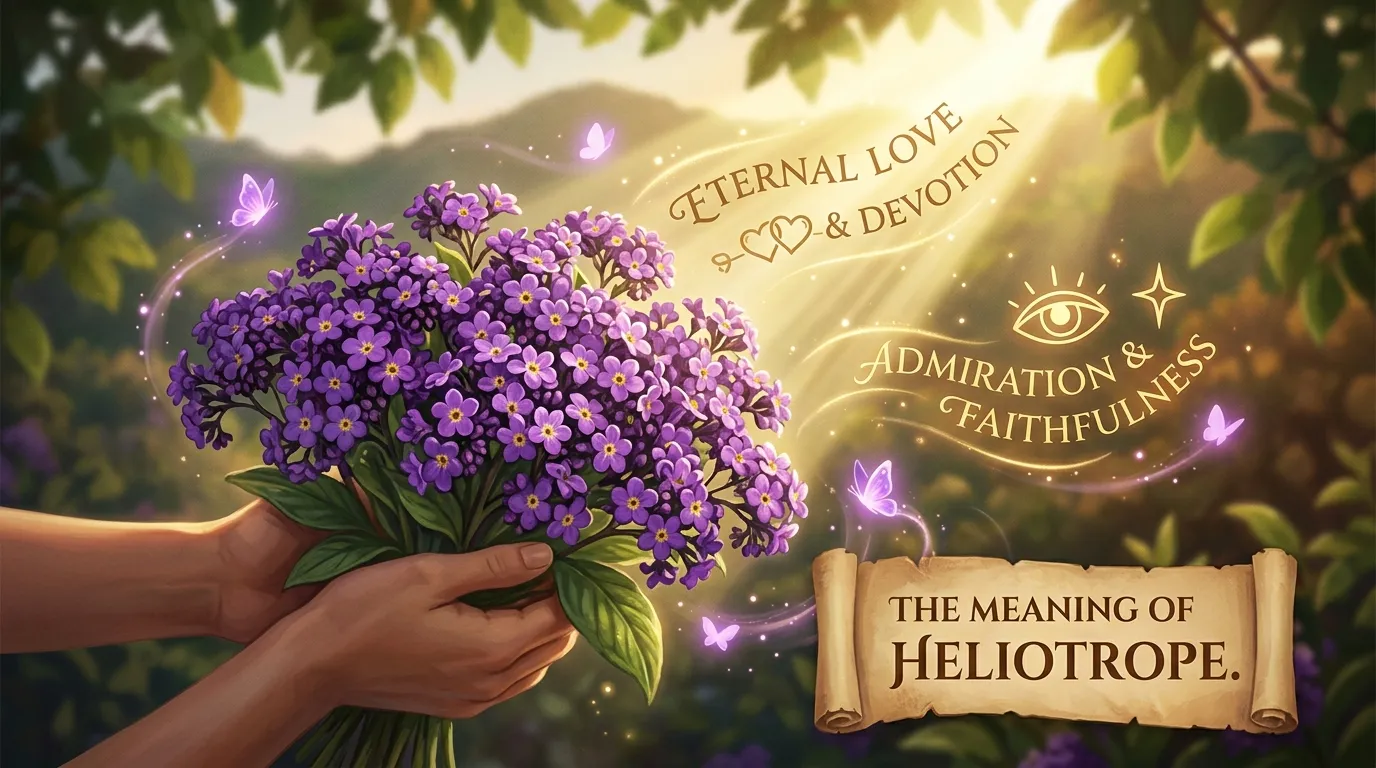
The heliotrope flower means eternal devotion, deep love, and total faithfulness. Its name comes from Greek words that mean “turning to the sun.” Because the flower follows the sun, it symbolizes a heart that always turns toward the person it loves.
| Flower Color | Dominant Meaning | Best Occasion |
| Purple | Eternal devotion and deep romantic love | Anniversaries and weddings |
| White | Pure affection and sweet memories | Sympathy and thinking-of-you gifts |
| Blue / Violet | Peace, healing, and spiritual devotion | Get-well gifts and garden displays |
Botanical Foundations & Profile
Heliotrope belongs to the borage family, Boraginaceae. Its most famous species is Heliotropium arborescens, which comes from the Andes mountains in Peru. Peruvian locals call it vanilla de chinchaysuyo because of its sweet, dessert-like scent.
| Category | Detail |
| Scientific Classification | Family: Boraginaceae | Genus: Heliotropium | Species: H. arborescens |
| Native Region | Peruvian Andes (South America) |
| Bloom Period | Early summer to the first frost |
| Average Lifespan | Tender perennial (grown as an annual in cold climates) |
| USDA Zones | Zones 9 to 11 (perennial); Zones 2 to 8 (annual) |
| Cultivar vs. Wild Species | ~300 wild species; ~20 common garden cultivars |
Deep History & Cultural Timeline
French botanist Joseph de Jussieu found the plant in Peru and sent seeds to Paris in 1740. By the Victorian era, it became a star in English and French gardens. The Victorians loved its sweet smell and put it in love bouquets. Poet Robert Browning wrote about its perfume. Painter Paul Gauguin even painted its purple clusters in his 1891 still life The Meal.
Symbolism Deep-Dive
Eternal Devotion
Heliotrope flowers bend their stems all day to track the sun. This natural habit, called heliotropism, created its link to endless love. The flower never stops looking at its light source.
Hope and Healing
In Greek myth, a water nymph named Clytie turned into a heliotrope after losing her love, the sun god Apollo. She stayed rooted, staring at the sun forever. The bloom thus came to mean quiet hope and true loyalty through hardship.
Comfort and Peace
The flower gives off a heavy, soothing scent of vanilla and cherry pie. This sweet perfume made the bloom a symbol of comfort and quiet peace in 19th-century gardens.
Color Meanings & Cultural Safety Matrix
Purple Heliotrope
- Primary sentiment: Deep devotion, passion, and royal love.
- Geographic nuances: In Western floriography, it means romantic devotion. In parts of South America, dark purple blooms honor memory at graves.
- Gifting warning: Do not give purple heliotrope to a casual friend. The message is strongly romantic.
White Heliotrope
- Primary sentiment: Pure affection, innocence, and sweet dreams.
- Geographic nuances: In Europe, white flowers suit weddings. In some East Asian traditions, white flowers connect to funerals and mourning.
- Gifting warning: Check your friend’s culture before gifting white blooms for a happy event.
Blue or Violet Heliotrope
- Primary sentiment: Spiritual peace, trust, and calm thoughts.
- Geographic nuances: Loved across North America and Europe for garden borders. It carries no negative cultural ties.
- Gifting warning: Blue varieties often lose their sweet scent. Pick a purple type if scent matters.
Global Traditions & Literary Impact
In Victorian language of flowers, sending heliotrope meant “I love you passionately.” Young lovers pressed the tiny blooms inside letter envelopes. A single spray told the receiver that the sender’s thoughts turned to them, just like the bloom turns to the sun.
In Peruvian folklore, native people used the plant in traditional rituals. They linked its sunny habits to the energy of the sun god, Inti. The sweet smell was thought to clear away bad feelings from a home.
In 19th-century literature, authors used the flower to mark cozy, romantic homes. In Marcel Proust’s In Search of Lost Time, garden smells like heliotrope trigger deep memories of childhood and lost love.
Economic, Culinary, or Medicinal Uses
Perfumers harvest heliotrope for its rich oil. The scent compound, heliotropin, smells like sweet almond and vanilla. It is a key note in high-end luxury perfumes.
Important Safety Note: Never eat this plant. Do not use it as a home remedy or tea. The plant contains chemicals called pyrrolizidine alkaloids. These compounds cause severe liver damage if swallowed.
The Ultimate Etiquette & Gifting Guide
| Relationship / Setting | Recommended Color | The Subtext Sentence |
| Spouse / Romantic Partner | Deep Purple | “My heart turns to you like the flower turns to the sun.” |
| Close Friend in Grief | White | “I wish you peace, sweet comfort, and gentle memories.” |
| Garden / Housewarming | Mixed Purple & Blue | “May your home stay bright, warm, and full of joy.” |
Universal Safety Rule: Always tell the receiver that heliotrope is for looking at and smelling only—never for eating or brew into tea.
Direct Comparison: Heliotrope vs. Close Lookalikes
| Feature | Heliotrope (H. arborescens) | Verbena (Verbena x hybrida) | Forget-Me-Not (Myosotis sylvatica) |
| Flower Cluster Shape | Flat, dense, coiled clusters | Flat or domed loose clusters | Small, loose, open sprays |
| Fragrance | Strong vanilla and cherry pie | Faint, fresh, or earthy | None |
| Foliage | Dark green, wrinkled, deep veins | Toothed, thin, rough leaves | Smooth, hairy, spoon-shaped |
| Bloom Season | Summer to frost | Spring to frost | Early spring to early summer |
| Toxicity | Toxic to humans and pets | Non-toxic to most pets | Non-toxic to pets |
How to tell them apart: Touch the leaf and smell the bloom. Heliotrope leaves are dark green and deeply wrinkled. The flowers smell like sweet vanilla dessert. Verbena has no strong sweet smell. Forget-me-nots have tiny blue flowers with bright yellow centers.
Practical Maintenance & Domestic Safety
Care Basics
Plant heliotrope in full morning sun with light afternoon shade. Keep the soil moist but never soggy. Use rich, well-draining soil mixed with compost. Feed it monthly with a balanced flower fertilizer during summer.
Pet Safety Alert
According to the ASPCA, heliotrope is toxic to horses, cattle, dogs, and cats. The plant holds toxic alkaloids that harm the liver. Keep potted plants away from curious pets. If a dog or cat eats any part of this plant, call a vet right away.
Expert Curations & Misconceptions
10 Fast Facts
- The name comes from helios (sun) and trepein (to turn).
- Its perfume smells like cherry pie, almond paste, and warm vanilla.
- Flowers track the sun only while they are young and growing.
- Old Victorian varieties had much stronger scents than modern hybrids.
- The plant grows as a shrub up to six feet tall in its wild Andes home.
- A single flower cluster holds hundreds of tiny, star-shaped blooms.
- Extreme hot weather makes the flower color fade from purple to white.
- Butterflies and bees love its nectar-rich flower heads.
- Heliotropium is one of the biggest genera in the borage family.
- Extracts from the plant were once used to make vintage purple dyes.
Myth vs. Reality
- Myth: Heliotrope is a safe herb for home teas because it smells like vanilla.
- Reality: The plant is poisonous and contains chemicals that cause liver damage.
- Myth: The flowers turn to face the sun every single day of their life.
- Reality: Mature, fully opened blooms lock in place and face east.
- Myth: Heliotrope handles hard winter frosts easily.
- Reality: It dies at freezing temperatures and grows as an annual in cold climates.
Expert Florist Tips
- Pinch off the tips of young stems in spring. This forces the plant to grow bushier and set twice as many flowers.
- Deadhead spent flower heads fast. Cutting off old blooms encourages fresh new clusters all summer long.
- Put potted heliotrope near patio seating. The warm evening air releases its rich vanilla scent.
Frequently Asked Questions
What does the heliotrope flower mean?
Heliotrope means devotion, deep love, and eternal faithfulness. Its name means “turning to the sun,” symbolizing a lover’s heart that always turns to its partner.
Why does heliotrope smell like vanilla?
The flower produces sweet-smelling oil compounds like heliotropin. These compounds create a rich perfume that smells like vanilla, cherry pie, and almonds.
Is heliotrope safe for dogs and cats?
No, heliotrope is toxic to pets. The ASPCA lists it as dangerous because it contains chemicals that can harm a pet’s liver if swallowed.
Does heliotrope really follow the sun?
Yes, young heliotrope stems turn during the day to face the sun. Once the flowers fully open and age, they stop moving and face east.
Can you grow heliotrope indoors?
Yes, you can grow it indoors near a bright, south-facing window. Ensure it gets six hours of sunlight and stays away from pets.
Is heliotrope an annual or a perennial?
It is a tender perennial in warm regions (USDA Zones 9–11). In colder places with winter frost, gardeners grow it as an annual plant.
What color is heliotrope?
Heliotrope comes in shades of deep purple, violet, lavender, blue, and crisp white. Deep purple is the most common and popular garden color.
Why are my heliotrope leaves turning brown?
Brown leaves usually mean dry soil or too much harsh afternoon sun. Keep the soil evenly moist and protect the plant from extreme heat.
How big does a heliotrope plant get?
In home gardens, it grows one to two feet tall and wide. In its native tropical climate, it can reach four to six feet tall.
How do you prune heliotrope?
Trim off dead flower clusters at the stem base. Pinch young stem tips early in spring to help the plant grow thick and bushy.
Can you eat heliotrope flowers?
No, never eat heliotrope flowers or leaves. All parts of the plant are poisonous to humans and animals.
Conclusion
Heliotrope connects physical biology with human emotion. Its habit of tracking the sun created a symbol of devotion that lasted for centuries. Plant it near a sunlit porch, enjoy its sweet vanilla perfume, and remember the quiet loyalty built into every bloom.

Zahid Abbas is an educator, researcher, and digital publishing strategist behind BloomsyFlower, a flower and gardening resource covering flower meanings, symbolism, history, care, seasonal blooms, and gifting. He combines research with simple, reader-friendly writing to help people understand, grow, and enjoy flowers.