Sweet nectar drops out of honeysuckle blooms in late spring. Kids love to pick the small trumpet flowers and taste the honey drop inside. But this quick-growing vine holds a much deeper story than a sweet backyard snack.
The Honeysuckle Flower Meaning
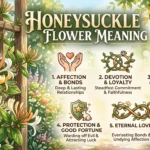
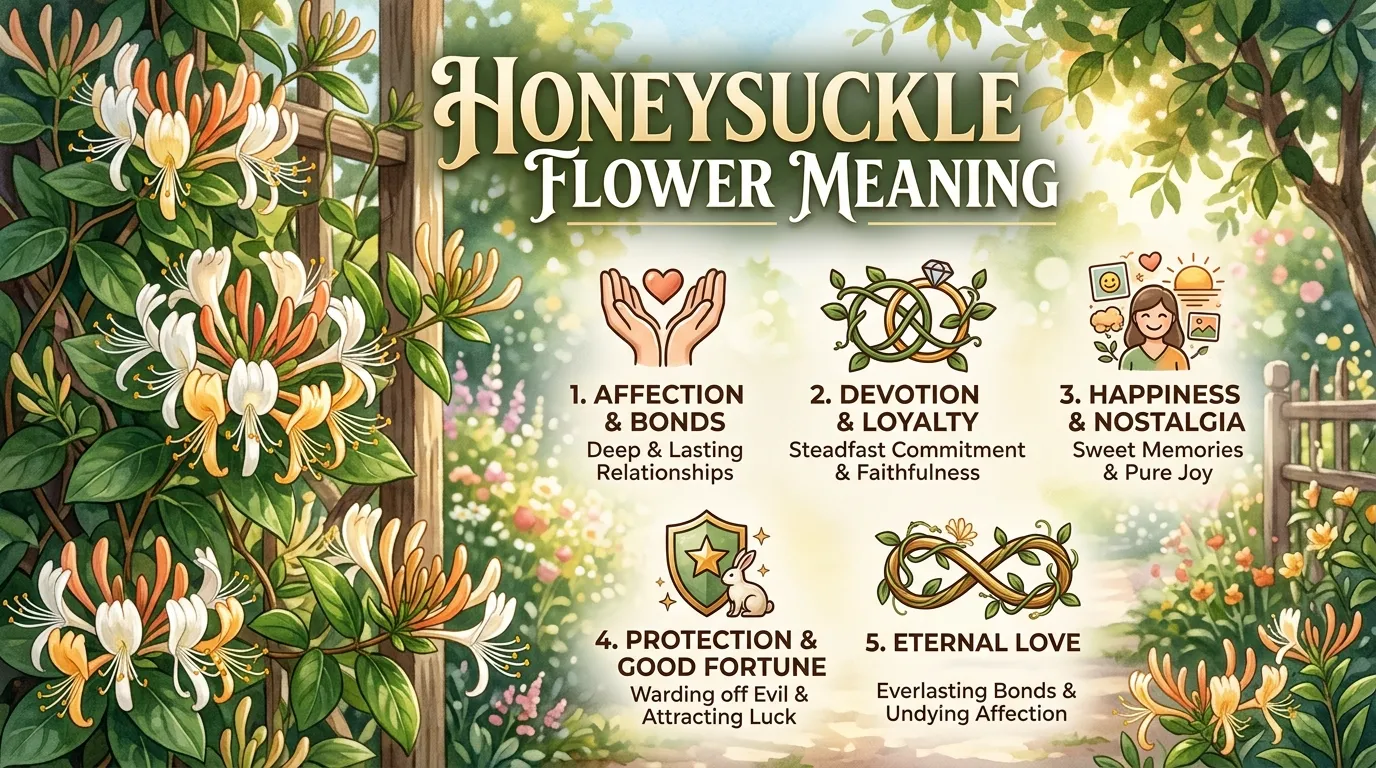
The honeysuckle flower stands for sweet affection, happiness, and devotion. Its sweet smell and strong, winding vines mean a bond that cannot be broken easily. People give honeysuckle to show steady love and deep loyalty.
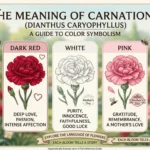
| Flower Color | Dominant Meaning | Best Occasion |
| Red | Deep passion and strong desire | Anniversaries and romance |
| Pink | Sweet affection and gentle joy | Birthdays and light gifts |
| Yellow | New friendship and bright warm feelings | Thank you gifts |
| White | Pure love and sweet innocence | Weddings and new beginnings |
Botanical Foundations & Profile
Honeysuckle belongs to the Lonicera genus inside the Caprifoliaceae family. It calls the Northern Hemisphere home, mostly in Asia and North America. The flowers use long tubes to hide nectar deep inside for moths and hummingbirds.
| Classification | Details |
| Scientific Name | Lonicera |
| Native Region | East Asia, Europe, North America |
| Bloom Period | Late spring to late summer |
| Average Lifespan | 10 to 20 years |
| USDA Zones | Zones 4 through 9 |
| Species Count | Around 180 wild species |
History & Cultural Timeline
Carl Linnaeus named the genus Lonicera in 1753. He named it for Adam Lonicer, a German doctor and botanist. The Japanese honeysuckle (Lonicera japonica) arrived in North America in 1806. People brought it over as a pretty garden plant and for ground cover. Today, botanists at Kew Gardens track both helpful and wild invasive species.
Symbolism Deep-Dive
Devotion
Honeysuckle vines wrap tight around fences and trees. They cling so hard they are almost impossible to pull apart without tearing. This tight grip made the flower a sign of forever love.
Nostalgia
The strong, sweet scent brings back early summer memories fast. Its smell hits the brain quickly, which links the bloom to happy childhood days.
Resilience
This plant grows fast in poor soil and dry land. It keeps blooming through hot summer weeks when other garden flowers wilt.
Color Meanings & Cultural Safety Matrix
Red Honeysuckle
- Primary sentiment: Deep passion and fiery romance.
- Geographic nuances: In China, red blooms bring good luck and joy. In Western countries, they show romantic desire.
- Gifting warning: Do not send red blooms to a plain acquaintance or coworker.
Pink Honeysuckle
- Primary sentiment: Gentle joy, sweetness, and light affection.
- Geographic nuances: Pink means spring youth in Japan. It means sweet friendship in North America.
- Gifting warning: Safe for most events, but it lacks the weight needed for deep regret or apology.
Yellow Honeysuckle
- Primary sentiment: Bright energy, warm friendship, and good cheer.
- Geographic nuances: Yellow means high wealth in parts of Asia. It used to mean envy in old European flower codes.
- Gifting warning: Avoid giving yellow blooms for sad events or funerals.
White Honeysuckle
- Primary sentiment: Purity, light, and honest intentions.
- Geographic nuances: White means clean grace in the West. In some Eastern homes, white flowers connect to mourning.
- Gifting warning: Check the family’s background before sending pure white flowers to a party.
Global Traditions & Literary Impact
Victorian lovers used honeysuckle to send secret notes. Leaving a sprig on a doorstep meant a secret promise. People believed bringing the blooms inside brought sweet dreams into the house.
In traditional Chinese medicine, Lonicera japonica is called Jin Yin Hua. This name means “gold and silver flower.” The name comes from how the blooms turn from white to yellow as they age.
In literature, William Shakespeare wrote about honeysuckle in A Midsummer Night’s Dream. He called it “woodbine.” He used the wrapping vine to show two lovers holding each other tight in the woods.
Economic, Culinary, and Medicinal Uses
People harvest the dried buds of Japanese honeysuckle to brew herbal tea. Traditional medicine uses these buds to cool body heat and calm sore throats.
Perfume makers use the rich oil from Lonicera fragrantissima. It gives soaps and candles a fresh, sweet honey scent. However, only the nectar and flowers are safe to eat.
Ultimate Etiquette & Gifting Guide
| Relationship | Recommended Color | The Subtext |
| Spouse or Partner | Red or Deep Pink | “My love for you grows stronger every year.” |
| Close Friend | Yellow | “Your friendship brings pure joy into my life.” |
| Bride or Groom | White | “May your path together be pure and happy.” |
| Sick Coworker | Light Pink | “Wishing you a sweet and speedy recovery.” |
Universal Safety Rule
When you give fresh honeysuckle, pick a cultivar that grows locally, and pair it with a simple note so your message stays clear.
Honeysuckle vs. Close Lookalikes
| Feature | Honeysuckle (Lonicera) | Trumpet Vine (Campsis) | Sweet Pea (Lathyrus) |
| Petal Shape | Long split tube with thin lips | Big open trumpet bell | Rounded sail and wing petals |
| Fragrance | Very sweet, like honey | Very faint or none | Soft, sweet floral scent |
| Foliage | Smooth oval leaves in pairs | Cut leaves with jagged edges | Thin vine tendrils with paired leaves |
| Bloom Season | Late spring to mid summer | Mid summer to early fall | Late spring to early summer |
| Vine Type | Twining stem vine | Climbs with tiny aerial roots | Climbs with thin tendrils |
How to tell them apart
Look at the stems. Honeysuckle stems wrap in a spiral around support. Trumpet vine uses tiny sticky feet to climb flat wood and brick walls.
Practical Maintenance & Domestic Safety
Care Basics
Plant honeysuckle in full sun for the best blooms. Give it well-drained soil and water it once a week during dry spells. Cut back old stems in early spring to keep the vine healthy and neat.
Pet Toxicity Warning
The ASPCA notes that real honeysuckle plants, especially their berries, are toxic to dogs, cats, and horses. The berries hold toxic chemicals called saponins. They cause upset stomachs, vomiting, and slow heart rates if eaten. Keep pets away from fruit on the vine.
Expert Curations & Misconceptions
10 Quick Fun Facts
- Hummingbirds love red honeysuckle flowers best.
- The flowers change color after bees pollinate them.
- Some honeysuckle vines can climb 30 feet high.
- Bush honeysuckle grows as a shrub instead of a vine.
- The sweet smell grows much stronger at night.
- Moths pollinate many honeysuckle species after dark.
- Children have sucked nectar from these blooms for hundreds of years.
- The bark peels away in long thin strips on old vines.
- Woodbine is the old English name for native wild honeysuckle.
- Some wild types help stop soil erosion on banks.
3 Myth vs. Reality Pairs
- Myth: All honeysuckle plants smell amazing.Reality: Some wild varieties have no scent at all.
- Myth: Honeysuckle berries make a great snack for humans.Reality: Most honeysuckle berries are toxic and taste bitter.
- Myth: Honeysuckle vines will crush brick houses.Reality: They twine around poles; they do not drill into brick.
2 Quick Florist Tips
- Pick stems when only two flowers on the spray are open. The rest will open in your vase.
- Cut stem bottoms under water at an angle so the vine drinks easily.
Possible Answer Question
What does the honeysuckle flower mean spiritually?
Honeysuckle means devoted love and protection. Its sweet smell brings positive energy and good memories into your home. The winding vine shows a deep bond between two souls.
Is honeysuckle a good gift for an anniversary?
Yes, honeysuckle makes a great anniversary gift. It stands for long-lasting affection and a bond that stays strong over time.
Why does honeysuckle smell stronger at night?
The plant releases its scent after sunset to attract night moths. These moths follow the sweet smell in the dark to find nectar and pollinate the flowers.
Can you eat raw honeysuckle flowers?
You can safely taste the sweet drop of nectar inside the tube. Do not eat the green stem base, leaves, or red berries, as they can cause stomach pain.
What does a red honeysuckle mean?
Red honeysuckle stands for deep passion and strong love. People give red blooms to show romantic desire and high energy.
Is honeysuckle invasive in North America?
Some imported species, like Japanese honeysuckle (Lonicera japonica), spread very fast and crowd out native plants. Always choose native choices like coral honeysuckle (Lonicera sempervirens) for garden beds.
Are honeysuckle berries poisonous to dogs?
Yes, honeysuckle berries contain harmful saponins. If your dog eats the berries, it can suffer from an upset stomach, throwing up, or diarrhea.
How did honeysuckle get its name?
People named the plant honeysuckle because kids and hikers pull the small blooms apart to suck the sweet, honey-like nectar from the base of the flower.
What does honeysuckle mean in Victorian flower language?
In Victorian floriography, honeysuckle stood for generous love and devoted bonds. Giving a sprig showed that you pledged your heart to the receiver.
Does honeysuckle need full sun to bloom?
Honeysuckle blooms best when it gets six hours of direct sunlight every day. It can grow in partial shade, but it will yield fewer flowers.
What month does honeysuckle bloom?
Most honeysuckle varieties start blooming in late May or June. They keep producing sweet flowers into July and August.
Final Thoughts
Honeysuckle Flower Meaning bridges natural biology with sweet human emotion. Its clinging vine shows us what real devotion looks like, while its sweet nectar brings simple summer joy. Plant native honeysuckle in your garden to enjoy sweet scents, welcome colorful hummingbirds, and share a symbol of lasting love.

Zahid Abbas is an educator, researcher, and digital publishing strategist behind BloomsyFlower, a flower and gardening resource covering flower meanings, symbolism, history, care, seasonal blooms, and gifting. He combines research with simple, reader-friendly writing to help people understand, grow, and enjoy flowers.