Lupine has an odd name. It comes from lupus, the Latin word for wolf. Old farmers thought this plant acted like a wolf. They believed it ate up all the good stuff in the soil. That belief was wrong. Lupine roots work with tiny bacteria in the ground. Together, they pull nitrogen from the air. This actually feeds the soil. It doesn’t starve it. Farmers still plant lupine today, for that exact reason.
The Definitive Answer Block
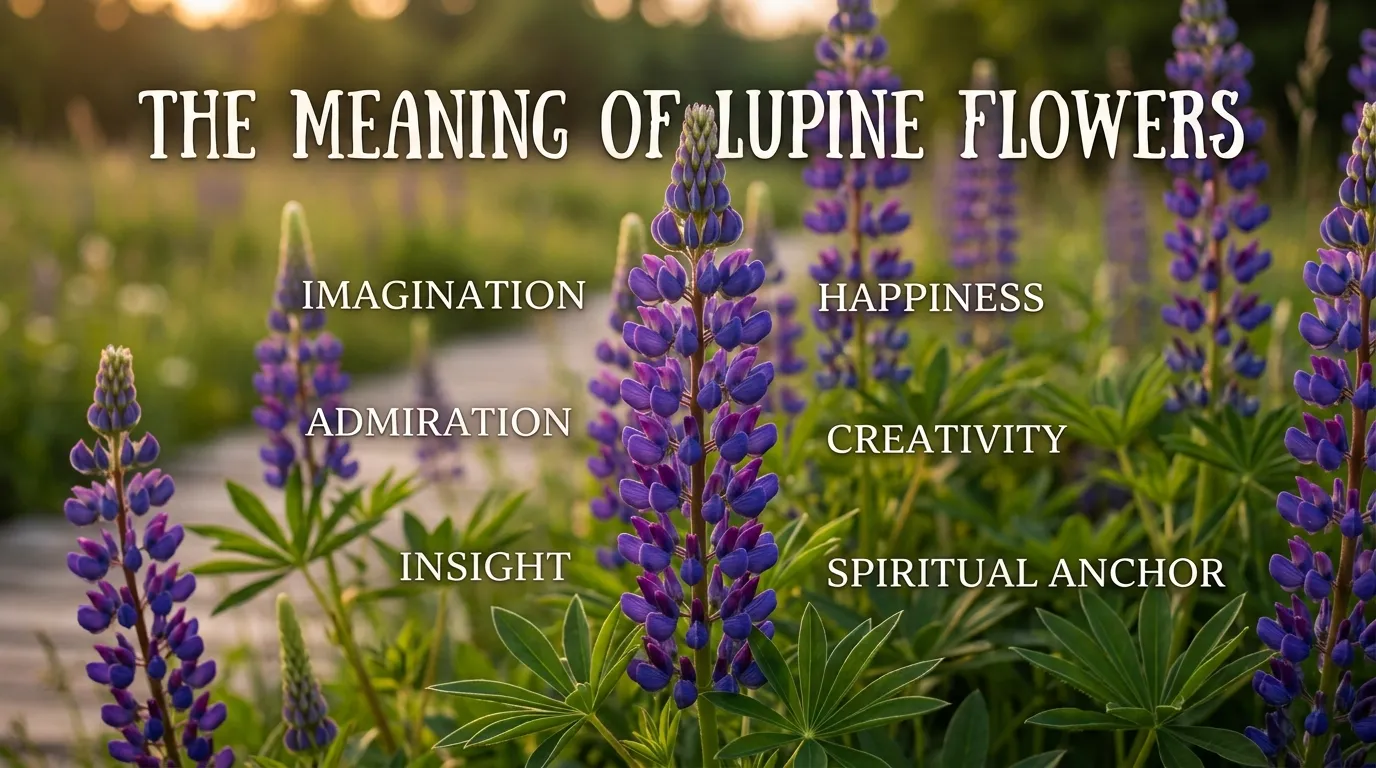
Lupine means imagination and admiration. Its tall, colorful spike stands out in any garden. Some older guides tie it to a driven, hungry spirit instead. That reading comes straight from the old wolf myth in its name.
| Flower Color | Dominant Meaning | Best Occasion |
|---|---|---|
| Blue/Purple | Imagination, admiration | Creative gifts, thank-you bouquets |
| Pink | Playful affection | Casual, warm gifts |
| Yellow | Cheerful admiration | Congratulations, new beginnings |
| White | Humility, quiet strength | Sympathy, simple gifts |
Botanical Foundations & Profile
Lupine’s scientific name is Lupinus. It sits in the pea family, called Fabaceae. Peas, beans, and clover all belong to this same family. All of them are known for feeding the soil they grow in. Lupine grows wild across North America, the Mediterranean, and parts of South America. Carl Linnaeus gave the genus its formal name in 1753.
| Category | Detail |
|---|---|
| Scientific Classification | Lupinus spp., family Fabaceae |
| Native Region | North America, Mediterranean region, South America |
| Bloom Period | Spring to early summer |
| Average Lifespan | Perennial types: 3–5 years. Annual types: 1 season |
| USDA Zones | 4–8, varies by species |
| Cultivar Count vs. Wild Species | Dozens of cultivars vs. about 200 wild species |
Deep History & Cultural Timeline
Ancient Romans grew a type called white lupine for food. They soaked the bitter seeds first, to make them safe to eat. Carl Linnaeus formally named the genus in 1753, in his book Species Plantarum. Native groups across North America also used wild lupine, mostly for dye and, at times, food, after careful prep work. In 1901, Texas made the bluebonnet its official state flower. That plant is a native lupine species. In the 20th century, farmers rediscovered lupine’s real value. They began planting it just to rebuild worn-out soil.
Symbolism Deep-Dive
Imagination
Lupine’s tall, packed flower spike stands out against plainer wildflowers. Old flower-readers likely built this meaning right off that bold shape.
Admiration
The flower comes in strong colors, from deep blue to bright pink. That range gave it a reputation for catching the eye.
A driven spirit
This older reading comes straight from the wolf myth in the plant’s name, tied to old fears about its appetite.
Renewal
Farmers now know the truth: lupine builds up soil instead of wearing it down. Some newer readings flip the old myth into a symbol of quiet generosity.
Color Meanings & Cultural Safety Matrix
Blue/Purple
- Primary sentiment: Imagination, admiration
- Geographic nuance: Blue lupine, especially the Texas bluebonnet, carries real state pride in the American South, on top of its general meaning.
- Gifting note: A safe, creative pick for almost any thoughtful gift.
Pink
- Primary sentiment: Playful affection
- Geographic nuance: No strong regional split here. Pink lupine is mostly a modern garden color, without old folklore behind it.
- Gifting note: Good for a light, fun gift. Not strong enough alone for serious romance.
Yellow
- Primary sentiment: Cheerful admiration
- Geographic nuance: No strong regional split here either. Yellow lupine grows wild in some warm, dry regions, but that hasn’t shaped its meaning much.
- Gifting note: Fits congratulations or a fresh start well.
White
- Primary sentiment: Humility, quiet strength
- Geographic nuance: White lupine has the deepest food history of any type, going back to ancient Rome, more than any folklore tie.
- Gifting note: A gentle pick for sympathy or a low-key gift.
Global Traditions & Literary Impact
Texas has marked the bluebonnet as its state flower since 1901. Each spring, families still drive out just to see fields of it in bloom. In the Mediterranean, white lupine seeds, called lupini beans, have been eaten since Roman times. Street vendors in Italy still sell them today, salted and pickled, much like they did centuries ago. Some Native American groups used wild lupine species with real care, since the seeds need proper soaking before they’re safe. Modern farming has picked lupine back up too, using it to rebuild soil health without added chemicals.
Economic, Culinary, or Medicinal Uses
Lupini beans come from white lupine seeds. They’re a popular snack across Italy, Portugal, and parts of Latin America. Sellers soak and pickle the beans first, since raw seeds hold bitter, toxic compounds. That soaking step really matters. Eating raw, unprepared seeds can cause real harm. Farmers also grow lupine as a cover crop, since its roots add nitrogen straight to the soil. That cuts down the need for added fertilizer. There’s no real modern medicine use for lupine, though food scientists now study its seeds as a plant-based protein.
The Ultimate Etiquette & Gifting Guide
| Relationship / Setting | Recommended Color | The Subtext Sent |
|---|---|---|
| Creative friend or artist | Blue/Purple | Admiration for imagination |
| Casual, fun gift | Pink | Playful affection |
| Congratulations or new job | Yellow | Cheerful admiration |
| Sympathy or quiet gift | White | Humility, quiet strength |
| Texas-themed gift | Blue (bluebonnet) | Regional pride |
Universal Safety Rule
Lupine’s meaning stays gentle across most Western settings. Just never gift the seeds or beans without noting they need real prep work first.
Direct Comparison: Lupine vs. Close Lookalikes
| Feature | Lupine (Lupinus spp.) | Larkspur (Delphinium spp.) | Foxglove (Digitalis spp.) |
|---|---|---|---|
| Petal drop | Small pea-shaped flowers drop along the spike | Florets drop along the tall spike | Bell flowers drop one by one |
| Fragrance | Faint, a bit sweet | Little to no scent | Little to no scent |
| Foliage | Palm-shaped leaves, narrow leaflets | Feathery, deeply cut leaves | Big, soft, tongue-shaped leaves |
| Bloom season | Late spring to early summer | Early to mid-summer | Late spring to early summer |
| Care needs | Full sun, well-drained, poor soil | Full sun, rich soil, needs staking | Partial shade, moist soil |
How to tell them apart
Lupine flowers look small and packed tight, shaped like tiny peas. Larkspur has a clear spur pointing backward on each bloom. Foxglove has large, open bells with no spur at all.
Practical Maintenance & Domestic Safety
Lupine likes full sun and soil that drains well. It actually prefers poorer, sandy soil over rich garden dirt. Water it while it’s young, then ease off once it’s grown in. Skip fertilizer entirely; lupine makes its own nitrogen. Cut off spent blooms if you want a longer flowering season. Many gardeners leave some pods on the plant to reseed for next year.
Now, about safety. This one matters. The ASPCA lists lupine as toxic to dogs, cats, and horses. The seeds carry the most risk. Ranchers in the western U.S. have tracked real cases of livestock poisoning tied to this plant. Some research even links it to a disability since birth in calves, when pregnant cows eat it. Keep lupine, especially the seed pods, well away from pets and grazing animals.
Expert Curations & Misconceptions
10 fun facts:
- “Lupine” comes from lupus, the Latin word for wolf.
- Lupine actually feeds soil, despite its wolf-based name.
- Texas made the bluebonnet, a native lupine, its state flower in 1901.
- People have eaten lupini beans since ancient Roman times.
- About 200 wild Lupinus species grow around the world.
- Lupine roots host bacteria that pull nitrogen from the air.
- Farmers use lupine as a natural way to rebuild soil.
- Raw lupine seeds are toxic until soaked and prepared.
- Texas holds a whole spring season built around bluebonnet fields.
- Lupine is part of the same family as peas and clover.
Myth vs. reality:
- Myth: Lupine drains soil, matching its wolf name. Reality: Lupine roots add nitrogen to soil through a natural partnership with bacteria.
- Myth: All lupine seeds are safe to eat raw. Reality: Raw seeds hold toxic compounds and need soaking first.
- Myth: Lupine is safe for pets since it’s a common wildflower. Reality: The ASPCA lists it as toxic to dogs, cats, and horses.
3 expert tips:
- Plant lupine in poor, sandy soil, not rich compost, for the best growth.
- Skip nitrogen fertilizer completely. Lupine makes its own.
- Fence off lupine patches from pets or livestock during seed pod season.
High-Value Section
What does the lupine flower mean?
Lupine means imagination and admiration, tied to its bold, colorful flower spike.
Why is lupine named after a wolf?
Old farmers wrongly believed the plant drained soil like a hunting wolf. In truth, it enriches soil instead.
Is lupine toxic to dogs, cats, or horses?
Yes. The ASPCA lists it as toxic to all three, with the seeds carrying the highest risk.
Why is the bluebonnet Texas’s state flower?
Texas picked the bluebonnet, a native lupine, in 1901. It’s still a major spring tourist draw today.
Can you eat lupine seeds?
Only after soaking and prep work. Raw seeds are toxic, but treated seeds become lupini beans, a popular snack.
Does lupine actually help the soil?
Yes. Its roots host bacteria that pull nitrogen from the air, adding nutrients instead of taking them away.
What’s the difference between lupine and larkspur?
Lupine has small, tightly packed, pea-shaped flowers. Larkspur has bigger blooms with a clear backward spur.
Can I grow lupine in my garden?
Yes, easily, in well-drained, poorer soil. Skip rich compost, since lupine doesn’t need extra fertilizer.
Is lupine related to peas?
Yes. It belongs to the same family, Fabaceae, along with peas, beans, and clover.
Why do ranchers worry about lupine?
Some lupine species cause real livestock poisoning, including a known birth defect in calves from pregnant cows grazing on it.
How long does lupine bloom?
Most lupine blooms for several weeks, from late spring into early summer.
What soil does lupine need?
Lupine wants poor, well-drained, slightly acidic soil. It struggles in soil that’s too rich.
Conclusion
Lupine Flower Meaning story comes down to one old mistake. People named it after a wolf, fearing it would drain the land. It does the opposite. It builds the soil back up. That gap between old fear and real biology runs through everything about this flower, from ancient Roman snack food to modern farming. Sometimes the thing everyone got wrong for centuries turns out to be the whole point.

Zahid Abbas is an educator, researcher, and digital publishing strategist behind BloomsyFlower, a flower and gardening resource covering flower meanings, symbolism, history, care, seasonal blooms, and gifting. He combines research with simple, reader-friendly writing to help people understand, grow, and enjoy flowers.