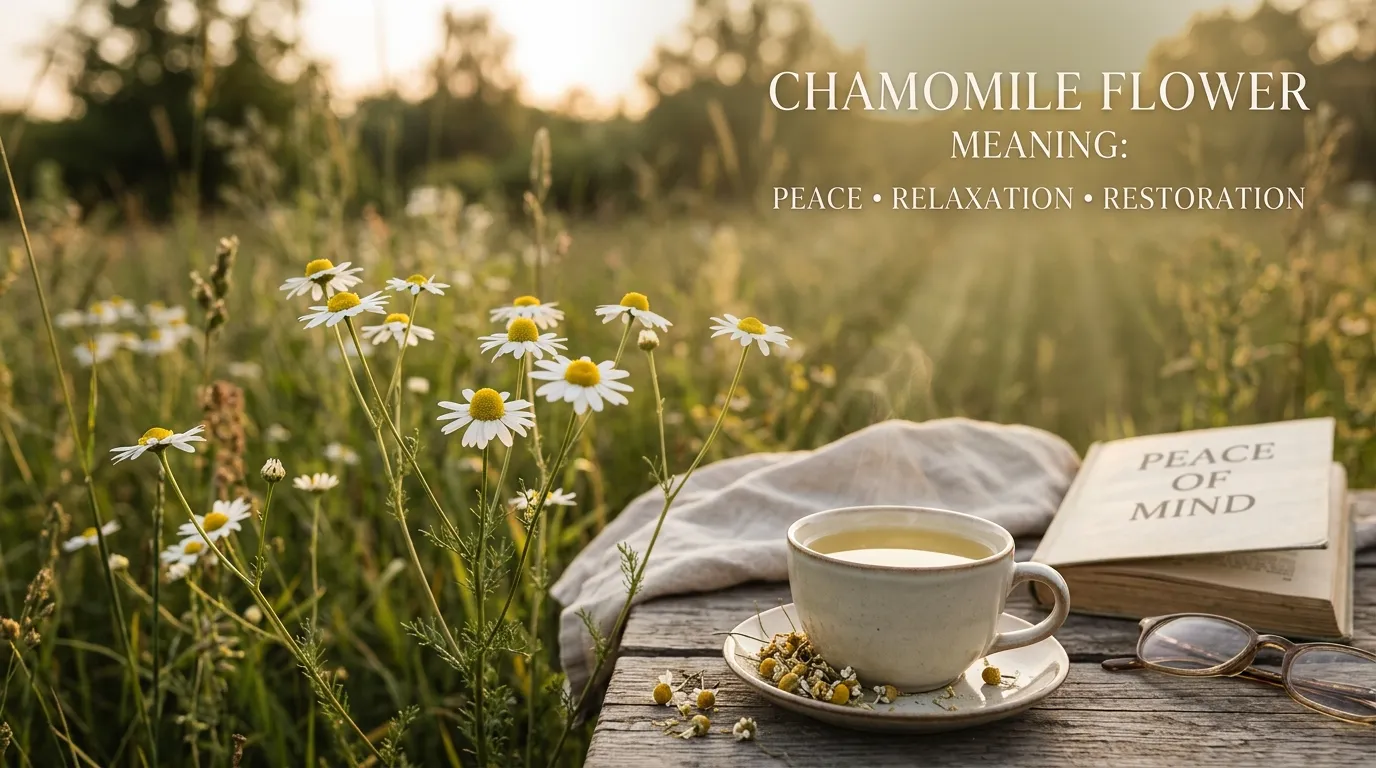
Chamomile grows better when you step on it. That’s not a guess. It’s an old English proverb, and it’s actually true. Crushed chamomile releases its apple-like scent faster, and the plant often spreads thicker after light foot traffic. That one strange trait built the flower’s whole reputation for quiet patience. Ancient Egyptians noticed something else about it too. Its small, sun-shaped bloom looked like a tiny daisy made of gold and white. They dedicated the flower to their sun god, Ra.
The Definitive Answer Block
Chamomile means patience, rest, and quiet strength through hard times. This meaning grows straight out of the plant’s own nature. Chamomile survives being trampled and often grows back stronger. Old English folklore turned that toughness into a lesson about calm endurance.
| Flower Color | Dominant Meaning | Best Occasion |
|---|---|---|
| White/Yellow (natural) | Patience, calm, rest | Get-well gifts, quiet comfort |
| Dried, as tea | Relaxation, healing | Self-care gifts, wellness baskets |
Botanical Foundations & Profile
Two plants share the common name “chamomile.” German chamomile carries the scientific name Matricaria chamomilla. Roman chamomile is Chamaemelum nobile. Both sit in the daisy family, called Asteraceae. The name “chamomile” comes from Greek, combining chamai, meaning “ground,” and melon, meaning “apple.” Together, they mean “ground apple,” a nod to its low growth and apple-like scent. Both types grow wild across Europe and western Asia.
| Category | Detail |
|---|---|
| Scientific Classification | Matricaria chamomilla and Chamaemelum nobile, family Asteraceae |
| Native Region | Europe, western Asia |
| Bloom Period | Late spring through summer |
| Average Lifespan | German chamomile: annual. Roman chamomile: perennial, 3+ years |
| USDA Zones | 4–9 |
| Cultivar Count vs. Wild Species | A handful of cultivars vs. 2 main species grown widely |
Deep History & Cultural Timeline
Ancient Egyptians used chamomile in medicine and in mummification rituals, and tomb art shows the flower dedicated to the sun god Ra. The Greek physician Dioscorides described chamomile’s uses in his medical text De Materia Medica, written around 65 CE. Anglo-Saxon healers listed chamomile among nine sacred plants in the “Nine Herbs Charm,” an Old English healing poem written down by the 10th century. William Shakespeare referenced the plant’s toughness directly in Henry IV, Part 1, writing that chamomile “grows the faster” the more it is trodden. In 1902, Beatrix Potter had Peter Rabbit’s mother give him chamomile tea after a stressful day, cementing the plant’s calming reputation for generations of readers.
Symbolism Deep-Dive
Patience
Chamomile survives being stepped on and often grows back thicker. That real trait gave rise to its old reputation for quiet, steady endurance.
Rest and calm
People have brewed chamomile tea for centuries as a bedtime drink. This everyday habit built its modern link to relaxation and sleep.
Humility
Chamomile grows low to the ground, easy to overlook among taller plants. Some old readings tied this modest habit to quiet, unshowy strength.
Healing
Ancient Egyptian and Greek medicine both used chamomile for real remedies. That long medical history gave the flower a lasting tie to comfort and recovery.
Color Meanings & Cultural Safety Matrix
White and Yellow (natural bloom)
- Primary sentiment: Patience, calm, gentle comfort
- Geographic nuances: Chamomile’s meaning stays fairly consistent across Western cultures, without the sharp splits seen in flowers like white lilies or chrysanthemums.
- Gifting warning: A safe, low-risk choice almost anywhere, since chamomile carries no strong negative reading in any major tradition.
Dried Chamomile (as tea or sachets)
- Primary sentiment: Relaxation, self-care, healing
- Geographic nuances: Chamomile tea holds a near-universal reputation as a calming drink, popular across Europe, the Americas, and parts of Asia alike.
- Gifting warning: A thoughtful, gentle gift for someone stressed or unwell; pairs well with a card wishing them rest.
Global Traditions & Literary Impact
Ancient Egyptian tomb paintings show chamomile offered to the sun god Ra, tying the flower to healing and the sun’s daily cycle. Anglo-Saxon healers listed chamomile among the nine sacred herbs in an old healing charm, one of the earliest English texts to record herbal medicine by name. Shakespeare used chamomile’s toughness as a direct metaphor in Henry IV, Part 1, where Falstaff notes that trodden chamomile only grows faster. Beatrix Potter’s 1902 tale The Tale of Peter Rabbit gave chamomile a lasting modern image, as Peter’s mother brews him a calming cup after his frightening day in Mr. McGregor’s garden.
Economic, Culinary, or Medicinal Uses
Chamomile is one of the most widely used herbal teas in the world, brewed from the dried flower heads for its mild, apple-like taste. Some research supports chamomile tea’s mild calming effect, though results across studies stay modest rather than dramatic. Chamomile essential oil is common in skincare products, valued for its gentle, soothing reputation on sensitive skin. The plant also has a long history in folk medicine for upset stomachs and minor skin irritation, backed by more evidence than many other traditional herbal remedies.
The Ultimate Etiquette & Gifting Guide
| Relationship / Setting | Recommended Form | The Subtext Sent |
|---|---|---|
| Get-well gift | Dried tea or fresh bouquet | Rest, comfort, healing |
| Stressed friend or coworker | Tea gift set | Quiet support, self-care |
| New home gift | Chamomile plant | A calm, steady start |
| Sympathy | Fresh chamomile bouquet | Gentle, quiet comfort |
Universal Safety Rule
Chamomile tea is generally gentle, but check for ragweed allergies before gifting it, since chamomile belongs to the same plant family and can trigger a reaction in sensitive people.
Direct Comparison: Chamomile vs. Close Lookalikes
| Feature | Chamomile (Matricaria / Chamaemelum) | Daisy (Bellis perennis) | Feverfew (Tanacetum parthenium) |
|---|---|---|---|
| Petal drop | Petals droop down as the flower matures | Petals stay flat, drop late in the season | Petals stay flat, similar to daisy |
| Fragrance | Strong, apple-like scent | Little to no scent | Sharp, slightly bitter scent |
| Foliage | Feathery, finely cut leaves | Rounded, simple leaves | Deeply cut, jagged leaves |
| Bloom season | Late spring through summer | Spring through fall | Summer |
| Care needs | Full sun, well-drained soil | Full sun to part shade, adaptable | Full sun, well-drained soil |
How to tell them apart
Chamomile has feathery, carrot-like leaves and a strong apple scent when crushed. Daisy has smooth, simple leaves and almost no scent. Feverfew has jagged leaves and a sharper, more bitter smell than either.
Practical Maintenance & Domestic Safety
Chamomile grows best in full sun with soil that drains well. Water it moderately, letting the soil dry out a bit between waterings. German chamomile grows as an annual and often reseeds itself each year. Roman chamomile spreads low as a perennial ground cover and can handle some light foot traffic, true to its old reputation.
On pet safety, chamomile deserves some caution despite its gentle reputation. The ASPCA lists chamomile as toxic to cats, dogs, and horses, capable of causing vomiting, drooling, and mild skin irritation. This surprises many people, since chamomile tea is a common, calming drink for humans. The risk to pets comes mainly from eating large amounts of the plant itself, not from occasional human tea exposure, but it’s still smart to keep the growing plant out of reach of curious pets.
Expert Curations & Misconceptions
10 fun facts:
- “Chamomile” comes from Greek words meaning “ground apple.”
- Ancient Egyptians dedicated chamomile to their sun god, Ra.
- Chamomile appears in the Anglo-Saxon “Nine Herbs Charm.”
- Shakespeare referenced chamomile’s toughness in Henry IV, Part 1.
- Beatrix Potter gave Peter Rabbit chamomile tea in her 1902 book.
- Two different plants share the common name “chamomile.”
- Chamomile belongs to the daisy family, along with sunflowers and asters.
- The Greek physician Dioscorides wrote about chamomile around 65 CE.
- Roman chamomile can survive light foot traffic better than most garden plants.
- Chamomile essential oil is common in modern skincare products.
Myth vs. reality:
- Myth: Chamomile is completely safe for pets since it’s a common tea herb. Reality: The ASPCA lists it as toxic to cats, dogs, and horses if eaten in quantity.
- Myth: “Chamomile” refers to just one plant. Reality: German chamomile and Roman chamomile are two separate species, both sharing the common name.
- Myth: Chamomile tea’s calming effect is just folklore. Reality: Some real research supports a mild calming effect, though it’s modest, not dramatic.
3 expert tips:
- Harvest chamomile flowers in the morning, right after the dew dries, for the strongest scent and flavor.
- Dry flower heads fully before storing them for tea, or they can mold in an airtight container.
- Check for a ragweed allergy before drinking chamomile tea regularly, since the two plants are close relatives.
High-Value Section
What does the chamomile flower mean?
Chamomile means patience, rest, and quiet strength, a meaning tied to the plant’s real ability to survive being trampled and grow back.
Is chamomile toxic to cats or dogs?
Yes. The ASPCA lists chamomile as toxic to cats, dogs, and horses, capable of causing vomiting and mild skin irritation if eaten.
Is chamomile tea actually calming?
Some research supports a mild calming effect, though the evidence stays modest rather than strong, and results vary between studies.
What’s the difference between German and Roman chamomile?
German chamomile is an annual, typically used for tea. Roman chamomile is a low-growing perennial, often used as ground cover.
Why is chamomile linked to patience?
Old English folklore noted that chamomile grows back stronger after being trodden on, turning that real trait into a symbol of quiet endurance.
Can I grow chamomile at home?
Yes, easily. It grows well in full sun with well-drained soil, and German chamomile often reseeds itself each year.
What’s the difference between chamomile and daisy?
Chamomile has feathery, carrot-like leaves and a strong apple scent. Daisy has smooth, simple leaves and almost no scent.
Is chamomile good for skin?
Chamomile extract and oil are common in skincare products, valued for a gentle, soothing reputation on sensitive skin.
Why did ancient Egyptians value chamomile?
They used it in medicine and mummification, and dedicated the flower to their sun god, Ra, based on its daisy-like, sun-shaped bloom.
Does chamomile trigger allergies?
It can, especially in people allergic to ragweed, since chamomile belongs to the same plant family and shares similar allergens.
How long does chamomile take to bloom?
German chamomile typically blooms within 6 to 8 weeks of planting, while Roman chamomile takes a bit longer to establish as a perennial.
Is chamomile a good gift for someone who’s stressed?
Yes, a chamomile tea set or fresh bouquet sends a gentle message of comfort, rest, and quiet support.
Conclusion
Chamomile Flower Meaning earns its calm reputation through real toughness, not softness. A flower that survives being stepped on, and often grows back stronger, became an old symbol for quiet patience through hard times. That same steady plant now sits in tea cups worldwide, still doing the same simple job it did in ancient Egypt: offering a small, gentle kind of comfort. Sometimes the softest gift comes from the toughest plant in the garden.

Zahid Abbas is an educator, researcher, and digital publishing strategist behind BloomsyFlower, a flower and gardening resource covering flower meanings, symbolism, history, care, seasonal blooms, and gifting. He combines research with simple, reader-friendly writing to help people understand, grow, and enjoy flowers.