Primrose earns its name honestly. It comes from the Latin word primus. That word means “first.” This flower blooms before almost anything else each year. Sometimes it pushes through late snow in February. One British prime minister loved it so much that people still mark his death with primroses every April. That tradition has lasted since 1881. It’s still going strong today.
The Definitive Answer Block
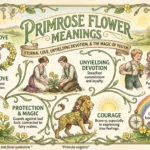
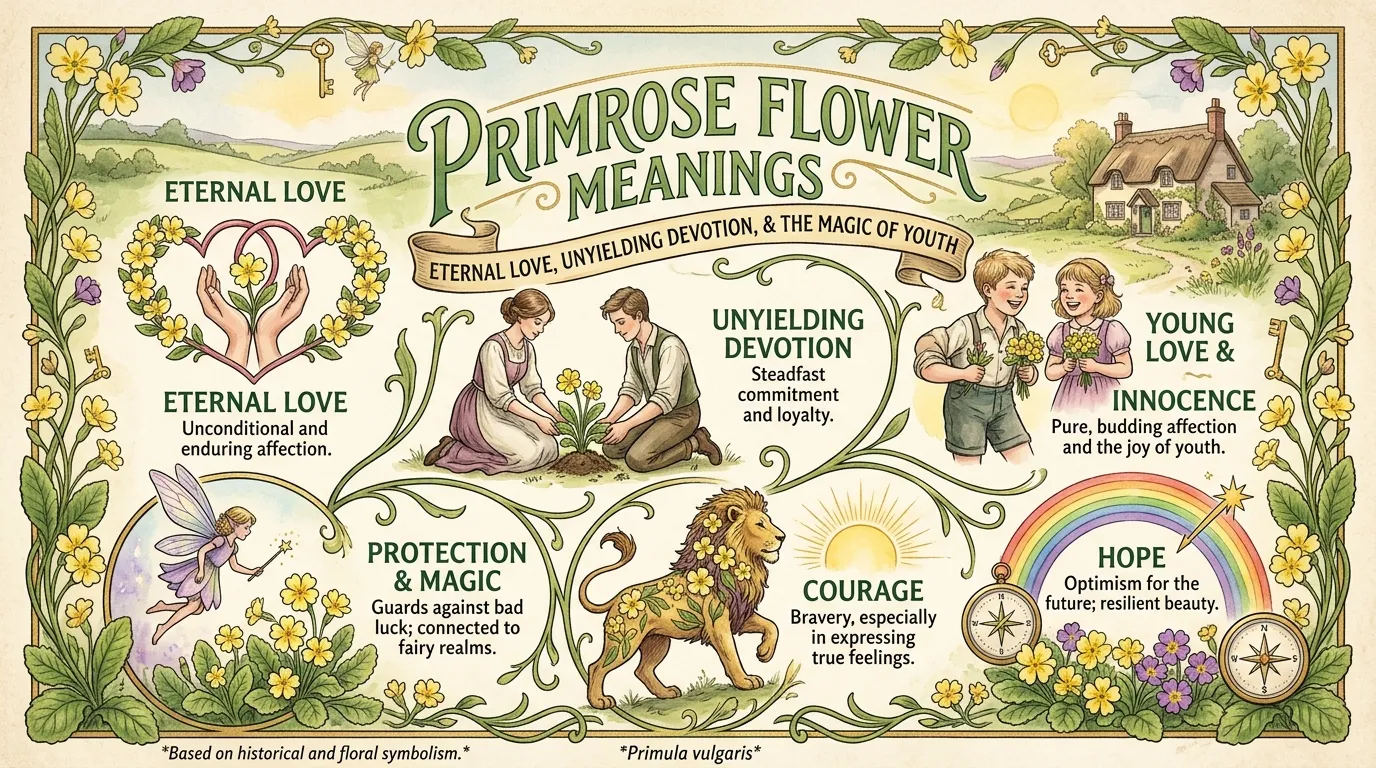
Primrose means young love and new beginnings. This meaning comes from timing. Primrose blooms first each spring. It often blooms before the last frost clears. Victorian flower-readers linked that early bloom to fresh, hopeful feelings.
| Flower Color | Dominant Meaning | Best Occasion |
|---|---|---|
| Yellow | New beginnings, hope | Early spring gifts, get-well wishes |
| Pink | Young love, gentle affection | New relationships |
| Purple | Confidence, deeper feeling | Thoughtful, meaningful gifts |
| White | Innocence, quiet purity | Sympathy, christenings |
Botanical Foundations & Profile
Common primrose has the scientific name Primula vulgaris. It sits in the primrose family, called Primulaceae. The plant grows wild across Europe, western Asia, and North Africa. It likes cool, shaded ground. You’ll find it along hedgerows and at woodland edges. Carl Linnaeus named the genus Primula in 1753. He took the name straight from the Latin word for “first.”
| Category | Detail |
|---|---|
| Scientific Classification | Primula vulgaris, family Primulaceae |
| Native Region | Europe, western Asia, North Africa |
| Bloom Period | Late winter to early spring |
| Average Lifespan | Perennial: 3–5 years, often longer |
| USDA Zones | 4–8 |
| Cultivar Count vs. Wild Species | Hundreds of cultivars vs. about 500 wild species |
Deep History & Cultural Timeline
Primrose has grown wild in Britain for centuries. Old English folk names call it the first flower of spring. Carl Linnaeus named the genus in his 1753 book, Species Plantarum. British Prime Minister Benjamin Disraeli loved primroses. Queen Victoria sent a wreath of them to his funeral in 1881. His supporters later marked April 19, the date of his death, as “Primrose Day.” That tradition still continues in parts of Britain. In 1883, his admirers founded the Primrose League, a political group named after his favorite flower. Devon, England, now claims primrose as its county flower.
Symbolism Deep-Dive
New beginnings
Primrose blooms before almost any other flower each year. That early timing made it a symbol for fresh starts.
Young love
Victorian readers linked its early, delicate bloom to new, untested feelings. This is much like how they read lilac.
Loyalty
Disraeli loved this flower deeply. A political group even took its name. That gave primrose a lasting tie to devotion.
Patience
Primrose often blooms through cold, harsh weather. Some readings tie the flower to quiet strength through a hard season.
Color Meanings & Cultural Safety Matrix
Yellow
- Primary sentiment: New beginnings, hope
- Geographic nuances: Yellow is the most common wild color in Britain. It carries the oldest, strongest meaning of the group.
- Gifting warning: A safe, cheerful choice for almost any early-spring occasion.
Pink
- Primary sentiment: Young love, gentle affection
- Geographic nuances: Pink types mostly come from garden breeding. They carry less old folklore than wild yellow primrose.
- Gifting warning: Good for a new relationship. Less fitting for formal or sad occasions.
Purple
- Primary sentiment: Confidence, deeper feeling
- Geographic nuances: Purple reads as bolder in modern floral use. Deep, rich shades often carry stronger feeling than pale ones.
- Gifting warning: Save it for someone you already know well.
White
- Primary sentiment: Innocence, quiet purity
- Geographic nuances: White fits general Western purity traditions well. It doesn’t carry the sharp split seen in some other white flowers.
- Gifting warning: A safe, gentle choice for sympathy or a christening gift.
Global Traditions & Literary Impact
Victorian England used primrose in its flower-language system. Its early bloom read as young, hopeful love, not settled devotion. British history gave primrose a second meaning too. Primrose Day falls every April 19. Some Britons still wear or display the flower to remember Benjamin Disraeli. William Wordsworth wrote about primrose in his poems. He tied it to quiet rural beauty as much as any single meaning. In parts of rural England, old folk belief held a strange warning. Bringing primroses indoors too early could bring bad luck to a household’s chickens. That superstition has mostly faded today.
Economic, Culinary, or Medicinal Uses
Primrose flowers and young leaves are edible. Cooks sometimes add them to salads or use them as a garnish. People prize the look more than any strong flavor. Old English folk medicine used primrose root and flowers for headaches. Modern research doesn’t strongly back these old uses. Today, primrose mostly grows as a garden plant. Shops sell it as an early-spring potted flower. One note worth knowing: “evening primrose oil” comes from a totally different plant, not true primrose.
The Ultimate Etiquette & Gifting Guide
| Relationship / Setting | Recommended Color | The Subtext Sent |
|---|---|---|
| New romantic interest | Pink | Fresh, hopeful affection |
| Get-well or cheer-up gift | Yellow | Hope, new beginnings |
| Sympathy or christening | White | Gentle, quiet purity |
| Established partner | Purple | Deeper, confident feeling |
| British history-themed gift | Any color | A nod to Primrose Day |
Universal Safety Rule:
Primrose’s meaning works well across most Western settings. Its Primrose Day tie is specifically British, so skip that angle for gifts outside that context.
Direct Comparison: Primrose vs. Close Lookalikes
| Feature | Common Primrose (Primula vulgaris) | Cowslip (Primula veris) | Buttercup (Ranunculus spp.) |
|---|---|---|---|
| Petal drop | Fades over 1–2 weeks | Drops in clusters, similar timing | Drops fast, often within days |
| Fragrance | Faint, sweet scent | Stronger, sweeter scent | Little to no scent |
| Foliage | Wrinkled leaves in a low rosette | Similar leaves, a bit narrower | Smooth, deeply lobed leaves |
| Bloom season | Late winter to early spring | Mid to late spring | Spring through early summer |
| Care needs | Partial shade, moist soil | Full sun to part shade | Full sun, poor soil is fine |
How to tell them apart:
Primrose grows single flowers close to the ground. Cowslip clusters several small blooms on one taller stem. Buttercup has shiny, cup-shaped petals that the other two lack.
Practical Maintenance & Domestic Safety
Primrose likes partial shade and soil that stays moist but drains well. Water it often, especially during dry spring spells. Cut off spent blooms to keep the plant tidy. Divide crowded clumps every few years to keep them blooming well.
Now, about pets. The ASPCA lists one type, Primula obconica, as mildly toxic to cats and dogs. It can cause stomach upset if eaten. That same plant can also irritate human skin, due to a compound called primin. Common garden primrose, Primula vulgaris, carries less risk. Still, keep any primrose out of reach of pets that like to chew on plants.
Expert Curations & Misconceptions
10 fun facts:
- “Primrose” comes from the Latin primus, meaning “first.”
- There are roughly 500 wild Primula species worldwide.
- Primrose Day, April 19, honors British PM Benjamin Disraeli.
- The Primrose League, founded in 1883, was a real political group.
- Devon, England, claims primrose as its county flower.
- Primrose flowers and leaves are edible, often used in salads.
- “Evening primrose” belongs to a totally different plant family.
- Wordsworth wrote about primrose in several of his poems.
- Primrose often blooms through light snow in early spring.
- Some Primula types can irritate sensitive skin.
Myth vs. reality:
- Myth: Evening primrose is a true primrose. Reality: It’s Oenothera biennis. That’s a different plant, from a different family, native to North America.
- Myth: Primrose is fully safe for pets. Reality: The ASPCA lists some types as mildly toxic. They can cause stomach upset.
- Myth: Primrose Day is an ancient tradition. Reality: It only began in 1881. It ties directly to Disraeli’s death.
3 expert tips:
- Divide crowded primrose clumps every two to three years. This keeps them blooming strongly.
- Plant primrose with morning sun and afternoon shade. This gives the longest bloom time.
- Wear gloves when handling Primula obconica. Its leaves can irritate sensitive skin.
High-Value Section
What does the primrose flower mean?
Primrose means young love and new beginnings. This ties to its habit of blooming first each spring, often before winter fully ends.
Is primrose toxic to cats or dogs?
Some types, like Primula obconica, are mildly toxic per the ASPCA. They can cause stomach upset. Common garden primrose carries less risk.
Is evening primrose the same as primrose?
No. Evening primrose is Oenothera biennis. That’s a different plant family, native to North America, unrelated to true Primula.
What is Primrose Day?
Primrose Day falls every April 19. It honors British Prime Minister Benjamin Disraeli, who died that day in 1881 and loved the flower.
Can you eat primrose flowers?
Yes. Common primrose flowers and young leaves are edible. People often add them fresh to salads or use them as a garnish.
What’s the difference between primrose and cowslip?
Primrose grows single flowers close to the ground. Cowslip clusters several small blooms on one taller stem.
Why is primrose called “first flower”?
Its name comes from the Latin primus, meaning “first.” It’s often the earliest flower to bloom each spring.
What soil does primrose need?
Primrose wants soil that stays moist but drains well. It likes rich soil and some shade through the day.
Can primrose cause skin irritation?
Yes, mostly Primula obconica. It has a compound called primin. That can irritate skin on contact.
Is primrose an English flower?
It grows natively across much of Europe, not just England. Still, it holds strong ties there, including as Devon’s county flower.
How long does primrose bloom?
Common primrose blooms for several weeks in late winter and early spring. It can bloom longer in cool, shaded spots.
Do primroses come in many colors?
Yes. Wild primrose is usually pale yellow. Garden types now come in pink, purple, red, and white too.
Conclusion
Primrose Flower Meaning through timing alone. A flower brave enough to bloom before winter fully lets go became a symbol for hope. That same early courage caught the eye of a 19th-century prime minister. It turned into a British tradition that still marks a date on the calendar today. Sometimes the first flower to show up ends up meaning the most.

Zahid Abbas is an educator, researcher, and digital publishing strategist behind BloomsyFlower, a flower and gardening resource covering flower meanings, symbolism, history, care, seasonal blooms, and gifting. He combines research with simple, reader-friendly writing to help people understand, grow, and enjoy flowers.