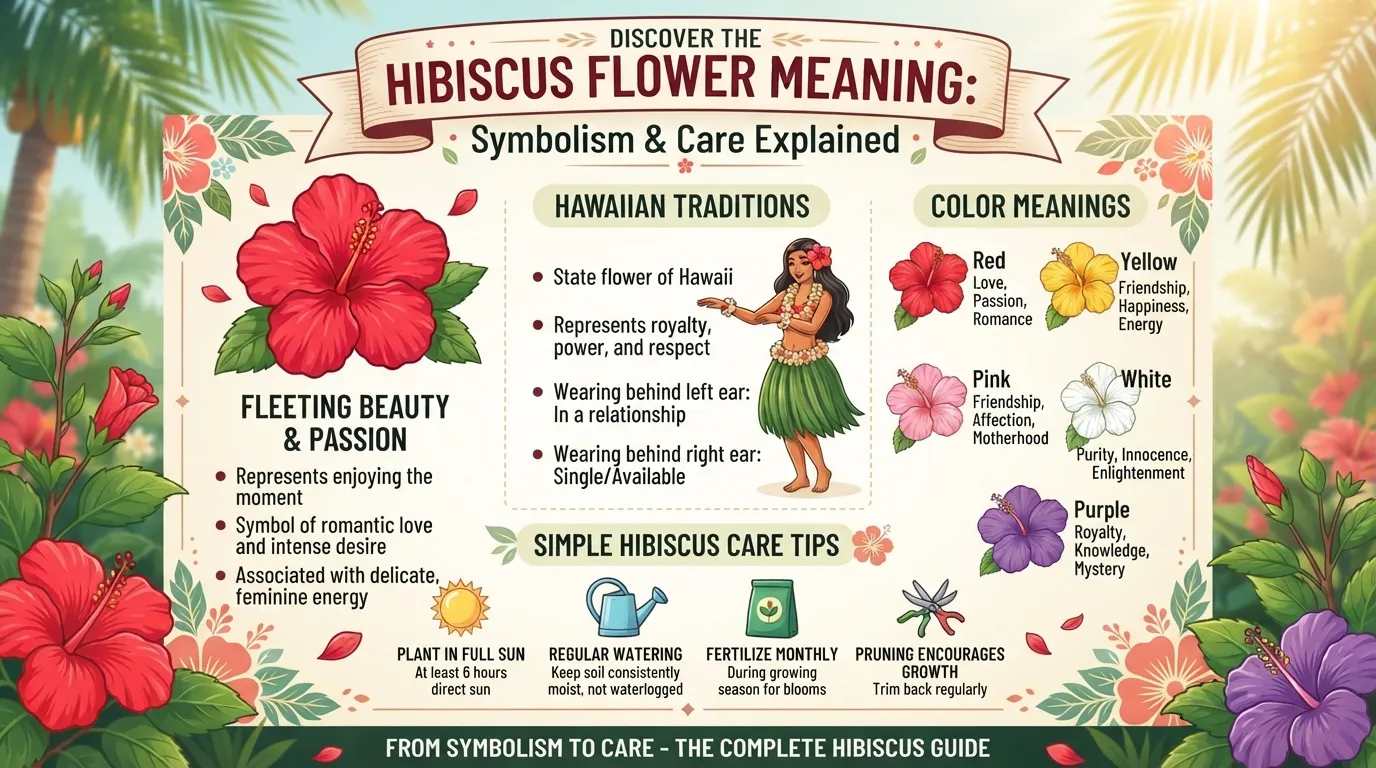
The hibiscus flower means delicate beauty, rare charm, and new love. It also stands for pride and passion. People give hibiscus to say someone’s beauty is fleeting yet unforgettable, or to show deep, warm feeling.
Origin of the Name
The word “hibiscus” comes from an old Greek word, hibiskos. This word was first used by the Greek doctor and writer Pedanius Dioscorides in the first century CE to describe a mallow-like plant. Botanists later kept this ancient name when they classified the flower we know today.
Hibiscus in Victorian Flower Language
In Victorian times, flowers carried hidden meanings. Hibiscus stood for “delicate beauty” and “a beauty that fades quickly, but is never forgotten.” This meaning grew from a true fact about the flower. Most hibiscus blooms last only one day before wilting, yet the plant keeps producing new flowers again and again through the season.
Botanical Foundations & Profile
| Feature | Detail |
|---|---|
| Scientific Name | Hibiscus (e.g. Hibiscus rosa-sinensis, tropical hibiscus) |
| Native Region | Asia, the Pacific Islands, and parts of Africa |
| Bloom Period | Summer through fall in most climates; year-round in the tropics |
| Average Lifespan | Perennial shrub; can live many years with care |
| USDA Zones | Zones 9 through 11 for tropical types; hardy types grow in cooler zones |
| Species Count | About 200 to 300 species |
History & Cultural Timeline
- Hibiscus has grown across Asia and the Pacific for thousands of years.
- Ancient Egyptians and Greeks recorded early uses of mallow-family plants related to hibiscus.
- Hawaii adopted the yellow hibiscus as its official state flower in 1988.
- Malaysia chose the red hibiscus as its national flower in 1960.
Symbolism Deep-Dive
Fleeting Beauty
A single hibiscus bloom often lasts just one day. This short life gave the flower its deep link to beauty that does not last forever, yet still leaves a strong impression.
Hospitality
In many Pacific Island cultures, people wear hibiscus flowers to welcome guests. This warm, open custom ties the flower closely to hospitality and friendly greeting.
Passion
Hibiscus blooms often show bold, bright colors and a striking center shape. This bold look gave the flower its connection to strong feeling and passionate love.
Meaning by Color
| Color | Meaning |
|---|---|
| Red | Passion, love, and deep desire |
| Yellow | Joy, sunshine, and new friendship |
| White | Purity and a peaceful welcome |
| Pink | Gentle romance and quiet admiration |
| Purple | Rare beauty and mystery |
Color Meanings & Cultural Safety Matrix
Red Hibiscus
- Primary sentiment: Deep passion and desire.
- Geographic nuances: In Malaysia, red hibiscus is the national flower, standing for courage and unity. In the West, red often means romantic love.
- Gifting warning: Save red hibiscus for close, loving relationships.
Yellow Hibiscus
- Primary sentiment: Joy and new friendship.
- Geographic nuances: In Hawaii, yellow hibiscus is the state flower, tied to sunshine and welcome. In parts of Asia, yellow can also mean prosperity.
- Gifting warning: A cheerful, safe choice for most happy occasions.
White Hibiscus
- Primary sentiment: Purity and peaceful welcome.
- Geographic nuances: In many Pacific cultures, white hibiscus is worn during formal or respectful events. In some Eastern homes, white flowers can connect to mourning.
- Gifting warning: Check local customs before gifting white hibiscus at a celebration.
Pink Hibiscus
- Primary sentiment: Gentle romance and admiration.
- Geographic nuances: In many tropical regions, pink hibiscus is common in casual, everyday gifting.
- Gifting warning: A safe, warm choice for friends or new romance.
Related Flower Meanings:https://bloomsyflower.com/cyclamen-flower-meaning/
Global Traditions & Literary Impact
In Hawaii, hibiscus flowers are worn behind the ear as part of a long-standing tradition. Wearing the flower behind the right ear signals someone is single, while wearing it behind the left ear signals they are taken. This simple custom turned the flower into a quiet, well-known form of communication.
In literature, hibiscus appears in the novel Purple Hibiscus by Chimamanda Ngozi Adichie, published in 2003, where the flower symbolizes rare beauty and quiet strength within a difficult family story. Please double-check this literary reference, as I cannot search a live database and details may be inaccurate.
Economic, Culinary, and Medicinal Uses
Hibiscus petals are widely used to make a tart, red herbal tea, popular in many countries for its bright color and tangy taste. Some traditional health practices use hibiscus tea and believe it may support calm relaxation, though research results vary. Hibiscus is also used in some skincare products for its gentle, natural properties. Always check with a doctor before using hibiscus for health purposes, especially if pregnant, nursing, or taking medication, since it can interact with certain drugs.
Ultimate Etiquette & Gifting Guide
| Relationship | Recommended Color | The Subtext |
|---|---|---|
| Spouse or Partner | Red | “My passion for you burns bright.” |
| New Friend | Yellow | “Welcome, I’m glad to know you.” |
| Wedding Guest | White | “Wishing you peace and joy.” |
| Casual Romance | Pink | “I admire you, gently and truly.” |
Universal Safety Rule
Since a single hibiscus bloom lasts only a day, gift a full plant rather than a cut flower if you want the beauty to last longer.
Hibiscus vs. Close Lookalikes
| Feature | Hibiscus | Hollyhock | Rose of Sharon (Hibiscus syriacus) |
|---|---|---|---|
| Petal Shape | Large, wide, trumpet-like petals | Ruffled, cup-shaped petals | Smaller, cup-shaped petals |
| Fragrance | Little to no scent in most types | Mild or no scent | Mild or no scent |
| Foliage | Broad, glossy, deep green leaves | Rough, hairy, lobed leaves | Narrow, toothed leaves |
| Bloom Season | Summer through fall, or year-round in the tropics | Summer | Summer through fall |
| Growth Style | Grows as a shrub or small tree | Grows as a tall, upright stalk | Grows as a woody shrub |
How to tell them apart
Look at the center of the flower. Hibiscus has a long, tube-like center piece reaching out past the petals, which hollyhock does not.
Practical Maintenance & Domestic Safety
Care Basics
- Plant hibiscus in full sun for the most blooms.
- Use rich, well-drained soil.
- Water often, since hibiscus likes moist soil, especially in summer.
- Feed regularly during the growing season to support new flowers.
Pet Toxicity Warning
The ASPCA lists tropical hibiscus (Hibiscus rosa-sinensis) as non-toxic to cats and dogs, though eating large amounts of any plant can still cause mild stomach upset. Always watch for unusual symptoms and contact a vet if you have concerns, since some related hibiscus species have not been fully studied.
Expert Curations & Misconceptions
10 Quick Fun Facts
- A single hibiscus flower often lasts only one day.
- Hibiscus is the national flower of Malaysia and South Korea.
- Yellow hibiscus is the official state flower of Hawaii.
- Hibiscus tea is naturally caffeine-free.
- Bees and hummingbirds love visiting hibiscus blooms.
- Some hibiscus varieties can grow over ten feet tall.
- Hibiscus flowers can be red, yellow, white, pink, orange, or purple.
- Hibiscus is related to cotton, okra, and cacao plants.
- Ancient Egyptian and Sudanese cultures used hibiscus in traditional drinks.
- Hibiscus flowers can change color slightly as they age in the sun.
3 Myth vs. Reality Pairs
Myth: All hibiscus flowers only bloom in the tropics.
Reality: Some hardy hibiscus varieties survive cold winters in northern gardens.
Myth: Hibiscus flowers stay open for many days.
Reality: Most hibiscus blooms last only a single day before wilting.
Myth: Hibiscus tea and hibiscus flowers used for decoration are always the same type.
Reality: Tea is usually made from a specific species, Hibiscus sabdariffa, not all hibiscus varieties.
2 Quick Florist Tips
- Float hibiscus blooms in a shallow bowl of water for a simple, elegant one-day display.
- Mist hibiscus petals lightly to help keep them fresh through a single event or party.
Questions About Cyclamen flower meaning
What does the hibiscus flower mean spiritually?
Hibiscus means beauty that does not last forever, yet still leaves a deep and lasting impression.
Is hibiscus a good gift for special occasions?
Yes, it works well for welcomes, new friendships, and romantic gestures, though it’s best gifted as a plant since blooms fade quickly.
What does a red hibiscus mean?
Red hibiscus stands for deep passion, desire, and strong love.
Can you drink hibiscus tea?
Yes, hibiscus tea is popular worldwide, though it’s wise to check with a doctor first if you are pregnant, nursing, or on medication.
When does hibiscus bloom?
Tropical hibiscus can bloom nearly year-round in warm climates, while other types bloom mainly in summer and fall.
Is hibiscus toxic to pets?
Tropical hibiscus is generally considered non-toxic to cats and dogs, but always watch for unusual symptoms after any plant is eaten.
How did hibiscus get its name?
The name comes from an ancient Greek word first used by a Greek doctor in the first century CE.
What does wearing hibiscus behind your ear mean in Hawaii?
Behind the right ear often signals someone is single, while behind the left ear signals they are in a relationship.
Final Thoughts
The hibiscus flower carries a beautiful, bittersweet meaning. Each bloom lasts only a single day, yet its bold color and striking shape leave a lasting impression on everyone who sees it. From Hawaiian traditions to tangy herbal tea, hibiscus has woven itself into cultures across the world.
Whether you plant it for its constant summer color, sip it as a tart, refreshing tea, or gift it to welcome someone new, hibiscus reminds us that even short-lived beauty can hold deep meaning. Consider adding a hibiscus plant to a sunny corner of your garden, where its bold blooms can greet you fresh each day.

Zahid Abbas is an educator, researcher, and digital publishing strategist behind BloomsyFlower, a flower and gardening resource covering flower meanings, symbolism, history, care, seasonal blooms, and gifting. He combines research with simple, reader-friendly writing to help people understand, grow, and enjoy flowers.