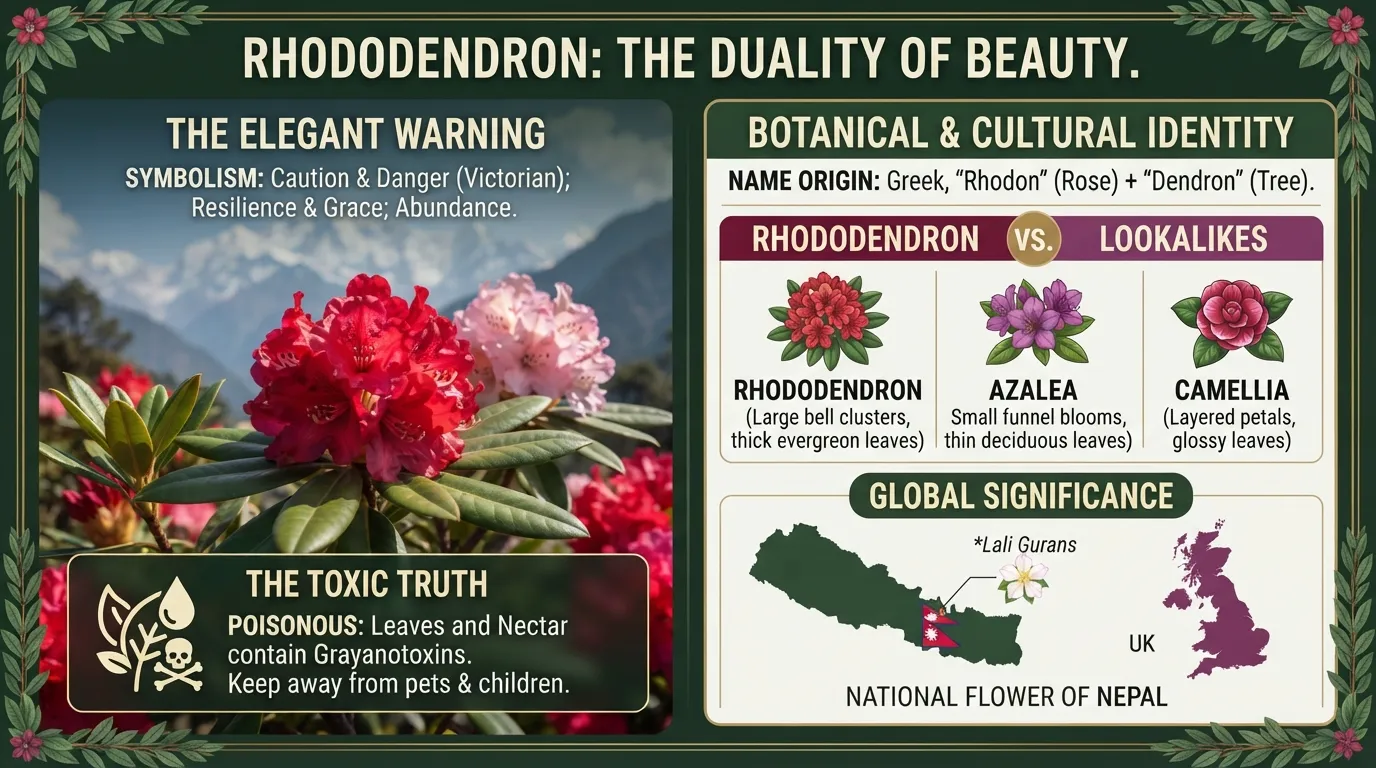
The rhododendron flower means caution and danger, but also elegance and abundance. In old flower language, people used it to say “beware.” Yet in many parts of Asia, this same flower stands for love, home, and deep beauty. This mix of warning and wonder makes the rhododendron one of the most interesting flowers in the world.
Origin of the Name
The word “rhododendron” comes from two old Greek words. Rhodon means rose. Dendron means tree. Put together, the name means “rose tree.” Ancient Greek people used this name for shrubs with big, rose-like blooms. Over time, botanists kept the name for this exact plant family, and it stuck through the centuries into modern science.
Rhododendron in Victorian Flower Language
During Victorian times, people used flowers to send secret messages. Open talk about feelings was often seen as rude. So flowers became a quiet, coded language instead.
Giving someone a rhododendron sent a clear signal: “Beware, danger is near.” This meaning likely grew from a real fact about the plant. Its leaves and nectar can be poisonous if eaten by people or animals. So while the flower looked lovely, gifting it in Victorian times was almost a polite warning, not a sweet gesture of love.
Botanical Foundations & Profile
| Feature | Detail |
|---|---|
| Scientific Name | Rhododendron (genus with many species) |
| Native Region | Asia, Europe, and North America |
| Bloom Period | Spring, with some types blooming into early summer |
| Average Lifespan | Many decades; some shrubs live over 50 years |
| USDA Zones | Zones 4 through 8, depending on the species |
| Species Count | Around 1,000 known species |
History & Cultural Timeline
- Rhododendrons have grown wild in mountain regions for thousands of years.
- Early European botanists began studying and naming rhododendron species in the 1600s and 1700s.
- The flower became a garden favorite in Britain during the 1800s, especially in large estate gardens.
- Nepal named the rhododendron its national flower, honoring its beauty across the Himalayan hills.
Symbolism Deep-Dive
Caution
Rhododendron leaves and nectar hold natural toxins. Eating them can cause real harm to people and animals. This simple fact shaped centuries of folklore, turning a pretty flower into a quiet warning sign.
Resilience
Rhododendrons often grow on steep, rocky mountainsides. They survive harsh winds, cold nights, and thin soil. This tough growing spot gives the flower a strong link to resilience and quiet strength.
Elegance
Despite growing in rough places, rhododendron blooms look soft and full. Their large, layered petals give off a graceful, almost regal feel. This contrast between tough roots and soft blooms adds to its elegant reputation.
Explore More Flower Meanings:
https://bloomsyflower.com/chamomile-flower-meaning/
Meaning by Color
| Color | Meaning |
|---|---|
| Red | Passion, danger, and strong emotion |
| Pink | Grace, gentleness, and quiet admiration |
| White | Purity, elegance, and new beginnings |
| Purple | Royalty, dignity, and deep mystery |
| Yellow | Caution mixed with joy |
Color Meanings & Cultural Safety Matrix
Red Rhododendron
- Primary sentiment: Deep passion and a strong warning at once.
- Geographic nuances: In Nepal, red rhododendron is a proud national symbol. In Western flower language, red often leans more toward passion or danger.
- Gifting warning: Save red rhododendron for bold, meaningful gifts, not casual ones.
Pink Rhododendron
- Primary sentiment: Soft grace and gentle respect.
- Geographic nuances: In many Asian gardens, pink rhododendron reflects quiet beauty and calm strength.
- Gifting warning: A safer, gentler choice than red for most occasions.
White Rhododendron
- Primary sentiment: Purity and fresh starts.
- Geographic nuances: In the West, white often means new beginnings. In some Eastern homes, white flowers can connect to mourning instead.
- Gifting warning: Check local customs before giving white rhododendron at a happy event.
Purple Rhododendron
- Primary sentiment: Nobility, mystery, and deep respect.
- Geographic nuances: Purple flowers often carry royal meaning across many cultures, including parts of Asia and Europe.
- Gifting warning: Best suited for formal or respectful gifts.
Global Traditions & Literary Impact
In Nepal, the rhododendron, locally called Lali Gurans, holds deep national pride. It blooms across the Himalayan hillsides each spring, turning entire mountains bright red and pink. Many local festivals and songs celebrate this flower as a symbol of beauty and strength.
In literature, rhododendrons often appear in nature writing and poetry that describe wild mountain landscapes, admired for their bold color against rocky, difficult terrain. Please double-check any specific literary references, as I cannot search a live database and details may be inaccurate.
Economic, Culinary, and Medicinal Uses
In parts of Nepal and the Himalayas, rhododendron flowers are sometimes used to make juice or a light, tangy drink. However, this must be done carefully and only with edible species, since many parts of the plant are toxic. Some traditional practices have also used rhododendron leaves in small, controlled remedies, but this carries real risk. Never eat any part of this plant without expert guidance, since toxicity levels vary widely between species.
Ultimate Etiquette & Gifting Guide
| Relationship | Recommended Color | The Subtext |
|---|---|---|
| New Homeowner | Pink or White | “Wishing you fresh beginnings and peace.” |
| Respected Elder | Purple | “I hold you in deep respect.” |
| Garden-Loving Friend | Red | “Your strength and passion inspire me.” |
| Formal Acquaintance | White | “A respectful, thoughtful gesture.” |
Universal Safety Rule
Never let children or pets chew on rhododendron leaves or flowers, and always wash hands after handling the plant, since its natural toxins can cause real harm if ingested.
Rhododendron vs. Close Lookalikes
| Feature | Rhododendron | Azalea | Camellia |
|---|---|---|---|
| Petal Shape | Large, bell-shaped clusters | Smaller, funnel-shaped blooms | Rounded, layered petals |
| Fragrance | Light or no scent | Often sweetly fragrant | Little to no scent |
| Foliage | Thick, leathery, evergreen leaves | Thinner leaves, often deciduous | Glossy, dark green leaves |
| Bloom Season | Spring | Spring | Winter through spring |
| Growth Style | Grows as a shrub or small tree | Grows as a smaller shrub | Grows as a shrub |
How to tell them apart
Look at the leaves. Rhododendron leaves are thick and stay green all year. Azalea leaves are thinner and often fall off in winter.
Practical Maintenance & Domestic Safety
Care Basics
- Plant rhododendrons in partial shade for best results.
- Use well-drained, slightly acidic soil.
- Water regularly, especially during dry summer weeks.
- Avoid heavy pruning; light trimming after blooming works best.
Pet Toxicity Warning
The ASPCA lists rhododendron as toxic to dogs, cats, and horses. Eating the leaves or flowers can cause vomiting, drooling, and in serious cases, heart problems. Keep pets away from this plant, and call a vet right away if you suspect they have eaten any part of it.
Expert Curations & Misconceptions
10 Quick Fun Facts
- Rhododendron is the national flower of Nepal.
- It is also the state flower of Washington and West Virginia in the USA.
- Some rhododendron shrubs can grow taller than a house.
- The flower’s honey can be toxic if bees gather nectar from certain species.
- Rhododendrons belong to the same plant family as blueberries and cranberries.
- Some species bloom in bright red, while others stay soft pink or white.
- Rhododendron leaves can curl up tightly in very cold weather.
- Wild rhododendron forests cover large parts of the Himalayan mountains.
- The flower has been grown in British gardens since the 1700s.
- Some rhododendron species can live for over a hundred years.
3 Myth vs. Reality Pairs
Myth: All rhododendron species are equally toxic.
Reality: Toxicity levels vary widely, and a few species have limited edible uses in specific traditions.
Myth: Rhododendron and azalea are always separate plants.
Reality: Azaleas actually belong to the rhododendron genus, though they look and grow a bit differently.
Myth: Rhododendron only grows in cold mountain climates.
Reality: Many hybrid varieties now thrive in home gardens across warmer regions too.
2 Quick Florist Tips
- Cut rhododendron stems in the cool morning for the longest-lasting blooms.
- Remove excess leaves from the stem before placing it in a vase to help it last longer.
What People Ask About
What does the rhododendron flower symbolize?
It mainly symbolizes caution or “beware” in traditional flower language, though it also stands for elegance, danger, and abundance depending on color and culture.
Is the rhododendron a lucky flower?
It is not traditionally seen as a luck flower. It is more closely tied to beauty, resilience, and caution.
Why is the rhododendron linked to danger?
Many parts of the plant, including the leaves and nectar, are toxic if eaten by humans or animals.
What does a red rhododendron mean?
Red rhododendron symbolizes passion and strong emotion, along with a hint of the flower’s traditional warning meaning.
Is rhododendron a good gift flower?
It works well as a garden or landscaping gift rather than a romantic bouquet, given its “beware” history.
What country has rhododendron as its national flower?
Nepal’s national flower is the rhododendron, known locally as Lali Gurans.
Can rhododendron grow in home gardens?
Yes, many hybrid varieties grow well in home gardens with the right shade, soil, and care.
Is rhododendron dangerous to touch?
Simply touching the plant is generally safe, but eating any part of it can cause serious harm, so caution is still needed.
Final Thoughts
Rhododendron Flower Meaning of striking contrasts. It looks stunningly beautiful, yet it carries a long history of warning and caution. From Victorian secret messages to Nepal’s proud national symbol, its meaning shifts depending on where and how it grows. Its ability to survive harsh mountains while blooming with soft, graceful color makes it a powerful symbol of resilience.
Whether you plant it for its bold beauty, admire it in the wild, or simply enjoy learning its rich history, the rhododendron remains one of nature’s most fascinating flowers. Just remember its quiet warning: enjoy its beauty with your eyes, but always keep it far from curious pets and small children.

Zahid Abbas is an educator, researcher, and digital publishing strategist behind BloomsyFlower, a flower and gardening resource covering flower meanings, symbolism, history, care, seasonal blooms, and gifting. He combines research with simple, reader-friendly writing to help people understand, grow, and enjoy flowers.