The rue flower means regret, grace, and protection. It also stands for repentance and clear vision. People once gave rue to express sorrow for a mistake, or to offer protection from harm.
Origin of the Name
The word “rue” comes from the Old French word rue, which traces back to the Latin word ruta. In English, the plant’s name also connects to an older verb, “to rue,” meaning to feel sorrow or regret. Over time, this double meaning, the plant and the feeling, became closely tied together in language and folklore.
Rue in Victorian Flower Language
In Victorian times, people used flowers to send quiet messages. Rue stood for “regret” and “disdain,” but older folklore also linked it to “grace” and “clear sight.” This mixed meaning grew from the plant’s two sides. Its bitter taste and sharp smell suggested sorrow, while its long history as a protective herb gave it a second, more hopeful meaning.
Botanical Foundations & Profile
| Feature | Detail |
|---|---|
| Scientific Name | Ruta graveolens (common rue) |
| Native Region | Southern Europe and the Mediterranean region |
| Bloom Period | Summer |
| Average Lifespan | Perennial; can live several years |
| USDA Zones | Zones 4 through 9 |
| Species Count | About 40 to 60 species |
History & Cultural Timeline
- Ancient Greeks and Romans grew rue for both medicine and ritual use.
- Rue appears in early European herbal texts dating back over 1,000 years.
- During the Middle Ages, people in Europe hung rue in homes for protection against illness.
- Shakespeare mentioned rue in several plays, cementing its tie to regret and remembrance in English culture.
Symbolism Deep-Dive
Regret
The English verb “to rue” means to feel deep sorrow for something done wrong. Because the plant shares this exact name, rue became tightly linked to regret and looking back on past mistakes.
Protection
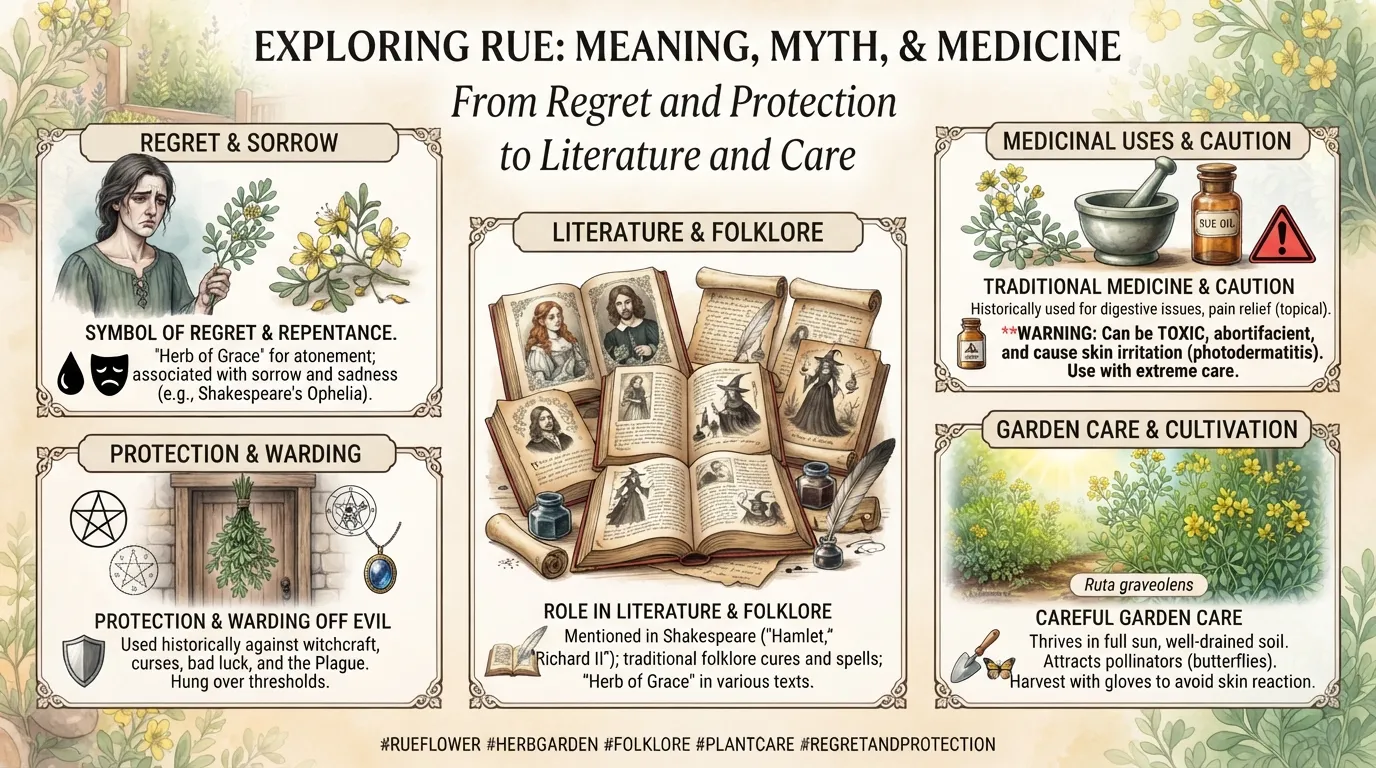
For centuries, people believed rue could ward off evil spirits, sickness, and bad luck. This strong folk belief gave the plant a lasting connection to safety and protection.
Clear Vision
Old herbal traditions once claimed rue could sharpen eyesight or bring mental clarity. This belief tied the plant to the idea of seeing the truth clearly, even in difficult times.
Meaning by Color
Rue flowers mostly bloom in a narrow color range, so this section focuses on its most common shades.
| Color | Meaning |
|---|---|
| Yellow | Caution and clear-eyed truth |
| Green (foliage) | Protection and steady resolve |
| Pale Yellow-Green | Quiet sorrow and reflection |
Color Meanings & Cultural Safety Matrix
Yellow Rue
- Primary sentiment: Caution paired with clarity.
- Geographic nuances: In Mediterranean folk tradition, yellow rue blooms are tied to old protective customs. In Western flower language, yellow can mean both joy and warning, depending on context.
- Gifting warning: Rue is rarely given as a cheerful gift; its meaning leans serious and reflective.
Green Rue Foliage
- Primary sentiment: Protection and quiet strength.
- Geographic nuances: Across much of Europe, rue’s green, feathery leaves were historically valued more than its small flowers.
- Gifting warning: Best shared as a symbolic herb rather than a decorative bouquet flower.
Global Traditions & Literary Impact
In Lithuania, rue is treated as a national symbol of purity and womanhood. It traditionally appears in wedding crowns worn by brides, representing virtue and a respected place in the community. This deep cultural role makes rue one of the most meaningful herbs in Lithuanian tradition.
In literature, rue appears in William Shakespeare’s play Hamlet, where the character Ophelia says, “There’s rue for you, and here’s some for me… we may call it herb of grace o’ Sundays.” This line, from around 1600, ties the plant directly to sorrow and reflection. Please double-check this literary reference, as I cannot search a live database and details may be inaccurate.
Economic, Culinary, and Medicinal Uses
Historically, rue was used in small amounts as a seasoning and in traditional folk remedies across Europe. However, rue is now known to be toxic in larger amounts and can cause skin irritation, especially in sunlight, as well as serious harm if ingested in excess. Modern health experts generally advise against using rue at home without professional guidance. Always consult a doctor before using rue or any herbal plant for health purposes, and never use it during pregnancy, as it has historically been linked to serious risk.
Related Flower Meanings https://bloomsyflower.com/allium-flower-meaning/
Ultimate Etiquette & Gifting Guide
| Setting | Recommended Use | The Subtext |
|---|---|---|
| Apology Gesture | Pressed rue with a handwritten note | “I regret what happened between us.” |
| Protective Herb Garden | Grow near the home entrance | “A quiet symbol of safety and watchfulness.” |
| Lithuanian Wedding Tradition | Rue crown or sprig | “Purity, respect, and new beginnings.” |
| Remembrance Gesture | Dried rue sprig | “I reflect on what we have lost.” |
Universal Safety Rule
Always wear gloves when handling rue, since its sap can cause skin irritation or burns in sunlight, and never use it internally without expert medical guidance.
Rue vs. Close Lookalikes
| Feature | Rue | Fennel | Wormwood |
|---|---|---|---|
| Leaf Shape | Blue-green, feathery, rounded lobes | Thin, thread-like, bright green | Silvery-gray, deeply lobed leaves |
| Fragrance | Strong, bitter, musky scent | Sweet, licorice-like scent | Strong, sharp, bitter scent |
| Flowers | Small, yellow, four-petaled clusters | Small, yellow, umbrella-shaped clusters | Small, pale yellow, button-like blooms |
| Bloom Season | Summer | Summer | Late summer |
| Growth Style | Grows as a small, bushy shrub | Grows tall and upright | Grows as a bushy perennial |
How to tell them apart
Look at the leaf color. Rue has a distinct blue-green tone, while fennel is bright green and wormwood leans silvery-gray.
Practical Maintenance & Domestic Safety
Care Basics
- Plant rue in full sun for the healthiest growth.
- Use well-drained soil, since rue dislikes wet roots.
- Water sparingly; rue tolerates dry conditions well.
- Wear gloves when pruning, since the sap can irritate skin.
Pet Toxicity Warning
The ASPCA lists rue as toxic to cats, dogs, and horses. Eating the plant can cause vomiting, skin irritation, and in some cases, more serious symptoms. Keep pets away from rue, and contact a vet right away if you believe they have eaten any part of it.
Expert Curations & Misconceptions
10 Quick Fun Facts
- Rue is sometimes called “herb of grace” in old English tradition.
- The plant’s sap can cause skin burns when exposed to sunlight.
- Rue was once planted near homes to ward off evil spirits.
- Shakespeare referenced rue in more than one of his plays.
- Rue is part of Lithuania’s national symbolism and wedding customs.
- Ancient Romans used rue in cooking, though in very small amounts.
- Rue has a strong, bitter smell that some people find unpleasant.
- The plant’s leaves have a distinct blue-green color.
- Rue was once believed to protect against the plague in medieval Europe.
- Painters in earlier centuries reportedly used rue to help their eyesight, though this is not supported by modern science.
3 Myth vs. Reality Pairs
Myth: Rue is completely safe to touch and handle.
Reality: Its sap can cause skin burns, especially when exposed to sunlight afterward.
Myth: Rue only symbolizes sadness and regret.
Reality: It also carries older meanings of protection, purity, and clear thinking.
Myth: Rue is a common cooking herb used safely today.
Reality: While historically used in small amounts, rue is now considered unsafe for regular food use.
2 Quick Florist Tips
- Use dried rue sprigs in symbolic arrangements rather than fresh-cut bouquets, since the sap can irritate skin.
- Pair rue with other protective or meaningful herbs, like rosemary, for a thoughtful remembrance gift.
Questions About Rue flower meaning
What does the rue flower mean spiritually?
Rue means regret and reflection, but also protection and clear vision, blending sorrow with quiet strength.
Is rue a good gift for special occasions?
It is less common as a cheerful gift and more fitting for apologies, remembrance, or symbolic protective gestures.
What does yellow rue mean?
Yellow rue suggests caution paired with clarity, reflecting the plant’s mix of warning and wisdom.
Is rue toxic to pets?
Yes, the ASPCA lists rue as toxic to cats, dogs, and horses, so it should be kept out of their reach.
Can you eat rue?
Historically yes, in small amounts, but modern experts advise against eating rue due to its toxicity risks.
When does rue bloom?
Rue typically blooms in summer, producing small, yellow, star-shaped flowers.
How did rue get its name?
Its name comes from Old French and Latin roots, closely tied to the English word “rue,” meaning regret.
What did rue mean historically?
Historically, rue meant protection from evil and illness, while also symbolizing regret and repentance in literature and folklore.
Final Thoughts
The rue flower carries a deep, layered meaning that blends sorrow with strength. Its name, tied directly to the English word for regret, gives it a uniquely reflective place among flowers. Yet its long history as a protective herb, hung in homes and worn in wedding crowns, shows a hopeful, guarding side as well.
From Shakespeare’s stage to Lithuanian wedding traditions, rue has held a quiet but powerful place in human history. Whether grown as a symbolic garden herb or shared as a gesture of reflection and apology, rue reminds us that even difficult feelings can carry grace. Always handle this striking plant with care, respecting both its beauty and its bite.

Zahid Abbas is an educator, researcher, and digital publishing strategist behind BloomsyFlower, a flower and gardening resource covering flower meanings, symbolism, history, care, seasonal blooms, and gifting. He combines research with simple, reader-friendly writing to help people understand, grow, and enjoy flowers.