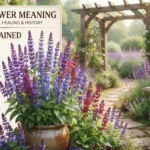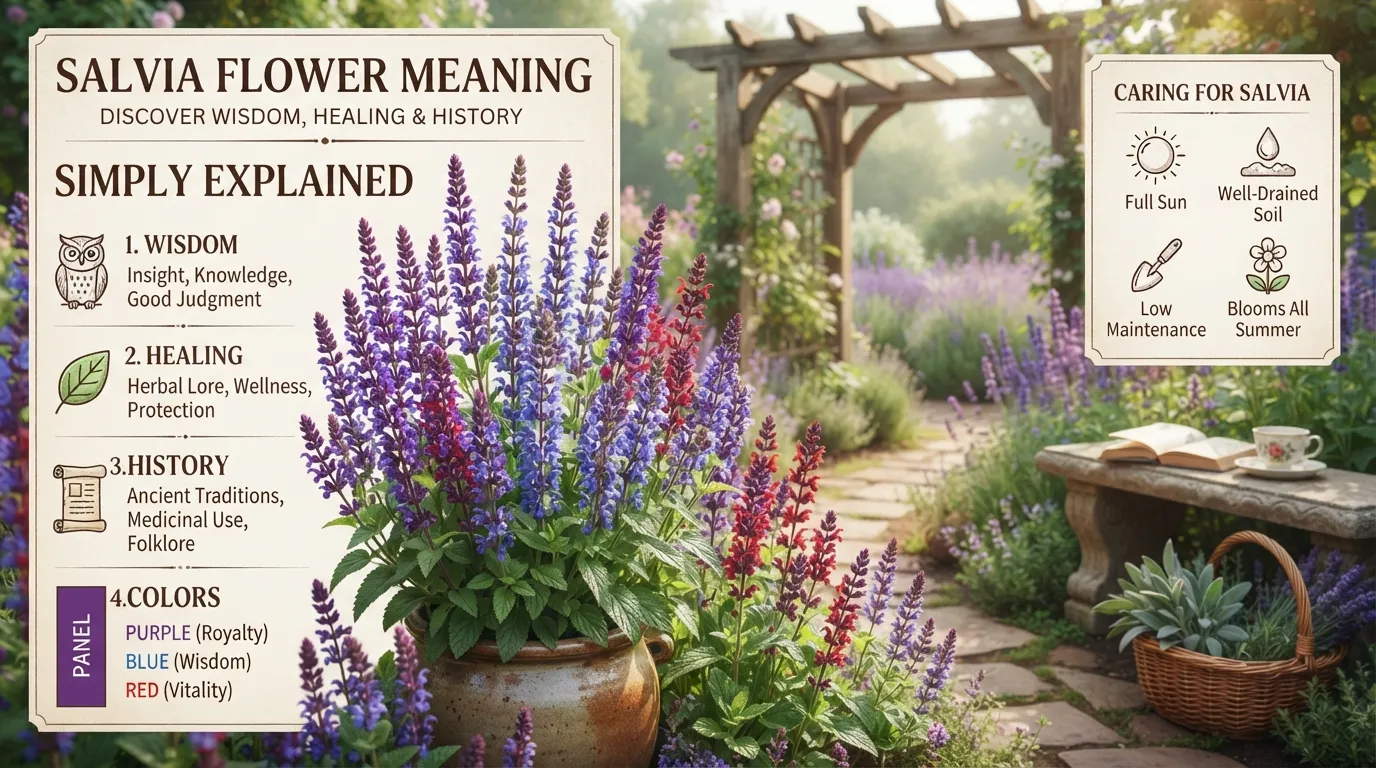
The salvia flower means wisdom, healing, and long life. It also stands for respect and domestic virtue. People give salvia to honor someone’s good judgment, or to wish them lasting health and peace at home.
Origin of the Name
The word “salvia” comes from the Latin word salvere, meaning “to heal” or “to be in good health.” This same Latin root also gives us the English word “salve,” a healing ointment. Ancient Roman healers used salvia often, and the name stuck as both a common and scientific title for the plant.
Salvia in Victorian Flower Language
In Victorian times, people used flowers to send quiet messages. Salvia, also called sage in many gardens, stood for “wisdom” and “esteem.” Some readings also linked it to “domestic virtue” and good family life. This meaning grew from the plant’s long history as a trusted healing herb, something wise households kept close and relied upon for generations.
Botanical Foundations & Profile
| Feature | Detail |
|---|---|
| Scientific Name | Salvia (genus with many species, e.g. Salvia officinalis, common sage) |
| Native Region | Mediterranean region, Central America, and parts of Asia |
| Bloom Period | Summer through fall, depending on species |
| Average Lifespan | Perennial or annual, by species; often returns for years |
| USDA Zones | Zones 4 through 10, depending on species |
| Species Count | About 900 species |
History & Cultural Timeline
- Ancient Egyptians, Greeks, and Romans used salvia, especially sage, in early healing practices.
- Roman writers called sage “the holy herb,” believing it could cure many illnesses.
- European monks grew salvia in monastery gardens throughout the Middle Ages for medicine and cooking.
- Today, salvia remains popular worldwide, both as a healing herb and a bold, colorful garden flower.
Symbolism Deep-Dive
Wisdom
Salvia, especially common sage, earned a long-standing reputation as a wise, trusted herb used by healers for centuries. This deep history of thoughtful, careful use gave the plant its strong link to wisdom and good judgment.
Healing
The very name “salvia” comes from a Latin word meaning “to heal.” This direct tie to health and recovery has shaped the plant’s symbolic meaning since ancient times.
Long Life
Old folklore in several cultures claimed that growing sage in the garden could help bring a long, healthy life to the household. This hopeful belief ties salvia closely to longevity and lasting vitality.
Meaning by Color
| Color | Meaning |
|---|---|
| Red | Energy, passion, and strength |
| Purple/Blue | Wisdom, dignity, and calm trust |
| White | Purity and protection |
| Pink | Gentle affection and grace |
Color Meanings & Cultural Safety Matrix
Red Salvia
- Primary sentiment: Energy and strong passion.
- Geographic nuances: In the West, red salvia is a favorite garden plant tied to vibrant, lively energy. In Latin America, where many salvia species originate, red blooms are prized for attracting hummingbirds and bold color.
- Gifting warning: A bold, safe choice for most lively or celebratory occasions.
Purple-Blue Salvia
- Primary sentiment: Wisdom and calm dignity.
- Geographic nuances: Across Europe, purple-blue sage varieties carry a long-standing link to wise, respected households.
- Gifting warning: Fitting for respectful or thoughtful gifts.
White Salvia
- Primary sentiment: Purity and protection.
- Geographic nuances: In the West, white often marks fresh starts. In some Eastern homes, white flowers can connect to mourning.
- Gifting warning: Check local customs before gifting white salvia at a celebration.
Pink Salvia
- Primary sentiment: Gentle affection and grace.
- Geographic nuances: Pink salvia varieties are popular worldwide in casual, warm-hearted garden gifting.
- Gifting warning: A safe, cheerful choice for most occasions.
Global Traditions & Literary Impact
In many European households, sage, a common type of salvia, was historically grown right outside the kitchen door, believed to protect the home and bring good health to the family inside. This tradition reflects the deep trust people placed in salvia as both a healing herb and a symbol of a well-cared-for home.
In literature, sage and salvia appear often in old herbal texts and folk writing describing household remedies and garden wisdom passed down through generations. Please double-check any specific literary references, as I cannot search a live database and details may be inaccurate.
Related Flower Meanings: https://bloomsyflower.com/monkshood-flower-meaning/
Economic, Culinary, and Medicinal Uses
Salvia, especially common sage, is widely used in cooking, adding a warm, earthy flavor to stuffing, meats, and sauces. Sage tea has also been used traditionally to soothe sore throats and support digestion. Some salvia species, like Salvia hispanica (chia), are grown for their nutritious seeds. As with any herb, it’s wise to check with a doctor before using salvia for health purposes, especially in concentrated or medicinal amounts.
Ultimate Etiquette & Gifting Guide
| Relationship | Recommended Color | The Subtext |
|---|---|---|
| Respected Elder | Purple-Blue | “I value your wisdom and guidance.” |
| Someone Recovering from Illness | White | “Wishing you healing and protection.” |
| Close Friend | Pink | “Your warmth and grace brighten my life.” |
| Energetic Loved One | Red | “Your passion and strength inspire me.” |
Universal Safety Rule
Choose culinary salvia varieties, like common sage, if you plan to use the plant in cooking, since not all ornamental salvia species are meant to be eaten.
Salvia vs. Close Lookalikes
| Feature | Salvia | Lavender | Catmint (Nepeta) |
|---|---|---|---|
| Petal Shape | Tubular, two-lipped flowers on tall spikes | Small, tubular flowers in tight spikes | Small, tubular flowers in loose spikes |
| Fragrance | Earthy, herbal scent | Sweet, floral scent | Minty, slightly pungent scent |
| Foliage | Soft, often fuzzy, gray-green leaves | Narrow, silvery-green leaves | Soft, heart-shaped, gray-green leaves |
| Bloom Season | Summer through fall | Late spring through summer | Late spring through fall |
| Growth Style | Grows upright, bushy, or trailing, by type | Grows as a low, woody shrub | Grows as a spreading, mounding perennial |
How to tell them apart
Crush a leaf and smell it. Salvia often has an earthy, savory scent, while lavender smells sweet and floral, and catmint smells minty.
Practical Maintenance & Domestic Safety
Care Basics
- Plant salvia in full sun for the healthiest blooms.
- Use well-drained soil; salvia dislikes sitting in water.
- Water moderately; many salvia types tolerate dry spells well.
- Trim spent blooms to encourage more flowers through the season.
Pet Toxicity Warning
Most common garden salvia species are generally considered non-toxic to cats and dogs, according to common pet plant guides. Still, eating large amounts of any plant can cause mild stomach upset in pets. Watch for unusual symptoms, and contact a vet if you have concerns.
Expert Curations & Misconceptions
10 Quick Fun Facts
- “Salvia” comes from the Latin word meaning “to heal.”
- Sage, a type of salvia, has been used in cooking for thousands of years.
- Hummingbirds are strongly attracted to red and orange salvia blooms.
- Salvia belongs to the mint family, which includes many fragrant herbs.
- Some salvia species can grow over five feet tall.
- Chia seeds come from a specific type of salvia plant.
- Salvia comes in red, purple, blue, pink, and white varieties.
- Ancient Romans considered sage a “holy herb” for healing.
- Salvia blooms attract bees and butterflies throughout the growing season.
- Over 900 species of salvia exist around the world.
3 Myth vs. Reality Pairs
Myth: All salvia plants are safe to cook with.
Reality: Only certain culinary varieties, such as common sage, are suitable for cooking. Many ornamental varieties are not.
Myth: Salvia only grows in one color.
Reality: Salvia blooms in many colors, including red, purple, blue, pink, and white.
Myth: Salvia is difficult to grow in home gardens.
Reality: Most salvia varieties are easy to grow and thrive with sun and well-drained soil.
2 Quick Florist Tips
- Cut salvia stems when about a third of the blooms on the spike are open.
- Remove lower leaves from cut stems and place them in clean, cool water right away.
Questions About Salvia flower meaning
What does the salvia flower mean spiritually?
Salvia means wisdom and healing, tied closely to its long history as a trusted medicinal herb.
Is salvia a good gift for special occasions?
Yes, it works well for wishing someone healing, honoring wisdom, or celebrating a warm, happy home.
What does red salvia mean?
Red salvia stands for energy, passion, and strength.
Is salvia toxic to pets?
Most common garden salvia species are considered non-toxic, though large amounts of any plant may cause mild stomach upset.
Can you eat salvia?
Yes, culinary varieties such as common sage are widely used in cooking, but not all ornamental salvia species are safe or suitable to eat.
When does salvia bloom?
Salvia typically blooms from summer through fall, depending on the species and climate.
How did salvia get its name?
Its name comes from the Latin word salvere, meaning “to heal” or “to be in good health.”
What did salvia mean in Victorian times?
It meant wisdom and esteem, along with domestic virtue, reflecting its trusted role in the household.
Final Thoughts
The salvia flower carries a warm, trusted meaning rooted in wisdom, healing, and long life. Its deep history as both a kitchen herb and a medicinal plant has made it a symbol of thoughtful care passed down through generations.
From ancient Roman healers to modern garden borders, salvia continues to bring color, fragrance, and quiet wisdom to homes around the world. Whether grown for its bold, bee-friendly blooms or gifted to honor someone’s healing journey, salvia reminds us that true wisdom often grows slowly, rooted in care and tradition. Consider planting salvia in a sunny garden bed, or sharing a sprig with someone whose wisdom you deeply respect.

Zahid Abbas is an educator, researcher, and digital publishing strategist behind BloomsyFlower, a flower and gardening resource covering flower meanings, symbolism, history, care, seasonal blooms, and gifting. He combines research with simple, reader-friendly writing to help people understand, grow, and enjoy flowers.