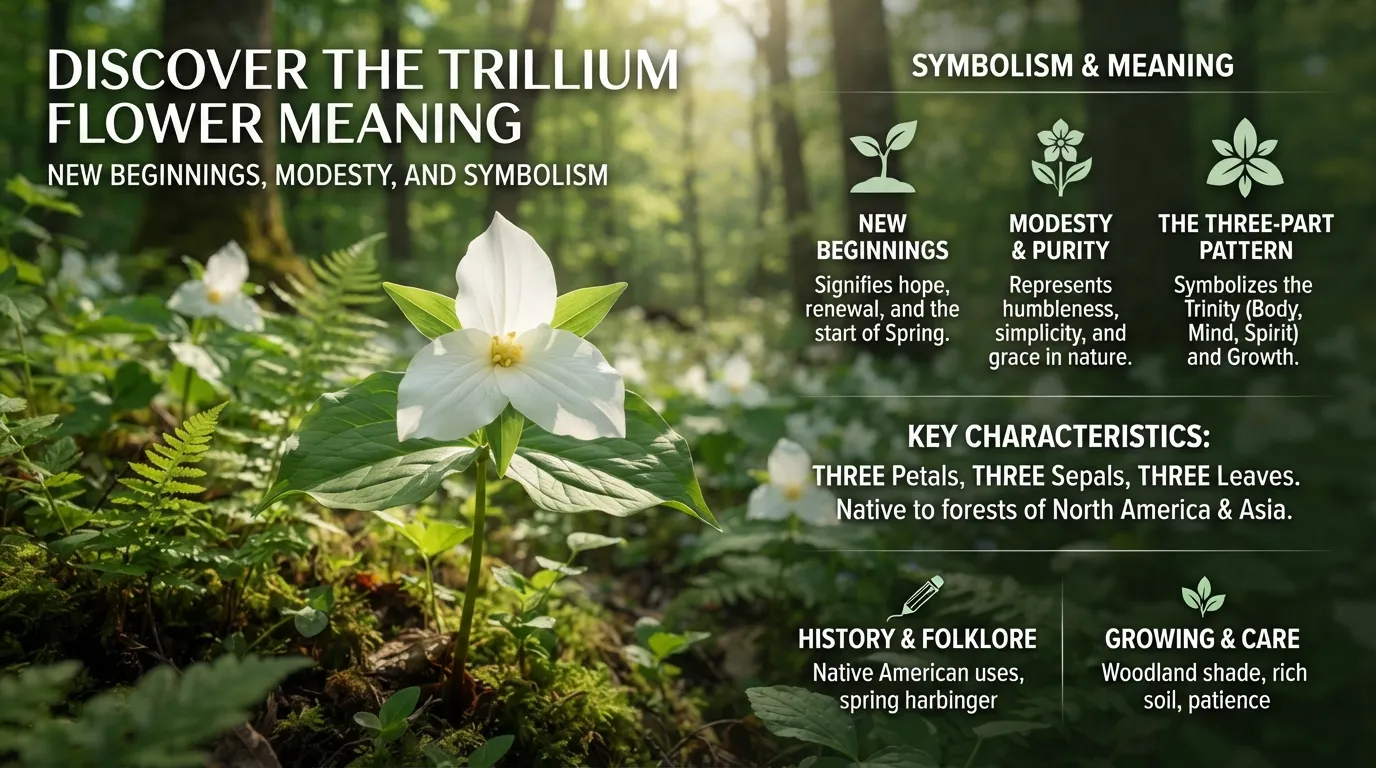
The trillium flower means pure love, elegance, and new beginnings. It also stands for protection and modesty. People give trillium to celebrate a fresh start, or to show a quiet, devoted love that does not need to be loud.
Origin of the Name
The word “trillium” comes from the Latin word tres, meaning “three.” This name points to the plant’s unique pattern, since trillium always grows in sets of three: three leaves, three petals, and three sepals. Botanist Carl Linnaeus used this Latin root when he gave the plant its scientific name in the 1700s.
Trillium in Victorian Flower Language
In Victorian times, people used flowers to send quiet messages. Trillium stood for “modest beauty” and in some readings, a gentle “protection.” This meaning grew from the plant’s shy, woodland nature. Trillium often grows hidden beneath tall trees, blooming softly in the shade rather than showing off in open, sunny gardens.
Botanical Foundations & Profile
| Feature | Detail |
|---|---|
| Scientific Name | Trillium (e.g. Trillium grandiflorum, white trillium) |
| Native Region | North America and parts of Asia |
| Bloom Period | Early to mid spring |
| Average Lifespan | Perennial; some plants live decades |
| USDA Zones | Zones 4 through 9, depending on species |
| Species Count | About 43 to 50 species |
History & Cultural Timeline
- Trillium has grown in North American forests for thousands of years.
- Indigenous peoples across North America used parts of trillium in traditional practices long before European settlers arrived.
- Carl Linnaeus gave the plant its scientific name, based on its three-part pattern, in the 1700s.
- Ontario, Canada, adopted the white trillium as its official provincial flower in 1937.
Symbolism Deep-Dive
New Beginnings
Trillium is one of the first flowers to bloom in spring forests, often appearing just as snow melts away. This early, hopeful bloom time ties the flower closely to fresh starts and new chapters in life.
Modesty
Trillium grows low to the ground, nestled beneath taller trees and ferns. Its quiet, shaded home gives it a gentle, modest character, never competing for attention in the busy forest.
Protection
Trillium takes years to mature and bloom from seed, growing slowly and carefully within the shelter of the forest floor. This slow, guarded growth links the flower to patience and quiet protection.
Meaning by Color
| Color | Meaning |
|---|---|
| White | Purity and new beginnings |
| Pink | Gentle love and soft grace |
| Red | Deep, quiet passion |
| Yellow | Hope and fresh energy |
Color Meanings & Cultural Safety Matrix
White Trillium
- Primary sentiment: Purity and fresh starts.
- Geographic nuances: In Canada, white trillium is a deeply respected national symbol, especially in Ontario. In the West more broadly, white often signals new beginnings.
- Gifting warning: A safe, gentle choice for most occasions, especially spring celebrations.
Pink Trillium
- Primary sentiment: Gentle love and soft grace.
- Geographic nuances: Pink trillium often appears as white blooms age, adding a soft, natural charm admired in woodland gardens everywhere.
- Gifting warning: A warm, safe pick for close friends or family.
Red Trillium
- Primary sentiment: Deep, quiet passion.
- Geographic nuances: Red trillium, sometimes called “wake robin,” holds a distinct folk history in parts of North America tied to early spring awakening.
- Gifting warning: Best shared between close, meaningful relationships.
Global Traditions & Literary Impact
In Ontario, Canada, the white trillium holds deep provincial pride as the official flower, appearing on signs, logos, and even past currency. Picking wild trillium is discouraged or restricted in many areas, since removing its leaves can prevent the plant from blooming again for years.
In literature, trillium often appears in nature writing and poetry describing early spring forests and quiet woodland beauty. Please double-check any specific literary references, as I cannot search a live database and details may be inaccurate.
Economic, Culinary, and Medicinal Uses
Some Indigenous communities historically used certain trillium species in traditional practices, including specific plant parts for particular purposes. However, trillium is a slow-growing, protected plant in many regions, and picking it can harm the plant for years to come. It is not considered a common food plant today, and foraging wild trillium is discouraged. Always consult a local expert or guide before using any wild plant for any purpose.
Related Flower Meanings: https://bloomsyflower.com/delicate-flower-meaning/
Ultimate Etiquette & Gifting Guide
| Relationship | Recommended Color | The Subtext |
|---|---|---|
| New Beginning or Spring Event | White | “Wishing you a fresh, hopeful start.” |
| Close Friend | Pink | “Your gentle grace means so much to me.” |
| Spouse or Partner | Red | “My quiet devotion to you runs deep.” |
| Someone Facing a New Chapter | Yellow | “Here’s to hope and new energy ahead.” |
Universal Safety Rule
Never pick wild trillium, since removing its leaves can prevent the plant from blooming again for several years; choose nursery-grown trillium instead for gifts or gardens.
Trillium vs. Close Lookalikes
| Feature | Trillium | Wood Anemone | Bloodroot |
|---|---|---|---|
| Petal Shape | Three broad, pointed petals | Thin, star-like petals, often in sets of five to eight | One ring of narrow, white petals |
| Fragrance | Mild or no scent | Little to no scent | Little to no scent |
| Foliage | Three broad leaves in a whorl | Deeply lobed, fern-like leaves | Single, large, lobed leaf wrapped around the stem |
| Bloom Season | Early to mid spring | Early spring | Early spring |
| Growth Style | Grows low with one flower per stem | Grows low, often spreading in patches | Grows low, single stem per plant |
How to tell them apart
Count the petals and leaves. True trillium always shows a pattern of three: three leaves, three petals, and three sepals, which other spring woodland flowers do not share.
Practical Maintenance & Domestic Safety
Care Basics
- Plant trillium in shady spots, similar to its natural forest floor home.
- Use rich, moist, well-drained soil.
- Water regularly, especially during dry spring weeks.
- Be patient; trillium can take several years to bloom after planting.
Pet Toxicity Warning
Trillium is generally considered mildly toxic if eaten in large amounts, though it is not commonly listed as a major pet danger. Still, it is wise to keep pets from digging up or chewing on the plant, both for their safety and the plant’s slow, delicate growth. Contact a vet if you notice unusual symptoms after exposure.
Expert Curations & Misconceptions
10 Quick Fun Facts
- Trillium always grows in a pattern of three: three leaves, three petals, three sepals.
- White trillium is the official flower of Ontario, Canada.
- Trillium can take seven years or more to bloom for the first time from seed.
- Ants help spread trillium seeds in the wild.
- Picking trillium leaves can prevent the plant from blooming again for years.
- Some trillium flowers slowly turn pink as they age.
- Red trillium is sometimes called “wake robin,” named for its early spring bloom.
- Trillium grows best in quiet, shaded forest settings.
- Some trillium species have a faint, unusual scent that attracts flies for pollination.
- Trillium is considered a slow-growing, long-lived woodland perennial.
3 Myth vs. Reality Pairs
Myth: It is fine to pick wild trillium for a small bouquet.
Reality: Picking the leaves can seriously harm the plant, preventing it from blooming for years.
Myth: All trillium flowers stay pure white their entire bloom.
Reality: Many white trillium blooms slowly turn pink as they age.
Myth: Trillium is easy to grow quickly in any garden.
Reality: Trillium grows slowly and needs shaded, moist conditions to truly thrive.
2 Quick Florist Tips
- Choose nursery-grown trillium plants rather than picking wild blooms, to protect natural populations.
- Display potted trillium in a cool, shaded spot indoors to help the blooms last as long as possible.
Questions About Trillium flower meaning
What does the trillium flower mean spiritually?
Trillium means new beginnings and quiet, pure love, often tied to its early spring bloom in peaceful forest settings.
Is trillium a good gift for special occasions?
Yes, especially for spring celebrations, new beginnings, or moments meant to honor quiet, lasting devotion.
What does a red trillium mean?
Red trillium stands for deep, quiet passion, sometimes linked to early spring awakening in folklore.
Is trillium toxic to pets?
Trillium is generally considered only mildly toxic, but it’s still wise to keep pets from digging up or chewing the plant.
Can you eat trillium?
Trillium is not considered a common food plant today, and foraging it is discouraged due to its slow growth and protected status in many areas.
When does trillium bloom?
Trillium typically blooms in early to mid spring, often among the first flowers to appear in forest settings.
How did trillium get its name?
Its name comes from the Latin word for “three,” reflecting its signature pattern of three leaves, three petals, and three sepals.
Is it legal to pick wild trillium?
In many regions, picking wild trillium is discouraged or restricted, since removing its leaves can prevent it from blooming again for years.
Final Thoughts
The trillium flower carries a gentle, meaningful symbolism rooted in new beginnings, modesty, and quiet devotion. As one of the first flowers to bloom each spring, it brings a sense of hope and renewal to quiet forest floors across North America.
Its signature pattern of three, three leaves, three petals, and three sepals, makes trillium instantly recognizable and deeply symbolic of balance and harmony in nature. Whether admired in the wild or grown carefully in a shaded garden, trillium reminds us that true beauty often grows slowly, patiently, and close to the earth. Always let wild trillium bloom undisturbed, and consider adding a nursery-grown trillium to your own shaded garden space instead.

Zahid Abbas is an educator, researcher, and digital publishing strategist behind BloomsyFlower, a flower and gardening resource covering flower meanings, symbolism, history, care, seasonal blooms, and gifting. He combines research with simple, reader-friendly writing to help people understand, grow, and enjoy flowers.