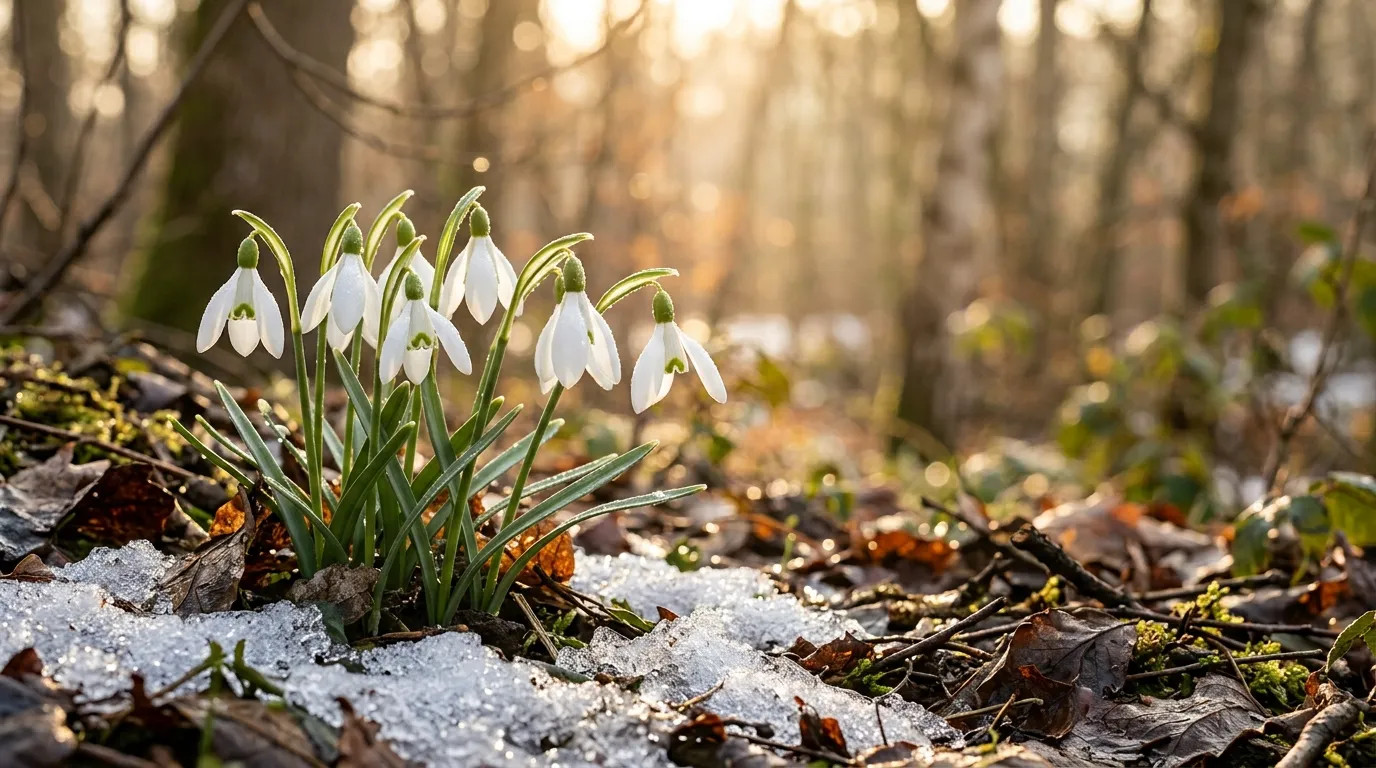
A Tiny Flower That Changed the End of Winter
When the ground is still cold and patches of snow remain, one small flower often appears before almost anything else. That flower is the snowdrop. Its white blooms push through frozen soil when most plants are still asleep. Because of this brave habit, people have long seen the snowdrop as a sign that winter is ending and better days are close.
What You’ll Learn
- What the snowdrop flower really means
- How its early bloom shaped its symbolism
- The history behind this famous spring flower
- What different snowdrop colours represent
- When it is the right flower to give as a gift
Snowdrop Flower Meaning (Featured Snippet)
The snowdrop flower meaning is hope, renewal, purity, and quiet strength. Because snowdrops bloom during the coldest part of the year, they remind people that life returns even after the hardest seasons. Across many cultures, they also represent comfort, fresh beginnings, and resilience.
Flower ColourDominant MeaningBest OccasionWhiteHope, purity, renewalSympathy, new baby, encouragementGreen and WhiteGrowth, balanceHousewarming, friendshipDouble White VarietiesGrace, eleganceWeddings, anniversaries
Botanical Foundations & Profile
The snowdrop belongs to the Amaryllidaceae family and the Galanthus genus. The best-known species is Galanthus nivalis, which is native to much of Europe and parts of western Asia. According to Kew Gardens, snowdrops are among the first flowers to bloom each year, often flowering while snow still covers the ground.
FeatureDetailsScientific NameGalanthus nivalisFamilyAmaryllidaceaeGenusGalanthusNative RegionEurope and Western AsiaBloom PeriodLate winter to early spring (January–March)Average LifespanPerennial bulb that returns every yearUSDA Zones3–8Wild SpeciesAround 20–25 recognised speciesNamed CultivarsMore than 2,500 garden cultivars
Deep History & Cultural Timeline
Snowdrops have grown wild across Europe for thousands of years, but they became popular garden plants during the 16th century. In 1753, Swedish botanist Carl Linnaeus officially named the genus Galanthus in his famous book Species Plantarum. During the Victorian era (1837–1901), flower lovers used snowdrops to express hope and comfort through the language of flowers, known as floriography. Today, many gardens in Britain celebrate “snowdrop walks” each winter, where thousands of blooming flowers welcome the coming spring.
Snowdrop Flower Symbolism
Hope
Snowdrops bloom when winter is still strong. Their courage to flower in freezing weather made them a lasting symbol of hope.
Renewal
Each bulb returns every spring. This yearly cycle reminds people that every ending can lead to a new beginning.
Purity
The flower’s bright white petals stand for innocence and a clean start. Many cultures connect white flowers with peace and honesty.
Quiet Strength
Snowdrops are small, but they survive frost, wind, and snow. Their gentle appearance hides remarkable toughness, making them a symbol of inner strength rather than loud power.
Snowdrop Flower Colour Meanings & Cultural Safety Matrix
White Snowdrop
Primary Sentiment: Hope, purity, peace, and fresh beginnings.
Geographic Nuances: In much of Europe, white snowdrops celebrate the arrival of spring. In some parts of the UK and Ireland, older folklore linked bringing snowdrops indoors before they bloomed naturally with bad luck.
Gifting Warning: White snowdrops are thoughtful for sympathy gifts, but check local traditions if giving them at celebrations.
Green and White Snowdrop
Primary Sentiment: Growth, balance, and healing.
Geographic Nuances: Gardeners often value the green markings as signs of healthy growth, while floral designers use them to add a natural touch to spring bouquets.
Gifting Warning: These varieties suit friends, neighbours, or someone starting a new chapter in life.
Double White Snowdrop
Primary Sentiment: Grace, elegance, and lasting love.
Geographic Nuances: Double-flowered snowdrops are prized by collectors, especially in Britain, where rare cultivars can become highly sought after.
Gifting Warning: Their delicate beauty makes them a lovely choice for anniversaries or intimate celebrations, but they are usually harder to find than common snowdrops.
Why Does the Snowdrop Mean Hope?
The answer lies in its biology. Snowdrops grow from underground bulbs that store food through the cold months. When winter is not yet over, the bulbs send up leaves and flowers through frozen soil. This rare ability made people believe the flower carried a promise that brighter days were coming.
Over time, that simple natural habit became one of the strongest flower symbols of hope in the world.
Global Traditions & Literary Impact
Victorian Floriography
During the Victorian era (1837–1901), people often used flowers to send messages they could not say aloud. In the language of flowers, the snowdrop meant hope, comfort, and consolation. A small bunch of snowdrops was a gentle way to tell someone that brighter days would come after sadness.
Related: [Link to: The Victorian Language of Flowers]
Christian Tradition
Many Christians see the snowdrop as a symbol of hope and new life. One old legend says the flowers appeared after Adam and Eve left the Garden of Eden. Although this story is folklore rather than a Bible account, it helped make the snowdrop a symbol of God’s promise that winter does not last forever.
In some churches across Europe, snowdrops also bloom close to Candlemas on 2 February, adding to their link with light and renewal.
Eastern Europe
In countries such as Romania, Moldova, and Bulgaria, the first snowdrops are welcomed as signs of spring. They often appear around seasonal celebrations that honour warmer days after a long winter.
People enjoy seeing the first flowers because they mark the change from cold, dark days to fresh growth.
Literature and Art
Many poets have written about snowdrops because they bloom when almost everything else is still asleep.
The English poet William Wordsworth admired early spring flowers, while later writers used snowdrops as symbols of quiet courage and hope. Artists also painted snowdrops in winter landscapes to show that life always returns.
Practical Uses of Snowdrops
Snowdrops are mainly grown as ornamental garden plants. Their beauty and early flowers make them favourites in woodland gardens, parks, and shaded borders.
Scientists have also studied snowdrops because they contain a natural compound called galantamine. Today, a purified form of this compound is used in certain prescription medicines for Alzheimer’s disease. It is extracted under strict medical control and should never be made at home.
Snowdrops are not edible. Eating any part of the plant can cause illness.
Authority: Kew Gardens and medical research on galantamine.
The Ultimate Snowdrop Gifting Guide
Relationship or SettingBest ColourHidden MeaningFriend starting a new jobWhiteGood luck and fresh beginningsSympathy giftWhiteComfort and hopeNew parentsWhiteA joyful new chapterHousewarmingGreen and WhiteGrowth and happinessWeddingDouble WhitePure love and lasting commitmentAnniversaryDouble WhiteFaithful love
Universal Safety Rule
If you are unsure about the recipient’s traditions, give snowdrops with a short note explaining that they represent hope and new beginnings. A kind message helps avoid cultural misunderstandings.
Snowdrop vs. Similar Flowers
FeatureSnowdropSnowflakeLily of the ValleyScientific NameGalanthusLeucojumConvallaria majalisFlower ShapeOne hanging bellSeveral bells on one stemSmall bells in a rowFragranceLightMildSweet and strongLeavesNarrowWiderBroadBloom SeasonLate winterMid springLate springCareEasyEasyModerate
Snowdrop vs. Crocus
FeatureSnowdropCrocusFlower ShapeHanging bellCup-shapedColoursMostly whitePurple, yellow, whiteLeavesThin with white stripeGrass-likeBloom TimeEarlierSlightly laterGrowing HabitBulbsBulbs
How to Tell Them Apart
Look closely at the flower.
A snowdrop hangs down like a tiny white bell. A crocus opens wide like a cup. A snowflake carries several hanging flowers on one stem, while a snowdrop usually has only one.
Related: [Link to: Snowdrop vs. Crocus]
Practical Maintenance & Domestic Safety
Snowdrops are easy plants for most gardens.
They grow best in partial shade and rich, well-drained soil. Water them during dry periods, but avoid soil that stays wet for long. Once planted, the bulbs often return every spring with little care.
Are Snowdrops Poisonous?
Yes.
According to the ASPCA, snowdrops are toxic to dogs, cats, and horses. The bulbs contain the highest amount of harmful compounds, although leaves and flowers can also cause problems.
Possible signs include:
- Vomiting
- Drooling
- Diarrhoea
- Stomach pain
- Tiredness
Keep bulbs away from pets, especially while planting.
For people, eating snowdrops can also cause stomach upset. They should never be used as food or herbal medicine without medical supervision.
Authority: ASPCA Animal Poison Control and Kew Gardens.
Expert Curations & Common Misconceptions
10 Fun Facts About Snowdrops
- The scientific name Galanthus comes from Greek words meaning “milk flower.”
- Snowdrops can bloom while snow is still on the ground.
- More than 2,500 named garden varieties exist today.
- Some collectors are so devoted to snowdrops that they are called galanthophiles.
- A single snowdrop bulb can slowly form a large colony over time.
- Snowdrops are among the earliest nectar sources for bees in late winter.
- Britain hosts many famous snowdrop festivals each year.
- Snowdrop bulbs dislike drying out and grow best when planted “in the green.”
- The inner petals have green markings that help distinguish different varieties.
- Some rare snowdrop cultivars have sold for surprisingly high prices among collectors.
Myth vs Reality
MythRealitySnowdrops always mean death.Most modern flower guides associate them with hope and renewal.Snowdrops are native everywhere in Europe.Some populations were introduced and spread by people over time.Snowdrops are safe to eat because they are small flowers.All parts of the plant can be toxic if eaten.
Expert Florist Tips
Plant Them Where Winter Looks Empty
Snowdrops shine when little else is blooming. Plant them near paths, gates, or windows where you can enjoy them in late winter.
Buy Bulbs From Trusted Sources
Healthy bulbs establish faster and produce stronger flowers. Reputable growers also provide correct cultivar names.
Let Leaves Die Back Naturally
Do not cut leaves immediately after flowering. The foliage feeds the bulb for next year’s blooms.
Possible Questions
What does a snowdrop flower symbolize?
A snowdrop mainly symbolizes hope, renewal, and resilience. Its habit of blooming during cold weather inspired these meanings.
Are snowdrops lucky?
In many places, yes. People often see snowdrops as lucky because they signal the arrival of spring after winter.
Do snowdrops represent death?
Not usually. Some old folklore connected snowdrops with death because they were planted in churchyards, but modern symbolism focuses more on hope and comfort.
What is the spiritual meaning of a snowdrop?
Spiritually, snowdrops often represent faith, healing, and new beginnings. Their early blooms remind people that difficult times do not last forever.
What does a snowdrop mean in love?
In relationships, snowdrops can symbolize faithful love, trust, and emotional support through hard times.
Are snowdrops a good sympathy gift?
Yes. Their message of hope and comfort makes them a thoughtful choice for someone experiencing loss or grief.
What month do snowdrops bloom?
Most snowdrops bloom between January and March, depending on climate and location.
Are snowdrops rare?
Common snowdrops are not rare. However, some collector varieties and unusual cultivars can be quite scarce.
Can snowdrops grow in pots?
Yes. Snowdrops grow well in containers if the soil drains well and the bulbs do not sit in water.
Are snowdrops poisonous to pets?
Yes. According to the ASPCA, snowdrops are toxic to dogs, cats, and horses. The bulbs are the most dangerous part.
What does a white snowdrop mean?
A white snowdrop represents purity, hope, peace, and a fresh start. This is the most widely recognised snowdrop meaning.
Why are snowdrops called flowers of hope?
They earned this name because they bloom when winter is still present. Their appearance signals that spring is close.
Conclusion
The snowdrop flower meaning comes directly from the way the plant lives. It blooms when most flowers are still hidden beneath winter’s cold grip. That simple act turned the snowdrop into a symbol of hope, renewal, purity, and quiet strength.
Across gardens, literature, and traditions, the message remains the same: even the longest winter eventually gives way to spring.
Sometimes the smallest flower carries the biggest promise.

Zahid Abbas is an educator, researcher, and digital publishing strategist behind BloomsyFlower, a flower and gardening resource covering flower meanings, symbolism, history, care, seasonal blooms, and gifting. He combines research with simple, reader-friendly writing to help people understand, grow, and enjoy flowers.