The Hook
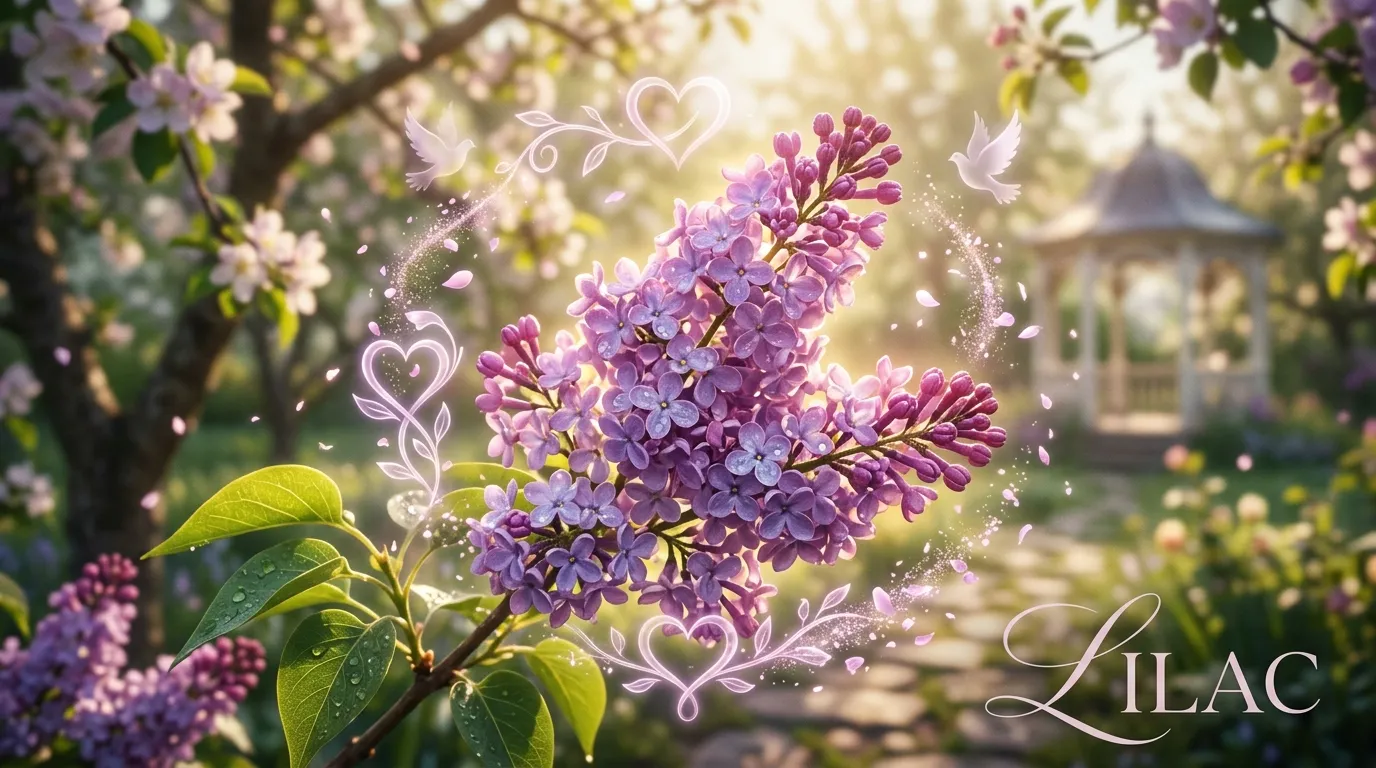
Every spring, one smell stops people on the sidewalk. It’s lilac. This shrub once grew wild on hills in the Balkans. Long ago, no one grew it in gardens. Then, in the 1560s, an Austrian ambassador carried it out of the Ottoman Empire. It never stopped spreading after that. Lilac blooms fast. It fades fast too. That’s why people use it to talk about young love. They also use it for things that don’t last.
What you’ll learn:
- What each lilac color means, and where that meaning flips
- The real history behind lilac’s name and its trip west
- Which flowers get mixed up with lilac, and how to tell them apart
- Whether lilac is safe around pets
- How to pick a lilac color for any relationship or event
The Definitive Answer Block
Lilac flowers stand for new love. They also stand for youth and innocence. Why? The plant blooms early. It blooms fast. It blooms just once a year. Victorian flower-language readers saw this and linked lilac to fresh, tender feelings. Not to old, settled love.
| Flower Color | Dominant Meaning | Best Occasion |
|---|---|---|
| Purple/Lilac | New love | New relationships, early dating |
| White | Youth and purity | Christenings, sympathy bouquets |
| Magenta | Confidence, deep affection | Anniversaries, bold romantic gifts |
| Yellow (rare) | Curiosity, cheer, friendship | Housewarmings, thank-you gifts |
Botanical Foundations & Profile
Common lilac has the scientific name Syringa vulgaris. It sits in the olive family, called Oleaceae. Jasmine and olive trees share this family too. Wild lilac grows on limestone hills across the Balkans. You’ll find it today in Bulgaria, Albania, Greece, and Turkey. [Link to: Kew Gardens plant profile for Syringa vulgaris] The genus name Syringa comes from a Greek word for “pipe.” Long ago, people hollowed out lilac stems to make flutes.
| Category | Detail |
|---|---|
| Scientific Classification | Syringa vulgaris, family Oleaceae |
| Native Region | The Balkans, Southeastern Europe |
| Bloom Period | Mid-spring, April to May |
| Average Lifespan | Shrub: 100+ years. One bloom: 1–2 weeks |
| USDA Zones | 3–7 |
| Cultivar Count vs. Wild Species | Over 2,000 cultivars vs. about 25 wild species |
Deep History & Cultural Timeline
Ottoman gardeners grew lilac long before Europe knew the plant. Then, in the 1560s, an ambassador named Ogier Ghiselin de Busbecq changed that. He worked for the Habsburg court in Vienna. He brought lilac cuttings home from his post in Istanbul. Carl Linnaeus gave the plant its formal name in 1753. He wrote it down in his book Species Plantarum. [Link to: Species Plantarum, Linnean Society archive] Later, French growers named Lemoine bred most of today’s double-flower lilacs. They worked in Nancy, France, from the late 1800s into the 1900s. Lilac reached American gardens with early colonists. By then, it had crossed three continents in about 300 years.
Symbolism Deep-Dive
New love. Lilac blooms fast. It fades fast too. So Victorian flower-readers linked it to fresh, untested feelings. Not to old, steady love.
Youth and innocence. White already means purity in most flower traditions. Lilac just picks up that meaning when it blooms white.
Fresh starts. Lilac is one of the first big shrubs to bloom after winter. So it became a symbol for spring. And for new beginnings.
Confidence. Darker shades, like magenta, feel bolder than pale ones. Florists use these deeper colors to send a stronger message.
Color Meanings & Cultural Safety Matrix
Purple / Lilac
- Primary sentiment: New love, first attraction
- Geographic nuances: In Victorian England, this color meant fresh romance. In parts of Eastern Europe, people hunt for a rare five-petal lilac bloom. Most lilacs have four petals. Finding five is good luck.
- Gifting warning: This color works well for a new partner. It feels a bit casual for a big anniversary. Pair it with magenta if the bond runs deep.
White
- Primary sentiment: Innocence, purity, remembrance
- Geographic nuances: In much of the West, white flowers fit both births and funerals. In parts of Asia, an all-white bouquet almost always means mourning.
- Gifting warning: Check the occasion first. Don’t send an all-white bunch to someone whose culture treats white as a funeral color.
Magenta / Dark Purple
- Primary sentiment: Passion, self-assurance
- Geographic nuances: In most Western settings, this color reads as bold and romantic. In more formal settings, it can feel too strong for a first gift.
- Gifting warning: Save this shade for someone you know well. It sends a stronger message than pale lilac does.
Yellow (rare cultivars, like ‘Primrose’)
- Primary sentiment: Friendship, warmth, curiosity
- Geographic nuances: In the West, yellow flowers often mean friendship. In some other cultures, yellow can hint at jealousy or fading love.
- Gifting warning: Yellow works well for a coworker or new friend. Skip it for a partner if you’re not sure how they’ll read it.
Global Traditions & Literary Impact
Victorian England built a secret language out of flowers. Lilac had its own clear spot in it. Purple lilac meant new love was starting. A sprig sent alone, with no note, could say what words couldn’t. [Link to: Victorian floriography reference guide] In Russia and nearby countries, kids still search lilac bushes each spring. They look for a rare bloom with five petals instead of four. Old tales say eating it makes a wish come true. Walt Whitman used lilac’s short bloom time in his 1865 poem for Abraham Lincoln, “When Lilacs Last in the Dooryard Bloom’d.” The flower’s quick return each spring stood for grief. Grief that comes back every year, just like the bloom does.
Economic, Culinary, or Medicinal Uses
You can eat lilac flowers. Cooks candy them or steep them into simple syrups. People prize the scent more than any strong taste. Some small perfume makers pull lilac’s scent for soap and light perfume. The flower gives very little oil through steam distillation, so this takes real skill. Old folk medicine used lilac bark and leaves for fevers. There’s no strong proof this works. Treat it as history, not medicine.
The Ultimate Etiquette & Gifting Guide
| Relationship / Setting | Recommended Color | The Subtext Sent |
|---|---|---|
| New romantic interest | Purple/Lilac | “I’m noticing you” |
| Established partner, anniversary | Magenta | “I still feel this strongly” |
| New baby or christening | White | Purity and new beginnings |
| Coworker or new friend | Yellow | Warm, easy friendliness |
| Sympathy or memorial | White | Gentle remembrance |
| Housewarming | Mixed purple bouquet | Fresh start, good wishes |
Universal Safety Rule: If you don’t know someone’s background, pick a mixed lilac bouquet over an all-white one. Mixed colors read as happy almost everywhere. Solid white can mean mourning in some cultures.
Direct Comparison: Lilac vs. Close Lookalikes
| Feature | Common Lilac (Syringa vulgaris) | Wisteria | Butterfly Bush (Buddleja) |
|---|---|---|---|
| Petal drop | Single flowers drop over 1–2 weeks | Whole clusters drop fast, together | Small flowers shed slowly over weeks |
| Fragrance | Strong, sweet, classic scent | Light, grape-like smell | Mild, honey-like smell |
| Foliage | Heart-shaped, dull green leaves | Many small leaflets per leaf | Long, narrow, gray-green leaves |
| Bloom season | Mid-spring | Mid-spring, a bit earlier | Summer into early fall |
| Care needs | Full sun, soil that drains well, cold winters | Full sun, needs a trellis or fence | Full sun, grows in poor soil |
How to tell them apart: Wisteria climbs, so it needs a structure. Lilac stands alone as a shrub. Butterfly bush blooms in summer, not spring.
Practical Maintenance & Domestic Safety
Lilac wants full sun, at least six hours a day. Give it soil that drains well, not soil that stays wet. Water deeply once a week for the first two years. After that, rain alone is often enough. Prune right after it blooms. Next year’s buds form fast, right on the old wood.
Now, about pet safety. There’s a common mix-up here. The ASPCA lists true lilac, Syringa vulgaris, as safe for both dogs and cats. [Link to: ASPCA Animal Poison Control plant list] The confusion comes from another plant. People also call it “Persian lilac.” Its real name is Melia azedarach, or chinaberry tree. That plant is toxic to pets. If a store sells you a “lilac,” check the scientific name first. Make sure it’s Syringa, not Melia.
Expert Curations & Misconceptions
10 fun facts:
- The word “lilac” comes from a Persian word, nilak. It means bluish.
- Lilac sits in the olive family, not the rose family.
- A mature lilac shrub can live over 100 years.
- Most lilac blooms have four petals. A rare five-petal bloom means good luck.
- The Lemoine family of France bred most double-flower lilacs we grow today.
- Early American colonists planted lilac in some of the first home gardens.
- New Hampshire named lilac its state flower in 1919.
- Rochester, New York, holds a lilac festival every May.
- People once hollowed lilac wood to make small flutes.
- Wild lilac still grows on Balkan hillsides today.
Myth vs. reality:
- Myth: Lilac is toxic to pets. Reality: True Syringa lilac is safe, says the ASPCA. A different plant shares the name and causes the confusion.
- Myth: Lilac has meant love “since ancient times.” Reality: Its love meaning starts with Victorian flower language in the 1800s. Not ancient times.
- Myth: Every purple flower called “lilac” is a true lilac. Reality: California lilac, or Ceanothus, isn’t a Syringa at all. It’s a whole different plant.
3 expert tips:
- Cut lilac stems at an angle, early in the morning. Then split the stem an inch up so it drinks well.
- Cut off spent blooms right after flowering. This pushes the plant to grow next year’s buds.
- Skip heavy nitrogen fertilizer on grown lilacs. Too much grows leaves instead of flowers.
High-Value Section
Does lilac mean love or friendship?
Purple lilac means new, first-stage love. It doesn’t mean settled friendship. Yellow lilac leans more toward friendship and warmth.
Why do lilacs bloom for such a short time?
Lilac sets its flower buds on old wood the summer before. Then it opens them all at once each spring, before it shifts energy to growing leaves.
Is lilac the same as wisteria?
No. Lilac is a shrub in the olive family. Wisteria is a vine in the pea family. They just look alike, both purple and clustered.
Can I grow lilac somewhere warm?
Not easily. Common lilac needs real winter cold to set its buds. Below USDA zone 8, it may not bloom well.
Is lilac poisonous to dogs or cats?
No. True Syringa vulgaris lilac is safe for both dogs and cats, per the ASPCA.
What does white lilac mean?
White lilac stands for youth and purity. Florists also use it in sympathy bouquets, for gentle remembrance.
How long do cut lilacs last in a vase?
About five to seven days. Change the water often and give the stem a fresh angled cut.
What’s the difference between lilac and Persian lilac?
True lilac is Syringa vulgaris. “Persian lilac” often means Melia azedarach, a toxic tree that just shares the common name.
Why is lilac New Hampshire’s state flower?
The state picked lilac in 1919. Lawmakers felt the hardy shrub matched the “rugged” spirit they wanted for the state.
Do lilacs come in yellow?
Yes, but it’s rare. A cultivar called ‘Primrose’ grows pale yellow blooms. Most lilacs are purple or white.
Is it bad luck to bring lilac indoors?
This is a local folk belief in parts of Europe. It’s not a firm rule. Most florists today see indoor lilac as fine.
What soil does lilac need?
Lilac wants soil that drains well and leans slightly alkaline. Heavy, wet clay will hold back its blooms.
Conclusion
Lilac’s whole story comes down to timing. It blooms hard and fast. Then it vanishes for a year. That rhythm is why people made it a symbol for young love and quick, bright feelings. This shrub took 300 years to travel from Balkan hills to backyard gardens. Yet it still tells the same short, sweet story each spring. Some of the best things don’t last long. That’s exactly what makes them worth noticing.

Zahid Abbas is an educator, researcher, and digital publishing strategist behind BloomsyFlower, a flower and gardening resource covering flower meanings, symbolism, history, care, seasonal blooms, and gifting. He combines research with simple, reader-friendly writing to help people understand, grow, and enjoy flowers.