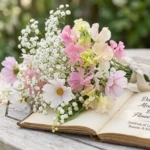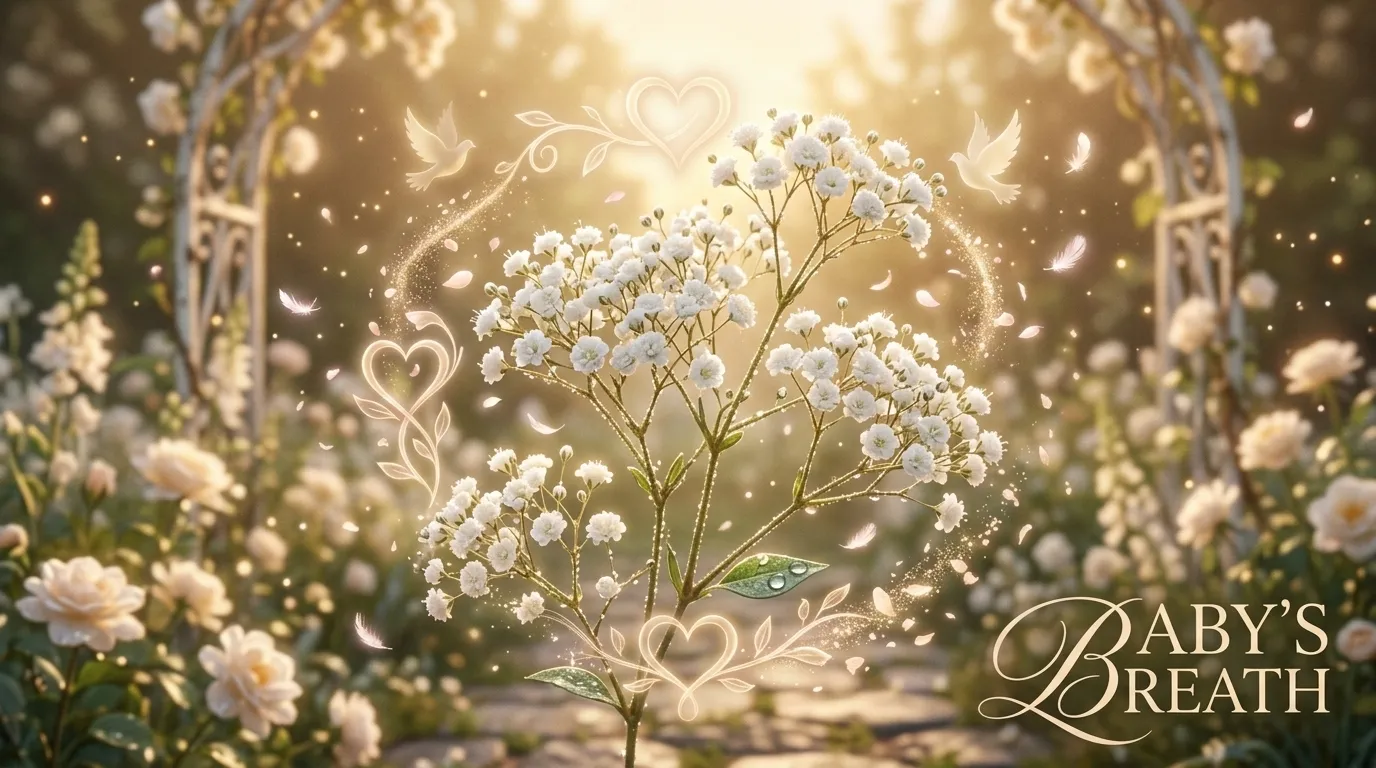
You’ve seen this flower everywhere. It fills the gaps in almost every wedding bouquet. Tiny white blooms, dozens on one stem. The name comes from something simple: those small white flowers look soft, like a baby’s breath on a cold morning. The plant’s scientific name tells a different story. It means “chalk-loving,” because this flower thrives in dry, chalky soil where little else grows.
What you’ll learn:
- What baby’s breath means, and why it stands for lasting love
- Where this flower comes from, and how it got so popular
- Whether it’s really safe around pets
- Which flowers look like baby’s breath, and how to tell them apart
- How to use baby’s breath the right way as a gift
The Definitive Answer Block
Baby’s breath means everlasting love and pure, innocent affection. The name comes from its soft, cloud-like look. Its meaning comes from Victorian flower language, where its many small blooms stood for a love too big to count.
| White | Pure, everlasting love | Weddings, new babies, sympathy |
| Pink | Gentle romance, warmth | Anniversaries, thank-you gifts |
| Deep Pink/Red (dyed) | Passion, bold love | Modern romantic gifts |
Botanical Foundations & Profile
Baby’s breath has the scientific name Gypsophila paniculata. It sits in the carnation family, called Caryophyllaceae. The genus name comes from two Greek words, gypsos and philos. Together they mean “chalk-loving.” This name fits, because the plant grows best in dry, chalky, limestone soil. It grows wild across Central and Eastern Europe. It also grows across parts of Central Asia.
| Scientific Classification | Gypsophila paniculata, family Caryophyllaceae |
| Native Region | Central and Eastern Europe, Central Asia |
| Bloom Period | Summer, June to August |
| Average Lifespan | Perennial plant: 3–5+ years. Cut stem: 1–2 weeks fresh, months dried |
| USDA Zones | 3–9 |
| Cultivar Count vs. Wild Species | Over 100 cultivars vs. about 150 wild Gypsophila species |
Deep History & Cultural Timeline
Carl Linnaeus gave the genus its name in 1753, in his book Species Plantarum. Growers in Europe used it in gardens for its dry-soil toughness long before florists ever touched it. By the late 1800s, Victorian bouquet-makers added baby’s breath to soften stiff arrangements of roses and lilies. Its real fame came later, in the 1980s. Wedding florists in the West began using it as a cheap, airy filler flower. That trend never really stopped. Today, growers in Colombia and Ecuador supply most of the baby’s breath sold in flower shops worldwide.
Symbolism Deep-Dive
Everlasting love. One stem holds dozens of tiny blooms. Victorian flower-readers saw this and linked it to love too large and too many to count.
Purity and innocence. The color white already means purity in most Western flower traditions. Baby’s breath, almost always white, picked up this meaning fast.
New beginnings. The name itself points to infancy. So the flower became linked to new babies, new love, and fresh starts.
Humility. Each single bloom is tiny and plain. Florists often read this as a symbol of quiet support, standing behind bolder flowers like roses.
Color Meanings & Cultural Safety Matrix
White
- Primary sentiment: Pure, everlasting love
- Geographic nuances: In the West, white baby’s breath is a wedding staple. In parts of Asia, plain white flower gifts can read as a funeral color instead.
- Gifting warning: Mix white baby’s breath with other colors if you’re sending it to someone from a culture where solid white signals mourning.
Pink
- Primary sentiment: Gentle romance, soft warmth
- Geographic nuances: Pink cultivars are newer and mostly a Western floral-industry creation, so they don’t carry old folk meanings the way white does.
- Gifting warning: Safe for almost any warm, friendly occasion. Not strong enough alone for a bold romantic statement.
Deep Pink or Red (dyed)
- Primary sentiment: Passion, playful boldness
- Geographic nuances: Dyed baby’s breath is a modern trend, mostly seen in the U.S. and U.K. floral market, not a traditional color with old symbolism.
- Gifting warning: Tell the recipient it’s dyed if they care about natural flowers. Some people find dyed stems less special than natural colors.
Global Traditions & Literary Impact
Victorian England built a whole language out of flowers, and baby’s breath had a clear place in it. Small and plain next to roses, it stood for a pure, quiet kind of love in the nosegays people carried and gave. In the 1980s, Western wedding culture pushed baby’s breath from a supporting flower into a design trend of its own. Florists began using huge, cloud-like arrangements of it, sometimes with no other flower at all. In some Slavic folk traditions, dried Gypsophila stems were hung in homes through winter, since the plant holds its shape and color long after other flowers fade.
Economic, Culinary, or Medicinal Uses
Baby’s breath is not eaten and it is not used in cooking. Its main economic role is in the cut-flower trade, where it ranks among the most exported filler flowers worldwide, largely grown in Colombia and Ecuador for the global market. Some folk traditions in Central Asia used Gypsophila root for its natural soap-like compounds, called saponins, to wash wool and hair. There’s no modern medical use, and eating any part of the plant is not advised.
The Ultimate Etiquette & Gifting Guide
| Wedding bouquet | White | Pure, lasting love |
| New baby gift | White | Innocence, new beginnings |
| Anniversary | Pink | Gentle, warm romance |
| Sympathy arrangement | White, mixed with other flowers | Soft remembrance |
| Just-because gift | Pink or dyed | Playful affection |
Universal Safety Rule: Never send solid white baby’s breath alone to someone from a culture where white signals mourning. Mix it with a warm color like pink or peach to keep the message clearly happy.
Direct Comparison: Baby’s Breath vs. Close Lookalikes
| Petal drop | Tiny blooms dry in place, rarely drop | Small flowers can shatter and drop fast | Fluffy plumes fade but hold shape |
| Fragrance | Faint, slightly sweet | Light, carrot-like smell | Almost no scent |
| Foliage | Thin, wiry, grayish-green stems | Feathery, carrot-like leaves | Fern-like, deep green leaves |
| Bloom season | Summer | Late spring through summer | Early to mid-summer |
| Care needs | Full sun, dry, chalky soil | Full sun, tolerates poor soil | Partial shade, moist soil |
How to tell them apart: Queen Anne’s Lace grows as a flat, wide cluster of flowers. Baby’s breath grows as a loose, airy cloud of many tiny blooms. Astilbe grows in tall, feathery plume shapes, not round clusters.
Practical Maintenance & Domestic Safety
Baby’s breath wants full sun and soil that drains fast. It actually likes poor, dry, slightly alkaline soil, so skip rich compost or heavy fertilizer. Water it lightly once it’s established, since too much water can rot its roots. Cut stems for drying just as the blooms open fully.
On pet safety, this one deserves real caution. The ASPCA lists Gypsophila as toxic to dogs, cats, and horses. [Link to: ASPCA Animal Poison Control plant list] The plant contains natural compounds called saponins, which can cause stomach upset if a pet chews or eats it. Many people assume this flower is harmless because it’s used as a soft, decorative filler. That assumption is wrong. Keep it out of reach of curious pets, especially in fresh-cut arrangements low on a table.
Expert Curations & Misconceptions
10 fun facts:
- The genus name Gypsophila means “chalk-loving” in Greek.
- Baby’s breath sits in the same plant family as carnations.
- One stem can carry over 100 tiny individual blooms.
- Colombia and Ecuador supply most of the world’s cut baby’s breath.
- The flower dries naturally and can hold its shape for years.
- Wild Gypsophila species number around 150 worldwide.
- It became a wedding-industry staple mainly in the 1980s.
- Some cultivars, like ‘Bristol Fairy,’ were bred just for the cut-flower trade.
- The plant thrives in dry, rocky soil where many flowers fail.
- Pink cultivars are a fairly recent addition to the usual white.
Myth vs. reality:
- Myth: Baby’s breath is harmless to pets because it’s just a filler flower. Reality: The ASPCA lists it as toxic to dogs, cats, and horses due to natural saponins.
- Myth: Baby’s breath only comes in white. Reality: Pink and dyed cultivars, like ‘Festival Pink,’ are common in shops today.
- Myth: Baby’s breath is a modern floral trend with no real history. Reality: Its use in bouquets goes back to Victorian flower language in the 1800s.
3 expert tips:
- Hang stems upside down in a dry, dark spot to dry them for long-lasting decor.
- Trim stems and change the water every two to three days to keep cut blooms fresh longer.
- Avoid rich garden soil when planting it outdoors; poor, well-drained soil grows it best.
High-Value Section
What does baby’s breath flower mean?
Baby’s breath stands for everlasting love and pure, innocent affection, based on its many small white blooms in Victorian flower language.
Why is it used so much in weddings?
Its light, airy shape softens bold flowers like roses, and it became a major wedding trend in the 1980s that never really faded.
Is baby’s breath toxic to cats and dogs?
Yes. The ASPCA lists it as toxic to dogs, cats, and horses, since it contains natural compounds called saponins that upset the stomach.
Does baby’s breath only come in white?
No. Pink cultivars, like ‘Festival Pink,’ exist, and florists often dye stems deeper pink, red, or even blue for trend-driven bouquets.
How long does dried baby’s breath last?
Properly dried stems can hold their shape and color for a year or more if kept out of direct sunlight and moisture.
What’s the difference between baby’s breath and Queen Anne’s Lace?
Queen Anne’s Lace forms flat, wide flower clusters, while baby’s breath grows as a loose, airy cloud of many tiny separate blooms.
Can I grow baby’s breath in my garden?
Yes, easily, as long as your soil drains well and leans slightly alkaline; it struggles in rich, wet, or acidic soil.
Why is it called “baby’s breath”?
The name comes from the flower’s soft, delicate look, thought to resemble the light, gentle breath of a newborn baby.
Is baby’s breath good for a sympathy arrangement?
Yes, especially mixed with other flowers, since its soft white blooms carry a gentle, quiet remembrance without being too bold.
What soil does baby’s breath need?
It needs dry, well-drained, slightly alkaline soil, closer to chalky or rocky ground than rich garden compost.
Do florists use fresh or dried baby’s breath more often?
Both are common; fresh stems fill bouquets for events, while dried stems suit long-lasting home decor and craft projects.
Conclusion
Baby’s Breath Flower Meaning earns its meaning honestly. A plant built to survive in dry, chalky soil where little else grows became, over time, a symbol of a love that holds on and doesn’t quit. Its many tiny blooms, packed onto one thin stem, turned a tough survivor into a soft, gentle gift. That’s the real story behind the cloud in every bouquet: something small and plain, doing more work than anyone notices at first glance.

Zahid Abbas is an educator, researcher, and digital publishing strategist behind BloomsyFlower, a flower and gardening resource covering flower meanings, symbolism, history, care, seasonal blooms, and gifting. He combines research with simple, reader-friendly writing to help people understand, grow, and enjoy flowers.