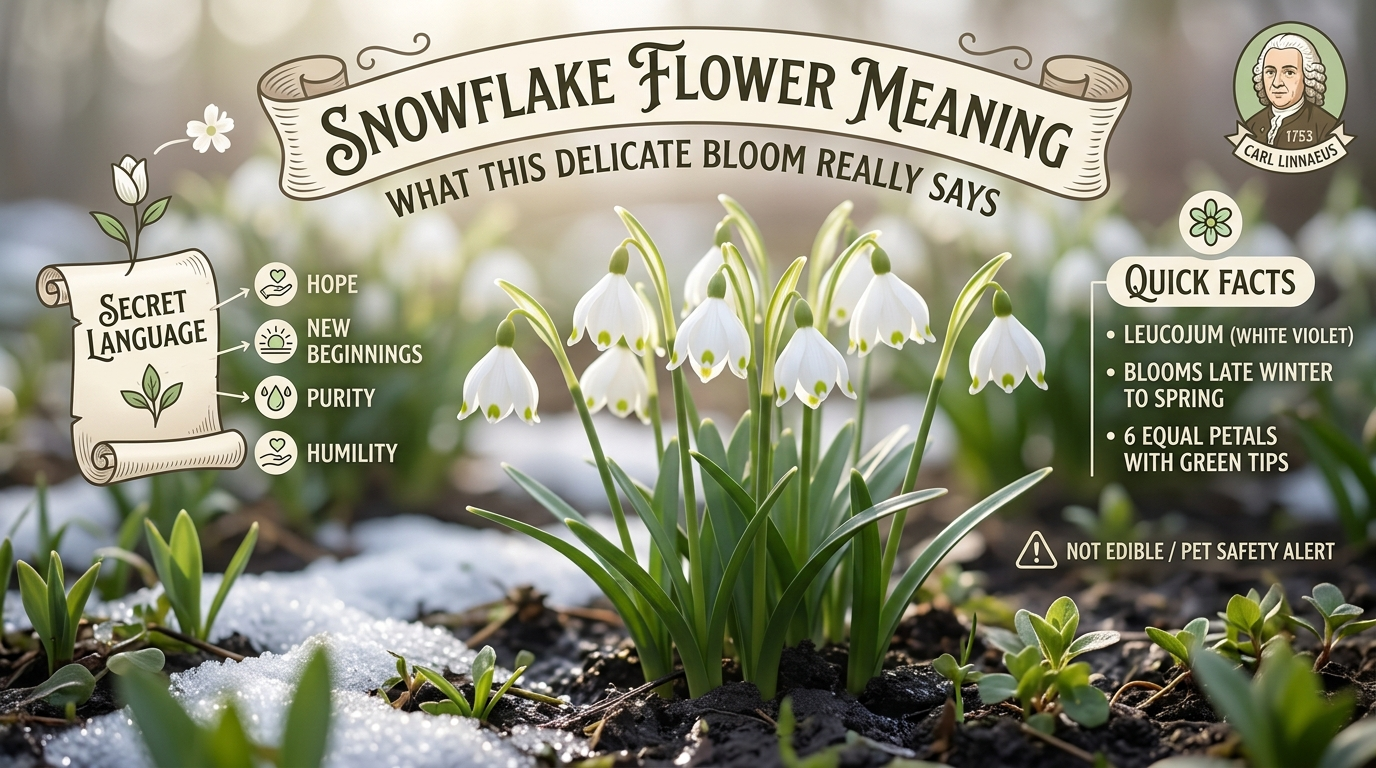
Quick Meaning of the Snowflake Flower
The snowflake flower meaning is all about hope and new starts. It means being clean and pure. It can also mean quiet strength. People give it when winter ends and spring begins. The snowflake flower meaning shows that a new, happy time is coming. It tells someone that good days are near.
Origin of the Name
The plant’s science name is Leucojum. This word is Greek. Leukos means “white.” Ion means “violet.” So the name means “white violet.” But this flower is not a real violet. It just got the name from its color.
People call it “snowflake” for a simple reason. This flower is small and white. It hangs down low. It looks like a snowflake falling from the sky. There are two main kinds of this flower. One is called Spring Snowflake. It blooms in spring, just like its name says. The other is called Summer Snowflake. But this one often blooms in spring too, not summer. This can be a little confusing. A famous scientist named Carl Linnaeus wrote about this flower. He did this in the year 1753. He put it in a big plant book. That book helped name many plants we still use today.
Snowflake Flower in Old Times (Victorian Meaning)
Long ago, in Victorian times, people loved secret flower messages. This was called “the language of flowers.” People did not always say their feelings out loud. Instead, they gave a flower to share a feeling.
White flowers meant something pure and good. They meant honesty too. The Snowflake flower hangs its head down low. It does not stand up tall and proud. This made people think of being humble and gentle. It also bloomed at the very end of winter. Because of this, people saw it as a sign. It meant hope was coming. It meant warm days were near. Giving someone a Snowflake flower was like saying, “Better days are on the way for you.”
Plant Facts Table
| Fact | Detail |
| Science Name | Leucojum |
| Where It Grows | Europe, North Africa, and nearby areas |
| Bloom Time | Late winter to spring |
| How Long It Lives | Many years, even many decades |
| Best Zones | Zones 4 to 8 |
| Number of Types | About 9 |
| Flower Color | White with small green tips |
| Family | Same family as daffodils |
History Timeline
- Long, long ago: This flower grew wild in wet fields across Europe. No one planted it. It just grew on its own.
- 1753: A scientist named Linnaeus wrote about the flower. He gave it a proper science name.
- After that: Gardeners began digging up wild bulbs. They planted them in home gardens instead.
- Later years: The flower spread even more. People carried bulbs to new countries.
- Today: It grows in gardens all over Europe. It also grows in parts of the United States.
What the Flower Stands For
Purity
The flower is white and clean looking. White has always meant something pure. It also means something honest and simple. People often pick this flower for happy new starts. They use it for new babies. They use it for spring holidays too.
Strength
This flower is small, but it is tough. It can grow through cold, hard ground. It can even push up through a bit of snow. Because of this, people say it shows quiet strength. It proves that small things can still be strong. It proves that soft things can still survive hard weather.
Memory
This flower often grows back every single year. It grows in the very same spot for a long time. Because of this steady return, people connect it to memory. It reminds people of old gardens. It reminds them of family members who once grew flowers there. Some people say it feels like an old friend that visits every spring.
Color Meaning
This flower is almost always white. Sometimes it has a tiny green dot at the tip. Because of this, its color meaning stays simple and the same.
| Color | What It Means | Gift Tip |
| White | Hope, purity, and new starts | Good for happy, hopeful days |
Around the world: In many Western countries, white flowers mean joy and hope. People use them for weddings. They use them for new babies too. But in some parts of Asia, white flowers can mean something sad. They can be linked to funerals or loss. Because of this, it is smart to ask first. Ask before giving white flowers to someone from those places. A short, kind note can help too.
Old Stories and Books
Old tradition: In parts of Europe, small white spring flowers were part of old spring festivals. People welcomed spring after a long, cold winter. They saw these small white flowers as the first happy sign of the new season.
Book note (not fully checked): Some old poems from long ago talk about small white spring flowers. These poems often connect the flowers to hope. They connect them to new life too. But we are not fully sure if one single old poem was written only about this exact flower. Please check this fact carefully before you use it as true.
also read more about:https://bloomsyflower.com/datura-flower-meaning/
How People Use It
You should never eat this flower. It is not food. It is not safe for cooking or snacking.
Even so, this plant is useful in one special way. Scientists take one natural part from it. They use it to help make real medicine. This medicine can help people with memory problems. It is only made in careful science labs. Doctors control how it is used. Please be careful: Never try to make your own medicine from this plant at home. Never eat any part of it. Always talk to a real doctor about real medicine.
Gift Guide
| Who You Give It To | Best Color | What It Says |
| New mom or dad | White | “I hope your new life is happy.” |
| A sad friend | White | “I have hope for better days for you.” |
| A grandparent | White | “Thank you for the good memories.” |
| A friend’s spring birthday | White | “Here’s to fresh new starts.” |
| Someone starting a new job | White | “I hope this new path goes well.” |
One Safety Tip
Always ask first before giving white flowers for sad events. In some cultures, white can mean loss instead of hope. A quick question can stop a mix-up.
Snowflake vs. Snowdrop (Look-Alike Flower)
Many people mix up these two flowers. They really are different.
| Trait | Snowflake | Snowdrop |
| Petals | 6 petals, all the same size | 3 long outer petals, 3 short inner petals |
| Smell | Has a light, soft smell | Almost no smell at all |
| Leaves | Shiny, deep green leaves | Thinner, grey-green leaves |
| Bloom Time | Late winter through spring | Very early winter through early spring |
| Flowers per Stem | Often many small flowers | Usually just one flower |
Easy tip: Look closely at the green spots. A Snowflake has a green dot on all six petals. A Snowdrop only has green marks on its small inner petals. This one small check can help you tell them apart fast.
How to Take Care of It
- Sun: Give it full sun, or just a little shade.
- Soil: Use wet, rich dirt that drains well.
- Water: Keep the soil a little damp, not dry.
- Trim: Let the leaves turn yellow on their own after it blooms. Do not cut them off early. The leaves feed the bulb for next year.
- Planting: Plant new bulbs in the fall, so they can grow strong roots before winter.
Warning for Pets: This plant can hurt cats, dogs, horses, and even kids if they eat it. It can cause drooling.The flower can cause throwing up too. It can also cause a sick, upset tummy. If someone eats a piece of this plant, call a doctor or an animal vet right away. Do not wait.
Fun Facts and Tips
10 Fun Facts:
- Its name means “white violet” in old Greek.
- There are about 9 kinds of this flower.
- The “Summer Snowflake” often blooms in spring, not summer.
- Some kinds can live through very, very cold weather.
- Bugs and pests do not bother this plant much.
- It makes small new bulbs all on its own.
- Most flowers have 6 petals with tiny green tips.
- It is a cousin of the daffodil flower.
- Deer usually leave this plant alone.
- Its seeds can float on water and grow in new spots.
True or False:
- Myth: Snowflake and Snowdrop are the exact same flower.
- Truth: They are two totally different flowers.
- Myth: The Summer Snowflake always blooms in summer.
- Truth: It usually blooms earlier, in spring.
- Myth: It is safe to eat because it looks so soft and pretty.
- Truth: It is not safe. All parts can make you sick.
2 Tips from Florists:
- Cut the flowers in the cool morning air. This helps them last longer in a vase.
- Mix them with tulips or other spring flowers for a pretty bunch.
Questions People Ask
What does the Snowflake flower mean?
It means hope, new starts, and being pure and honest.
When should I give this flower?
Give it for new babies, spring holidays, or to cheer up someone who is sick.
Does the color change the meaning?
Not really. This flower is almost always white, so the meaning stays the same.
Can you eat this flower?
No. It is not safe to eat at all.
When does it bloom?
It blooms from late winter all the way through spring.
Does it spread too much in a garden?
It spreads slowly by making new small bulbs. It is not a big problem plant.
Where does its name come from?
Its small, round, white flowers look like falling snowflakes.
What did it mean in old times?
Long ago, it meant purity, hope, and better days ahead.
Is it safe to have around pets?
No. It can make pets sick if they chew on it or eat it.
How long do the bulbs live?
They can live and bloom for many years, even for many decades.
Final Thoughts
The snowflake flower meaning is full of hope. This small flower stands for purity, quiet strength, and new beginnings. It grows through cold, hard ground when other plants cannot, showing that small things can still be strong. The snowflake flower meaning also connects with the idea of staying strong during hard times. Its name comes from old Greek words linked to the color white. People have long loved this flower for its gentle beauty. It returns each spring, like a loyal old friend. You can plant it in your garden or give it to someone you care about. Either way, the snowflake flower meaning carries a warm message: new and happy days can come after even the coldest winter.

Zahid Abbas is an educator, researcher, and digital publishing strategist behind BloomsyFlower, a flower and gardening resource covering flower meanings, symbolism, history, care, seasonal blooms, and gifting. He combines research with simple, reader-friendly writing to help people understand, grow, and enjoy flowers.