Quick Meaning of Succulent
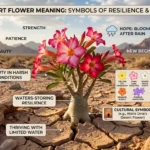
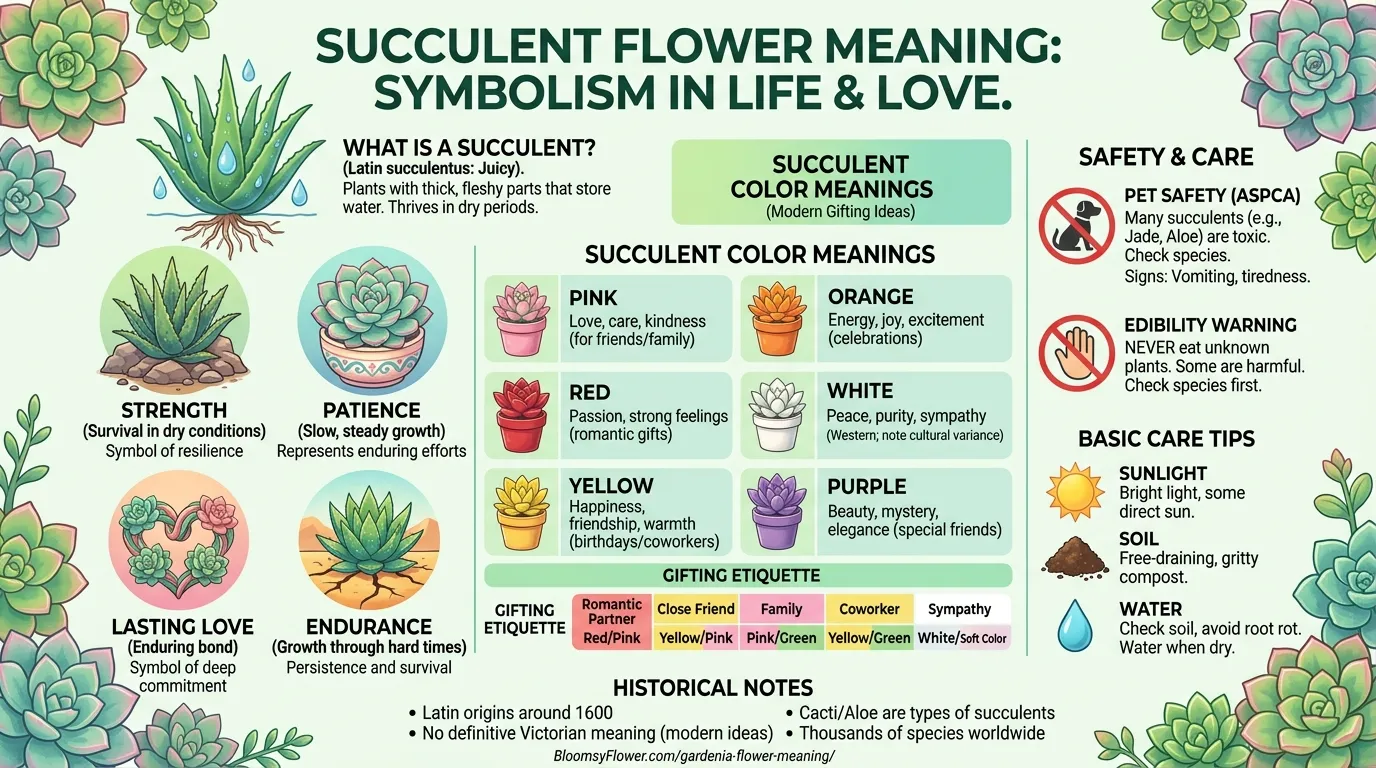
Succulents often symbolize strength, patience, lasting love, and the ability to grow through hard times.
A succulent is a plant that stores water in its leaves, stems, or roots. This helps it live through dry periods. Succulents come in many shapes, sizes, and colors. Some also grow beautiful flowers.
When people ask about succulent flower meaning, they often want to know what these plants represent as gifts. Succulent flower meaning is linked to their strong nature. They can survive with little water and careful care.
This makes them a nice symbol of strength and steady love. A small succulent can also represent a friendship that lasts for years.
It is important to know that succulent is not one flower or one plant species. It is a large group of plants. Thousands of species are found around the world.
Origin of the Name
The word succulent has a long history.
It comes from the Latin word succulentus. Succulent means “juicy” or “full of juice.” It comes from succus, meaning “juice” or “sap.”
The word entered English around 1600. At first, it described something full of juice. Around 1825, it was also used as a noun for plants with juicy tissues.
There was no single person who named all succulents. The word developed from older languages.
The name fits these plants well. Their thick leaves and stems can hold water.
Succulent in Victorian Flower Language
Victorian flower language gave special meanings to many flowers.
However, there is no strong proof that succulent had one standard Victorian meaning.
Many meanings shared online today are modern ideas. They are not always old Victorian traditions.
Today, people often connect succulents with:
- Strength
- Patience
- Long-lasting love
- Friendship
- Growth
- Care
- Endurance
Succulent flower meanings come from the way succulents live and grow.
Botanical Foundations & Profile
Succulents are a broad group of plants. They do not have one scientific name.
| Feature | Succulent |
| Scientific Name | No single name |
| Native Region | Many regions worldwide |
| Bloom Period | Varies by species |
| Average Lifespan | Varies by species and care |
| USDA Zones | Varies by species |
| Species Count | Thousands of species |
History & Cultural Timeline
Succulents have a long history with people and plant collectors.
Around 1600
The English word succulent began to describe plants or plant parts that were full of juice.
Around 1825
The word was used as a noun for a plant with juicy tissues.
18th and 19th Centuries
Plant collectors became more interested in unusual plants. Succulents became part of plant collections and botanical study.
Today
Succulents are popular houseplants. Many are easy to grow when given good light and well-drained soil.
There is no single “discoverer” of succulents. The group includes plants from many families and regions.
Discover More Flower Meanings https://bloomsyflower.com/gardenia-flower-meaning/
Symbolism Deep-Dive
1. Strength
Succulents can store water in their fleshy parts.
This helps them survive dry periods. Because of this, they can symbolize strength.
A succulent can make a thoughtful gift for someone facing change.
2. Patience
Succulents often grow slowly.
They do not need constant attention. With the right care, they can grow for many years.
This makes them a symbol of patience and steady growth.
3. Lasting Love
A healthy succulent can stay with someone for a long time.
Its lasting nature can represent a strong bond.
For this reason, succulents can be used as gifts for friends, family, and loved ones.
Meaning by Color
The meaning of a succulent can also change with its color.
Succulent flower meaning are mostly used for modern gift ideas. They are not fixed rules.
Pink Succulents
Main feeling: Love, care, and kindness.
Pink succulents can make sweet gifts for friends and family.
Red Succulents
Main feeling: Love, passion, and strong feelings.
Red can be a good choice for romantic gifts.
In many Western settings, red is linked with love. In Chinese culture, red can also represent joy, luck, and celebration.
Yellow Succulents
Main feeling: Happiness, friendship, and warmth.
Yellow can work well for birthdays and cheerful gifts.
Orange Succulents
Main feeling: Energy, joy, and excitement.
Orange can add a bright touch to a plant gift.
White Succulents
Main feeling: Peace, purity, and simplicity.
White is often linked with calm feelings in Western settings.
However, color meanings can change between cultures. White may also be linked with mourning in some East Asian cultures.
Purple Succulents
Main feeling: Beauty, mystery, and care.
Purple can make a succulent gift feel special and elegant.
Succulent Color Meaning Table
| Color | Common Gift Meaning | Good Gift Idea |
| Pink | Love and kindness | Friend or family |
| Red | Love and passion | Romantic partner |
| Yellow | Joy and friendship | Friend or coworker |
| Orange | Energy and happiness | Birthday gift |
| White | Peace and purity | Sympathy or simple gift |
| Purple | Beauty and care | Special friend |
Tip: Always consider the person’s culture before choosing a color.
Global Traditions & Literary Impact
Succulents are closely linked with dry landscapes around the world.
Aloe is one well-known example. Aloe plants can survive dry conditions because of their water-storing tissues. Kew describes succulents as plants that are well adapted to places with limited water.
Succulents also appear in gardens, homes, plant collections, and modern design.
Literary Reference
There is no widely accepted classic book that gives succulents one fixed symbolic meaning.
A direct literary link should therefore be checked before using it as historical proof.
For example
The Secret Garden by Frances Hodgson Burnett, published in 1911, shows how plants and gardens can represent growth and change. However, it should not be used as proof of a historical succulent meaning.
Economic, Culinary & Medicinal Uses
Succulents are used for more than decoration.
Many are sold as houseplants and garden plants. Some are also used in research and traditional plant practices.
Aloe Vera
Aloe vera is one well-known succulent.
Its gel is used in many skin products. The RHS also notes its traditional use for soothing mild sunburn.
However, do not assume every succulent is safe to eat.
Some plants can be harmful if eaten. The exact species must always be checked first.
Safety note: Never eat an unknown succulent or use it as medicine without proper guidance.
Ultimate Etiquette & Gifting Guide
| Relationship | Recommended Color | The Subtext |
| Romantic partner | Red or pink | Love and care |
| Close friend | Yellow or pink | Friendship and warmth |
| Family member | Pink or green | Care and lasting support |
| Coworker | Yellow or green | Good wishes |
| New neighbor | Green | Welcome and friendship |
| Sympathy gift | White or soft colors | Peace and comfort |
| Birthday | Yellow or orange | Joy and celebration |
These are modern gift ideas, not strict rules.
The plant itself also matters. Choose one that fits the person’s home and care skills.
Universal Safety Rule
Never assume that a succulent is safe to eat or safe for pets.
Check the exact plant species before eating it or placing it near animals.
Succulent vs. Close Lookalikes
Because “succulent” covers many plants, there is no single succulent shape.
Some succulents look very different from others.
| Feature | Succulent | Cactus | Aloe | Sempervivum |
| Petal Shape | Varies greatly | Varies | Tube or bell-like flowers | Star-like flowers |
| Fragrance | Usually little or none | Usually little or none | Usually mild | Usually little or none |
| Foliage | Thick and fleshy | Often reduced leaves | Long, thick leaves | Tight, fleshy leaves |
| Bloom Season | Varies | Varies | Often seasonal | Often seasonal |
| Water Storage | Leaves, stems, or roots | Mainly stems | Thick leaves | Thick leaves |
How to Tell Them Apart
Look at the leaves, stems, and growth shape.
Cacti often have spines and special structures called areoles.
Aloe usually has long leaves in a strong rosette.
Sempervivum forms tight rosettes with pointed leaves.
Remember that cacti, aloe, and sempervivum are also succulents.
Practical Maintenance & Domestic Safety
Succulents are often easy to care for.
However, they still need the right conditions.
Sunlight
Most common succulents like bright light.
Some need direct sun. Others can burn in very strong sunlight.
Check the needs of your exact plant.
Soil
Use soil that drains water quickly.
Succulent soil should not stay wet for long. RHS recommends free-draining, gritty compost for many succulents.
Water
Do not water on a strict schedule.
Check the soil first.
Many indoor succulents should be watered when the surface feels dry. Let extra water drain away.
Too much water can cause root rot.
Pruning
Remove dead leaves and flowers when needed.
Use clean tools when cutting damaged growth.
Pet Safety
Not every succulent is safe for pets.
For example, the ASPCA lists jade plants as toxic to dogs, cats, and horses. Reported signs include vomiting, depression, and poor coordination.
The ASPCA also lists aloe as toxic to dogs and cats. Signs can include vomiting, diarrhea, and tiredness.
Keep unknown plants away from pets.
Expert Curations & Misconceptions
10 Fun Facts About Succulents
- Succulents store water in special plant tissues.
- They grow in many parts of the world.
- Thousands of succulent species exist.
- Cacti are a type of succulent.
- Some succulents have very thick leaves.
- Some have thin leaves and unusual shapes.
- Many succulents can grow flowers.
- Some grow well indoors.
- Many prefer soil that drains quickly.
- Too much water can cause plant rot.
Myth 1: All Succulents Are Cacti
Myths and Facts
| Myth | Reality |
| All succulents are cacti. | False. Cacti are only one type of succulent. |
| Succulents never need water. | False. They still need water to grow. |
| Every succulent is safe for pets. | False. Some species can be toxic to pets. |
Two Florist Tips
Tip 1: Choose a plant that matches the person’s home.
Tip 2: Add a simple care card with the gift.
This helps the plant stay healthy for longer.
Common About Succulent Flower Meaning
What is the spiritual meaning of a succulent?
Succulents can symbolize strength, patience, growth, and lasting love.
These are modern symbolic meanings. They are not universal religious meanings.
Are succulents good gifts?
Yes. They can make thoughtful gifts for friends, family, coworkers, and loved ones.
They can also last much longer than many cut flowers.
What succulent color means love?
Red and pink are common choices for love and affection.
Color meanings can change between cultures.
Are succulents poisonous?
Some are toxic, while others are not.
The answer depends on the exact species. Always check the plant before giving it to pets or children.
Can you eat a succulent?
Some succulent plants have edible parts.
Others can be harmful.
Never eat an unknown succulent. Confirm the species and safe preparation first.
When do succulents bloom?
Bloom times depend on the species.
Some bloom in spring or summer. Others can bloom at different times.
Are succulents invasive?
Some species can spread quickly in suitable climates.
Most common houseplant succulents are not a major invasive concern.
Check local plant guidance before planting one outdoors.
Why are succulents linked with strength?
They can store water in their leaves, stems, or roots.
This helps many species survive periods of drought.
Where did the word succulent come from?
The word comes from Latin succulentus, meaning juicy or full of juice.
The English word dates to around 1600.
Did succulents have a Victorian flower meaning?
There is no strong evidence for one standard Victorian meaning for succulents.
Many meanings used today are modern interpretations.
Final Thoughts
Succulent flower meaning is closely linked with strength and lasting growth. Succulents can store water and survive dry periods. This makes them a natural symbol of patience and endurance. Their many shapes and colors also make them beautiful gifts. Pink can suggest care, while red can suggest love. Yellow can express friendship and joy. White can create a calm feeling. Remember that color meanings can change across cultures. Succulents are also a broad plant group, not one flower. Their care needs can vary from one species to another. Always check the exact plant before giving it as a gift. With the right light, soil, and water, many succulents can thrive for years. Choose a plant that matches the person, the message, and the space. A simple succulent can carry a lasting message of care.

Zahid Abbas is an educator, researcher, and digital publishing strategist behind BloomsyFlower, a flower and gardening resource covering flower meanings, symbolism, history, care, seasonal blooms, and gifting. He combines research with simple, reader-friendly writing to help people understand, grow, and enjoy flowers.