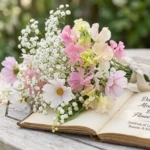
White flowers do something odd. They aren’t really “white” at all. Most white petals have no pigment at all inside them. Instead, tiny air pockets inside the petal scatter every color of light at once. Your eye reads that mix as pure white. That’s not poetry. That’s real plant biology. Maybe that’s why white flowers became a symbol for purity across so many cultures. They’re already made of every color at once, showing none of them.
The Definitive Answer Block
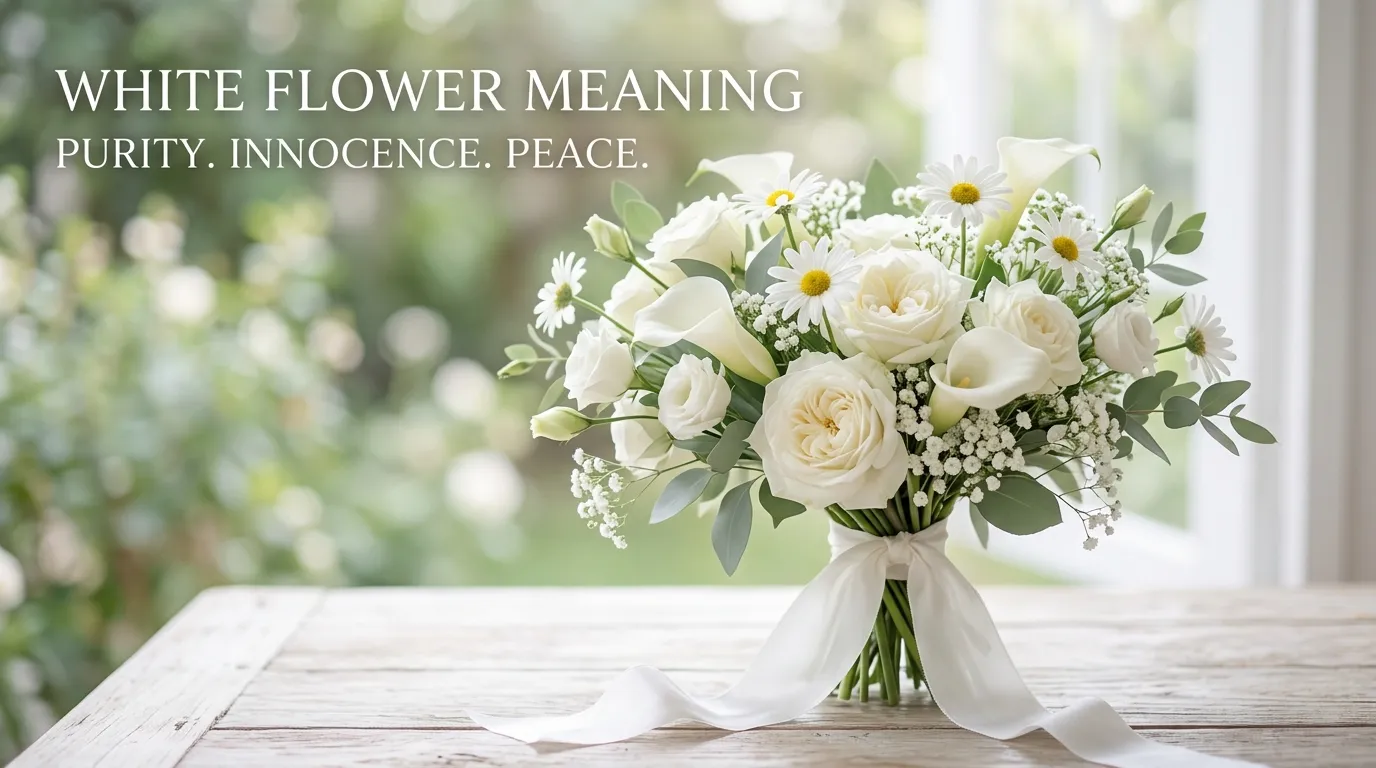
White flowers mean purity, innocence, and new beginnings. This meaning holds steady across many cultures and many flower types. It comes straight from the color itself. White reads as clean and untouched almost everywhere on Earth.
| Flower Type | Dominant Meaning | Best Occasion |
|---|---|---|
| White Lily | Purity, restored innocence | Funerals, Easter, sympathy |
| White Rose | New beginnings, reverence | Weddings, new jobs, apologies |
| White Chrysanthemum | Mourning, truth | Funerals in East Asia, sympathy in the West |
| White Orchid | Elegance, quiet strength | Formal gifts, congratulations |
Botanical Foundations & Profile
White isn’t a pigment. It’s an absence of pigment, paired with a trick of light. Air gaps inside a petal’s cell walls scatter light in every direction at once. Your eye sees that scattered mix as solid white. This happens across totally unrelated plant families, from roses to lilies to daisies. So “white flower” isn’t one species or one family. It’s a shared optical trick, used by thousands of different plants.
| Category | Detail |
|---|---|
| Botanical Basis | Light scattered by air pockets in petal cells, not pigment |
| Common White-Flowering Genera | Lilium, Rosa, Chrysanthemum, Narcissus, Gardenia |
| Bloom Period | Varies by species; spans nearly all seasons |
| Fragrance Trend | Many white flowers, like jasmine and gardenia, are strongly scented |
| USDA Zones | Varies widely by specific flower |
| Global Spread | Found on every continent except Antarctica |
Deep History & Cultural Timeline
Ancient Greek and Roman brides wore white flower wreaths, tying the color to purity long before white wedding dresses existed. In Victorian England, the flower-language boom of the 1800s locked in white’s meaning as innocence, printed in dozens of popular guidebooks. Queen Victoria wore a white gown at her 1840 wedding, and that single choice helped push white toward its now-standard bridal meaning across the West. In China and Japan, white took a very different path. Confucian mourning customs from over 2,000 years ago tied white cloth and white flowers to death and grief, a meaning that still holds strongly today.
Symbolism Deep-Dive
Purity.
White shows no marks and no stains. That simple visual fact is likely the root of nearly every “purity” reading tied to the color.
New beginnings.
A blank white page holds nothing yet. White flowers picked up that same “fresh start” meaning, especially for weddings and new jobs.
Reverence.
Many white flowers, like lilies, grow tall and upright with a calm, still shape. That stillness reads as quiet respect in funeral and memorial settings.
Truth.
In some Victorian guides, white stood for honesty itself, the idea that nothing hides behind a clean, unclouded color.
Color Meanings & Cultural Safety Matrix
White (General)
- Primary sentiment: Purity, innocence, new beginnings
- Geographic nuances: In the West, white means weddings and celebration. In China, Japan, and Korea, white is the traditional color of mourning and funerals.
- Gifting warning: Never send an all-white bouquet to someone in East Asia without checking the occasion first. It can read as a funeral message by mistake.
Lily White
- Primary sentiment: Restored innocence, sympathy
- Geographic nuances: In Christian tradition, white lilies tie closely to Easter and the Virgin Mary. In general Western use, they’re now a top funeral flower choice too.
- Gifting warning: Skip lilies for a joyful event like a birthday. Their strong funeral association can send the wrong message.
White Rose
- Primary sentiment: New beginnings, reverence, quiet love
- Geographic nuances: White roses are a wedding staple in the West. In Victorian tradition, they specifically meant “I am worthy of you,” a message rarely used today.
- Gifting warning: A safe, elegant choice almost everywhere. Just avoid pairing it only with red roses, since that combo carries an old, less common “unity” meaning some florists still note.
Chrysanthemum White
- Primary sentiment: Grief, honesty (varies sharply by culture)
- Geographic nuances: In much of East Asia, white chrysanthemums mean death and mourning almost exclusively. In parts of Europe, chrysanthemums of any color carry funeral meaning too.
- Gifting warning: Avoid gifting white chrysanthemums in most contexts unless the occasion is specifically a funeral or memorial.
Global Traditions & Literary Impact
Victorian England’s flower-language books gave white blooms a fixed reading: purity, silence, and a fresh start, printed and repeated across dozens of guidebooks through the 1800s. In China, white flowers, especially chrysanthemums, appear at funerals as a mark of respect for the dead, a tradition tracing back to ancient Confucian mourning customs. Christian art has long placed white lilies in paintings of the Annunciation, using the flower to mark Mary’s purity in scenes stretching back to the Renaissance. In Hindu weddings, white jasmine garlands, called veni, are woven into the bride’s hair, standing for purity and auspicious new beginnings rather than mourning at all.
Economic, Culinary, or Medicinal Uses
Some white flowers do double duty beyond the garden. White jasmine is steeped into jasmine tea across China and much of Southeast Asia, prized for its scent more than any strong flavor. Also White chamomile flowers get dried and brewed into a calming tea, backed by real, if modest, research on its mild relaxing effect. White elderflower is pressed into cordial and syrup across parts of Europe, a common ingredient in cocktails and soft drinks. None of these uses connect directly to white’s symbolic meaning, but they show how often white blooms cross from garden to kitchen.
The Ultimate Etiquette & Gifting Guide
| Relationship / Setting | Recommended Flower | The Subtext Sent |
|---|---|---|
| Wedding | White rose or white lily | Purity, new beginnings |
| Sympathy, Western context | White lily or white rose | Peaceful remembrance |
| Sympathy, East Asian context | White chrysanthemum | Formal, expected mourning tribute |
| New job or fresh start | White rose | A clean, hopeful beginning |
| Casual celebration | White daisy | Simple, cheerful goodwill |
Universal Safety Rule:
Before sending any all-white bouquet, check the recipient’s cultural background first. In much of East Asia, solid white flowers signal mourning, not celebration.
Direct Comparison: Common White Flowers
| Feature | White Lily | White Rose | White Chrysanthemum |
|---|---|---|---|
| Petal drop | Petals brown and wilt after 1–2 weeks | Petals drop gradually over about a week | Petals hold shape a long time, then fade slowly |
| Fragrance | Strong, heavy scent | Light to moderate, varies by variety | Faint, slightly bitter herbal scent |
| Foliage | Long, narrow, glossy leaves | Compound leaves with small thorns on the stem | Deeply lobed, matte green leaves |
| Bloom season | Early to midsummer | Spring through fall, repeat bloomer | Late summer through fall |
| Care needs | Partial shade, moist rich soil | Full sun, regular watering | Full sun, well-drained soil |
How to tell them apart:
Lilies have large, trumpet-shaped single blooms. Roses have many layered petals in a rounded shape. Chrysanthemums have many thin, tightly packed petals in a dense round head.
Practical Maintenance & Domestic Safety
Most white flowering plants want full sun and soil that drains well. Water deeply but not too often, letting the topsoil dry out a bit between waterings. Deadhead spent blooms on most white flowers to keep the plant producing new buds.
Pet safety depends heavily on the specific flower, not the color. The ASPCA lists true lilies, genus Lilium, as highly toxic to cats, capable of causing kidney failure from even a small nibble. Roses and daisies, by contrast, are listed as non-toxic to both cats and dogs. Chrysanthemums sit in between, listed as mildly toxic, able to cause stomach upset. Never assume a white flower is safe just because it’s a common gift plant. Always check the specific species, not just the color, before bringing it into a home with pets.
Expert Curations & Misconceptions
10 fun facts:
- White petals have no pigment at all; the color comes from scattered light.
- Queen Victoria’s 1840 white wedding gown helped start the white wedding-dress trend.
- White chrysanthemums are one of the most common funeral flowers in China and Japan.
- White lilies are true lilies, genus Lilium, and are highly toxic to cats.
- White jasmine flowers are the base for most jasmine tea worldwide.
- Hindu brides often wear white jasmine garlands for their wedding ceremony.
- White roses historically meant “I am worthy of you” in Victorian flower language.
- Elderflower, a white bloom, is pressed into cordial across much of Europe.
- White daisies are one of the least toxic common garden flowers for pets.
- Some white flowers, like moonflower, only open at night and close by morning.
Myth vs. reality:
- Myth: All white flowers carry the same meaning worldwide. Reality: White means purity in the West but often means mourning in China, Japan, and Korea.
- Myth: White flowers are always safe for pets since they look gentle. Reality: True lilies are highly toxic to cats, while roses and daisies are not.
- Myth: White flowers have no pigment because they’re “unfinished.” Reality: The lack of pigment is a deliberate result of light-scattering air pockets in the petal cells.
3 expert tips:
- Confirm the specific flower species before buying “white flowers” as a pet-safe gift; color alone tells you nothing about toxicity.
- Pair white flowers with soft greenery, like eucalyptus, to keep an all-white bouquet from reading as too stark or too formal.
- For East Asian recipients, mix white with another color, like pink or peach, to avoid an accidental funeral message.
High-Value Section
What do white flowers mean in general?
White flowers mean purity, innocence, and new beginnings across most Western traditions, rooted in the color’s clean, unmarked look.
Do white flowers mean something different in other cultures?
Yes. In China, Japan, and Korea, white flowers, especially chrysanthemums, traditionally signal mourning and funerals rather than celebration.
Are white lilies toxic to cats?
Yes, seriously so. True lilies, genus Lilium, can cause kidney failure in cats from even a small amount eaten.
Is it safe to send white flowers to a wedding?
Yes, in most Western contexts. White is a traditional, expected color for wedding flowers and carries no negative meaning there.
Why are white flowers used at funerals?
White symbolizes peace and purity in Western funeral customs, while in East Asian customs it’s the direct, traditional color of mourning itself.
What causes white color in flower petals?
White comes from tiny air pockets inside petal cells that scatter all wavelengths of light at once, not from any actual white pigment.
Are all white roses toxic-free for pets?
Yes. Roses, including white ones, are listed as non-toxic to cats and dogs by the ASPCA, unlike true lilies.
What’s the most common white funeral flower in Asia?
White chrysanthemums are the most common and widely recognized funeral flower across China, Japan, and Korea.
Can I mix white flowers with other colors safely?
Yes, and it’s often the safer choice. Mixed-color bouquets read as celebratory nearly everywhere, avoiding the mourning association some cultures attach to solid white.
Do white flowers have a scent advantage over colored ones?
Not universally, but several strongly scented flowers, like jasmine and gardenia, happen to bloom white, which is likely coincidence tied to their specific pollinators.
Is jasmine tea made from white jasmine flowers?
Yes. White jasmine blossoms are traditionally used to scent green or black tea leaves in classic jasmine tea production.
What white flower is safest for a home with pets?
Daisies and roses are generally safe choices, both listed as non-toxic to cats and dogs by the ASPCA.
Conclusion
White Flower Meaning carry real science under a simple color. No pigment at all, just scattered light, tricking the eye into seeing purity. That same “clean slate” quality shaped two very different traditions worldwide: celebration in the West, mourning in the East. Both readings come from the same honest fact about white. It shows nothing, hides nothing, and lets whatever moment surrounds it fill in the meaning.

Zahid Abbas is an educator, researcher, and digital publishing strategist behind BloomsyFlower, a flower and gardening resource covering flower meanings, symbolism, history, care, seasonal blooms, and gifting. He combines research with simple, reader-friendly writing to help people understand, grow, and enjoy flowers.